CGB Review of How to Train Your Dragon (2010) (In Loving Memory of Sophie)

I’ve actually seen this movie twice; the first time was last year when my dog Sophie was alive.  I was sick with the flu and Sophie was sitting on her blankets in front of the TV.  “Tell me what happens, Sophie,” I said while trying not to throw up. Sophie just tilted her head and yawned.  I think she took a nap during the climactic battle in the dragons’ nest.
My second viewing was last night during our LifeTeen movie night.  Every time Toothless would tilt his head or lick Hiccup’s face, I smiled because I thought of Sophie, who passed away on May 11th of this year.

This is my review of How to Train Your Dragon!

httyd

Also this review will be dedicated to Sophie.

DSC06218

How to Train Your Dragon is based on a series of twelve children’s books of the same name written by Cressida Cowell.  It tells the story of Hiccup, a Viking teenager who lives in the island of Berk.  On the island, dragons come periodically to steal Berk’s livestock.  As a result, the Viking villagers hate dragons and train to slay them.  Hiccup, the awkward son of the village leader, Stoick the Vast, sets out to kill a dragon in order to gain acceptance, but when he catches the dreaded Nightfury dragon, he can’t bring himself to do it and instead begins to form a friendship with the Nightfury that he names “Toothless.”

I can see why so many people adore this movie.  This is a fantastic and charming animated film!

The Hits
Holy cow, the animation is gorgeous!  The fire effects look like real fire.  The water looks realistic.  Even the clouds are stunning!  I like how the Vikings characters are designed to look brutish and macho, but are still easy on the eyes.
The opening scene is one of the best that I’ve seen in a while.  Everything we need to know is summarized with exciting visuals and Hiccup’s narration giving us context.  From there, the story never skips a beat and moves at a smooth pace with no filler scenes to slow down the plot.
This movie is a must-see for pet owners especially because it understands the relationship that forms between a human and their animal friend.  It capture how hard you have to work on gaining your pet’s trust when you first bring them home, as well as their unbreakable loyalty to you once you’ve earned their respect.  I love how Toothless becomes protective of Hiccup because it reminds me of how during our walks, Sophie would bark and stand in front of me if she suspected that something was wrong.   The bond between Hiccup and Toothless is genuine and heart-warming.  Every scene they have together is used to show the organic development of their relationship.  This allows the scenes where Hiccup and Toothless have to go through Hell and back for each other to feel believable.

The One and Only Miss
The only hiccup (ba boom pssh!) of this movie is that Hiccup’s change of heart is too abrupt.  When we first meet him, he’s gung-ho about catching a dragon and killing it in order to prove his worth.  Then when he has Toothless in his grasp, he goes for the kill and then within seconds, he changes his mind and decides that he just can’t kill a dragon.
Now to the movie’s credit, it is explained in the third act why he did a 180, but I think because in the beginning, his character was set up as being hellbent on killing a dragon, his change of heart felt too quick.  If he had been first established as not really wanting to kill dragons, but feeling obligated to do so, then it would have felt in-character for him to not go through with it.  Another alternative could be have Hiccup let Toothless go, but then show him continue to wrestle with the idea of killing him at the next opportunity.  He could begin to bond with Toothless while undergoing this internal struggle over the course of the movie.  I understand that this is a kids’ movie and that there are other story elements that they need to cover, but I think it would good for children to see that not everyone turns over a new leaf that quickly.  Children need to know that it’s sometimes hard for people to change their ways and that conversion of the heart comes gradually, not instantly.

Overall, How to Train Your Dragon is a great animated gem that has something for both kids and adults to enjoy.   The topic of two opposing forces is handled with tact and grace and the love between Hiccup and Toothless is centered on loyalty and the courage to stand against public opinion in order to protect each other.

Saint Francis of Assisi, pray for us.

Rest in peace, Sophie (11/10/99-5/11/15)

DSC06308

DSC06372

IMG_0555

CGB Review of Pan’s Labyrinth/El Laberinto del Fauno (1,000 likes special!)

So when the Catholic Girl Bloggin’ Facebook page hit 1,000 likes, I knew I had to do something special to celebrate.  I decided to do a review of my favorite movie of all time.

This is my review of Pan’s Labyrinth/El Laberinto del Fauno!

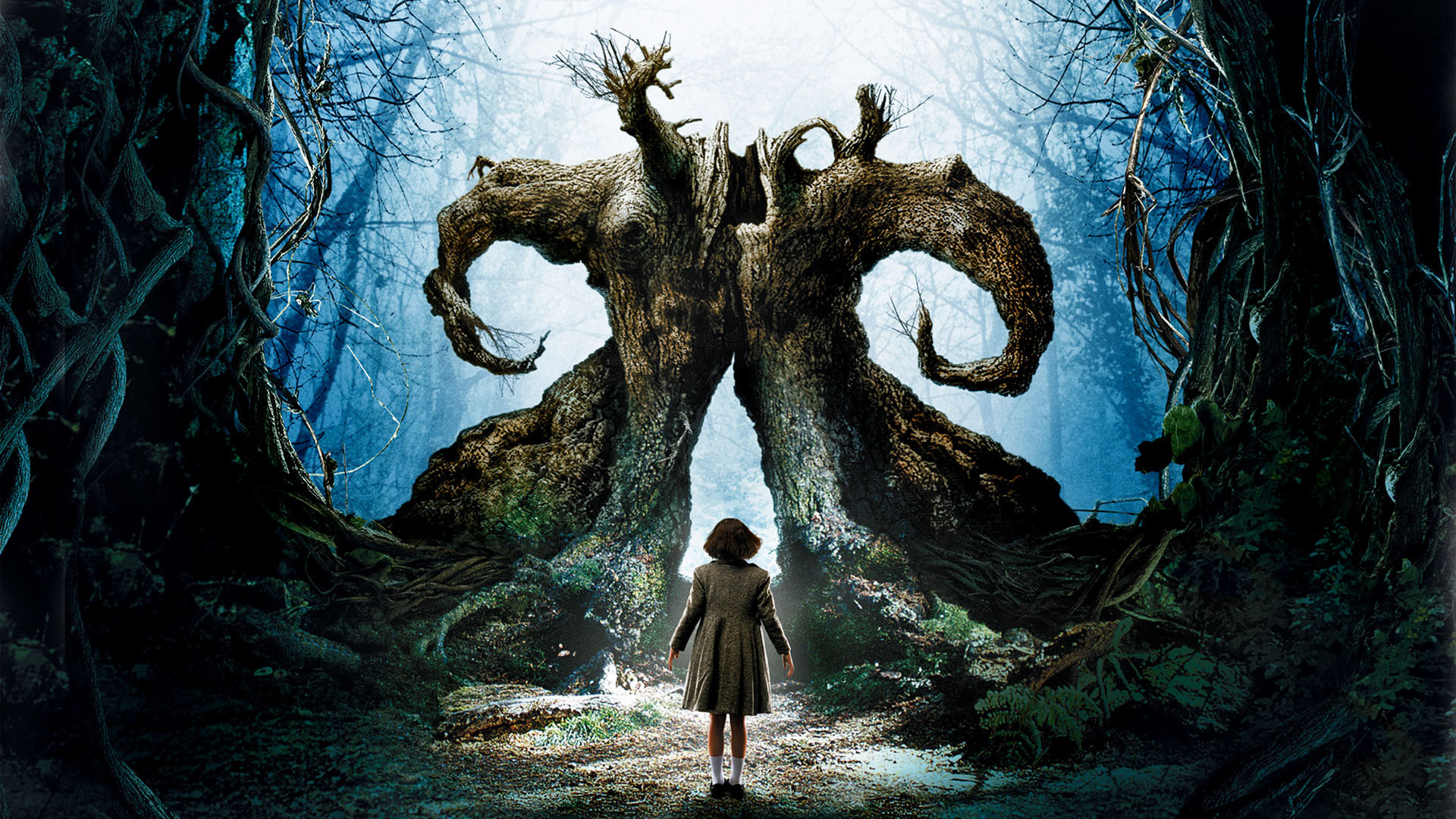
pans_labyrinth-HD

Pan’s Labyrinth opens with a fairy tale about Princess Moanna, the daughter of the king of the underworld.  One day she escapes from the underworld and enters the human world.  The minute the sunlight touches her eyes, she is blinded and all memory of her time as royalty is forgotten.  She lives among the mortals until sickness claims her life.  Her father believes that her spirit will one day find its way home.
Fast-forward to post-Civil War Spain in 1944; a young girl named Ofelia and her pregnant mother Carmen have moved to the countryside to live with Ofelia’s new stepfather Captain Vidal.  Lonely and isolated, Ofelia seeks refuge in the mill’s abandoned labyrinth, where she comes across a Faun who tells her that she is Princess Moanna and that in order to return to the underworld, she must complete three tasks before the full moon rises.

Guys and gals, I’ve been wanting to review this movie for a very long time.  I love this movie to pieces.  I discovered it six years ago and I’ve watched it 20 times ever since.  This movie was a turning point in my life and really changed my outlook on storytelling, so I have a lot to say about this gem.

The Hits
If you want to see some quality acting, look no further.  Every actor in this movie is exceptional; even the supporting characters give great performances!
Ivana Baquero plays Ofelia/Princess Moanna and she is wonderful.  A lover of fairy tales who finds comfort in her books, Ofelia is a lonesome innocent trapped in the brutal world of her stepfather’s mill.   Ofelia was originally written as an 8-year old, but 11-year old Baquero impressed Guillermo del Toro so much that he made revisions to the script so that he could cast Baquero, which was a wise decision in my opinion.  She looks young enough to still be reading fairy tale books, but is also old enough to be going on perilous quests.
Ariadna Gil plays her mother Carmen, who is sedated for a good chunk of the movie.  I like that the movie makes her a grounded, world-weary adult instead of villifying her for dismissing Ofelia’s obessesion with fairy tales.   Maribel Verdu is warm and empathetic as Mercedes, a housekeeper/revoluntionary who is conspiring with a group of rebels to take down Captain Vidal.
The most impressive performance comes from Sergei Lopez as Captain Vidal. What makes him stand out is that he is actually a comedic actor in his native Catalonia and producers had warned Del Toro that he might not fit the role of Vidal.  Lopez has said, “He [Vidal] is the most evil character I’ve ever played in my career.”  He’s right on the money because Captain Vidal is one sadistic son of a gun.  A cold and deranged fascist who is addicted to violence, Captain Vidal rules the mill with an iron fist that has been heated by the flames of Hell.
This movie came out in 2007, yet the special effects have aged gracefully.  The creatures are brilliantly designed and feel like unique monsters, especially the Pale Man (that guy with eyes on his hands).  I love that the fairies have earth-tone skin with leaf wings.  A lot of the scenes take place at night, so the use of midnight turquoise lighting instead of midnight blue makes it easy to see all that’s going on. Oh, and did I mention that the music is a hypnotic, melancholic lullaby that will haunt your ears long after the credits roll?

The Misses
No film is perfect.  As much as I praise this movie to high Heaven, there are some drawbacks.
I’ve always felt that Ofelia is not connected enough to the violence that surrounds her.  There’s never a scene where she witnesses her stepfather committing a violent act.  Yes, there’s a scene where Captain Vidal murders a man and his grown son, but Ofelia is absent from this scene.  I’m not saying that I would’ve preferred having her shoehorned into a scene where she’s not needed, but still, her disconnect has always been a problem for me.
There’s one major continuity error that if CinemaSins ever did an “Everything Wrong with Pan’s Labyrinth” video, they would pick up on it.
Also it’s sort of a SPOILER, so…SPOILER ALERT in 3…2…1…
After Ofelia completes the first task, she has to open the Book of Crossroads to find out what the second task is.  Shades of red explode across the pages and Ofelia hears her mother gasping.  She finds her very pregnant mother bleeding profusely.  Later that night, Ofelia, who is now sleeping in the attic, is visited by the Faun who says, “You did not complete the task,” to which Ofelia responds, “No, my mother–she was sick…”
This scene has always bothered me because after she defeated the Toad in the tree and got the golden key, the Faun told her to be patient and wait for her next assignment.  The next day, Ofelia opens the Book of Crossroads and then shiz goes down with her mother.  I don’t remember the Faun telling her there was something she needed to do before the second task; he just told her to be patient.
My guess is that this problem got overlooked in the screenwriting process. Director Guillermo del Toro did a lot of the work himself; directing, screenwriting, editing, giving up his salary to avoid budget constraints, even writing the subtitles! When a project as massive as this falls on the shoulders of one person, it’s easy for something to get overlooked.

Pan’s Labyrinth will always and forever be my #1 favorite film.  It’s a dark and poetic story with well-defined characters portrayed by great actors, a beautiful musical score and stunning visuals.  It doesn’t need a sequel, a prequel or a reboot. Just let it be the gothic fairy tale that it was always meant to be.

Saint Rose of Lima, pray for us.

CGB Review of To The Wonder (Guest Starring Leia the Dog!)

Hey indie filmmakers, why are you so afraid of dialogue?  What did dialogue ever do to you?

This is my review of To The Wonder!

570_Ben-Affleck-in-new-To-the-Wonder-poster-2372
Also, I’d like to welcome a very special guest: My “niece” Leia the dog!
image
To The Wonder chronicles the whirlwind romance of an American man and a French woman played by Ben Affleck and Olga Kurylenko.  At first everything is awesome and they’re all in love and shiz, but when Kurylenko moves to Oklahoma with Affleck, shiz hits the fan and their love is tested.  Things get even more complicated when Affleck reconnects with Rachel McAdams.
So before I start, I’m going to do something a little different with this review. Along with my “hits and misses” system, I’m also going to use reaction pictures of Leia to explain what the movie does right and what it does wrong.

The Hits
This movie is surprisingly Catholic without even trying to be!
11949485_1021268321240029_4141030830977364671_n
For one, this movie has the most compassionate, humanistic portrayal of a priest character in a secular film that I’ve ever seen.  Javier Bardem plays a priest who is experiencing a dark night of the soul.  He feels disconnected and uncared for by God, yet finds peace and healing through ministering to others.
So I’m guessing the screenwriter found inspiration from Mother Teresa’s spiritual darkness.  😉
Like Melancholia, this film is a cinematography student’s dream come true.   There are a lot of beautiful nature shots.  This would be the greatest nature documentary ever made if director Terrance Malick had just said, “Frick it, let’s just throw the script away and make an Earth Day movie for Disney!”
To The Wonder is the best representation of the “love just happens” philosophy in action.  It makes a good cautionary tale about what happens when people dismiss the fact that love is a choice and not just an emotional high.  Affleck and Kurylenko are committed to each other…when everything is fine and dandy. When life kicks in and the real challenges arise, what they think is love is suddenly gone. When we abandon the personal responsibility aspect of love, we end up with fleeting relationships that are great for the moment, but can be easily replaced when things get dull or tough.  In a way, the film argues that looking for love using self-serving actions leave us empty-handed, and that true love exists once we look outside ourselves and serve those who are less fortunate than us.

The Misses
A friend of mine once said, “I could watch a movie on mute as long as Rachel McAdams is in it.”
Hey, M.P., guess what?  You’re in luck because this movie is SEVERELY ALLERGIC TO DIALOGUE!
11261203_1021268331240028_3913814755104511634_n
Yeah, I was also tilting my head at the startling lack of dialogue.  Tell me, when you’re walking around at the mall or the beach or somewhere with your friend, do you just awkwardly stare at each other and then gaze at the pretty flowers as if posing for a photoshoot?   I sure don’t!  The characters in this film will literally walk to each other and just exchange glances without even saying “hello.”  In the rare times that they do talk, they whisper to each other because–Terrence Malick!
You may have noticed in my summary that I used the actors’ names and not the names of their characters.  That’s because nobody in this film calls each other by their names.
Sixteen minutes into the film, I said aloud, “Hey, what are your guys’ names?”
Thirty minutes into the film, as Ben Affleck silently walks across a construction site, I ask, “Dude, what’s your character name?”
An hour later…”I’d love to connect with ya’ll, but I have no idea what your names are!”  Watching an entire movie and never knowing who is who is kind of a problem.
Why is pacing such a common problem in cinema?  To The Wonder and Melancholia are two movies that really like to drag out their running time.   Scenes will go on for longer than they’re supposed to and there are so many silent periods throughout the movie that I actually started doing my math homework without ever feeling like I was missing something important.
By the end, Leia and I just dozed off…
11924221_1021268324573362_2331275760405209656_n

All of that being said, To The Wonder is a conflicting movie.  There is a lot of good stuff here and as an arthouse indie flick, it succeeds in having its own unique style.  However, the unrealistic silence between the characters and the “drag-your-feet” pacing will test your patience as it did mine.
On the bright side, I got to spend some quality time with my fur-niece.

11890941_1018865641480297_9143009589639131053_n

Saint Valentine, pray for us.

CGB Review of Melancholia (2011)

“Lord, can I just click out of Netflix, go downstairs and put The Imitation Game back in the Blue-Ray machine?” I said aloud as I endured Melancholia’s overly-long wedding reception.

This is my review of Melancholia!

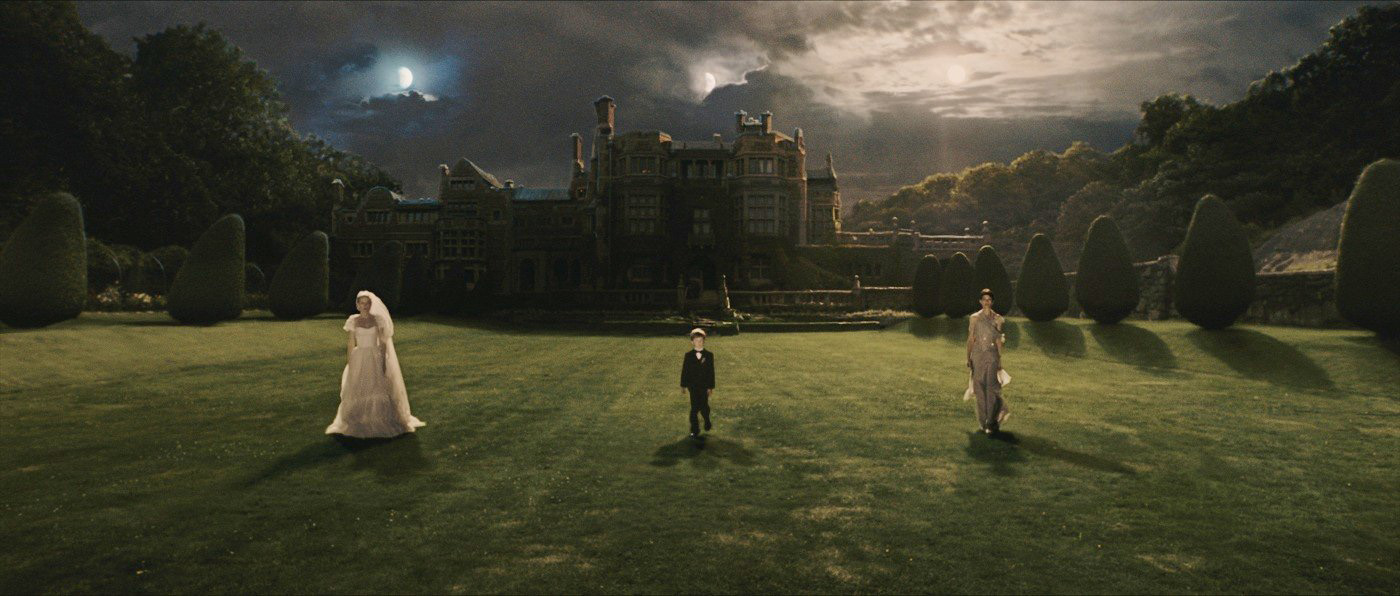
Lars Von Trier - Melancholia 2

Melancholia tells the story of two sisters, Justine and Claire and the disintegration of their co-dependent relationship as they await the inevitable destruction of Earth once it collides with the planet Melancholia.
This movie is directed by Lars Von Trier, a Danish filmmaker who has his own approach and style to his films (just look up Dogme 95).  In a nutshell, he loves handheld cameras, nudity and being artsy.  I think one of his more recent films features a girl walking up some stairs and then 3+5 appears on the screen because–Von Trier.
Guys and gals, I really wanted to love Melancholia.  After The Imitation Game gave me an incredible experience, I was ready to be wowed by another indie movie.  But once the credits rolled with Melancholia, I felt drained from slogging through this one.
Okay, let’s go over the few things this movie got right and where it took a nosedive.

The Hits
The opening scene is amazing!  We see some beautifully choreographed montages of our main characters treading nature landscapes in slow motion, accompanied by Triston and Isolde musical score.  I’ll give the movie this: If you’re studying cinematography, then you’re gonna love this film because there are some really gorgeous shots of the courtyard, the moon, and especially of the sky.
Kirsten Dunst and Charlotte Gainsbourg (who shows up in a lot of Von Trier’s films) give everything they’ve got to make the film watchable.  They are believable as two sisters with a strained relationship.  You may find it odd that Claire has a British accent while Justine doesn’t, but then we see that their mother is British and the father is American, so this potential issue is fixed right away.
The story of two characters coping with an inevitable coming doom is a compelling story arch that can make for some great character studies if done well.  The actual plot of Melancholia is pretty original and the fantastic opening scene made me feel hopeful for a surreal experience.
Well, I had an experience, all right…a frustrating one.

The Misses
WHY IS PACING SUCH AN ISSUE?!
The wedding reception…ugh!  This is where the pacing suffers greatly.  I asked my mother, “Are wedding receptions this long?”  Justine’s wedding reception has got to be the longest, most drawn-out movie wedding reception in cinematic history.  What makes it drag is that there are segments that could have been cut out.  I have no problem with Justine sitting silently in the bathtub during her reception or the sisters’ mother ranting about the woes of modern marriage.  These are necessary moments for character development.  However, do I really need to know that Justine and Claire’s dad collects spoons?  Is it essential to the plot that we watch Justine try to drive the wedding limo?  Was Justine’s boss/the best man even needed in this story?  I understand that boss characters typically represent greed and corporatism, but his character has one long wedding toast speech and then a handful of sentences before he leaves the plot, never to be seen again.  If you’re going to have your main character stand up to someone, make sure that the person they’re confronting has done something to negatively impact them.  Have Justine confront her hateful mother or Claire’s husband who never shuts up about how much the wedding cost.
In my past reviews, I’ve complained about too much dialogue.  Aloha’s use of dialogue involved characters walking up to each other and explaining exposition.  Courageous used ten lines of dialogue to explain something that could’ve been summed up in five words or less.  Melancholia has the opposite problem; there is not enough dialogue.  When characters do talk, the conversations stop the story because characters will talk about the food or the music, basically things that have little to no connection to advancing the story or developing character.

I did some research on Lars Von Trier and this seems to be a guy who really loves cinema.  “I’m afraid of everything except filmmaking,” he has said.
I know you have a lot of phobias, Lars, but pacing is your friend, not your foe.

CGB Review of The Imitation Game

Within minutes after I pressed play on the DVD menu, the film opens with an assertive narration from Alan Turing:
“Are you paying attention?  Good.  If you are not listening carefully, you will miss things. Important things.  I will not pause, I will not repeat myself, and you will not interrupt me.  You think that because you’re sitting where you are, and I am sitting where I am, that you are in control of what is about to happen.  You’re mistaken.  I am in control, because I know things that you do not know.”
Mr. Turing, I’m all ears.

This is my review of The Imitation Game!

Benedict-Cumberbatch-the-imitation-game

The Imitation Game is the true story of Alan Turing, a mathematician, cryptanalyst and eventual war hero who broke the unbreakable war codes of Nazi Germany’s Enigma machine.
So this was the highest grossing independent film of 2014 and frankly, all of that money is well deserved because this is an excellent film.  I have nothing bad to say about this movie, so here is everything right with the Imitation Game!

I want that soundtrack!  The musical score is haunting and hypnotic.  Heck, I can still hear it in my head hours after the credits roll.  In fact, I’m listening to it on YouTube as I write out this review (it’s playing on my tablet).  It’s the kind of music that I would want to listen to while walking at the park or jogging around my neighborhood.
Like Bradley Cooper in American Sniper, Benedict Cumberbatch is mesmerizing as Alan Turing.  This is a man who is lost in his own head, expressing himself through codes and calculations.  An antisocial and off-putting man who is never intentionally hurtful, machines and mathematics are his true love, making more sense to him than the emotional responses of others.  His ideas are so complex that not even people who are as smart as him have any clue as to what he’s talking about.  This prevents the clichéd “he’s a misunderstood dreamer and everyone else is a jerk who doesn’t get him” trope.  Benedict Cumberbatch’s thoughtful performance portrays Alan Turing as someone I would want as a teacher or a mentor.
Keira Knightly is wonderful as Joan Clarke, who shares a chaste, emotional connection with him.   Alan and Joan never touch in a sexual way, yet their souls speak to each other through their intellect.  Their last scene together is heartbreaking as we see these two bright people allow themselves to be vulnerable and emotionally-naked with each other.
Ever since I reviewed Right to Believe, I always pay close attention to the portrayal of a homosexual character; is it sensationalized or handled with tact and grace?  Does it define the character or is it only an aspect of a three-dimensional protagonist?  Is the LGBT character written as a human being or an agenda pawn?  By this litmus test, the Imitation Game passes the class with flying colors.  His homosexuality is a subplot and never consumes the story.  In fact, for a while, I thought Alan Turing was asexual (someone who does not experience sexual attraction; different from celibacy.  http://www.asexuality.org/home/?q=overview.html )  I like how the subject of homosexual men marrying women is treated as the complex matter that it is; neither Alan nor his fiancée Joan is vilified.  He deeply cares for her, but feels conflicted; she genuinely loves him as her closest friend, but societal norms mandate her to be married.
Overall the film gives us a sense of what it’s like to be Alan Turing; the script is so intimate with the main character that it’s like the director and/or screenwriter personally knew Turing.  Like Amelie and American Sniper, the Imitation Game knows its protagonist and wants you to know him, as well.  This is a humanistic film that tells the story of a brilliant man who was forced to hide his sexuality from the very world he was trying to save.

SPOILER CORNER!!!!  IF YOU HAVE NOT SEEN THE IMITATION GAME YET, SKIP THIS SEGMENT!!!
The ending got to me.  I was disgusted at the way the British government treated him after he was arrested for gross indecency, for just being a homosexual.  He was given two options: Two years in prison or chemical castration.  He chose castration so that he could continue working.
I mentioned Alan and Joan’s last scene together, which comes at the end before the text comes on-screen revealing Alan’s suicide.  I bring it up because this is the scene that moved me the most.  Alan tells Joan that he continues the government’s hormonal treatment so that he can keep Christopher, the machine that broke Nazi Germany’s Enigma.  “If I don’t continue, they’ll take Christopher away from me and I’ll be alone,” he bursts into tears, “…and I don’t want to be alone.”  Joan comforts him and suggests he do a crossword puzzle, his favorite hobby.  When he struggles to lift the pencil and says, “I’ll do it later,” that’s when I knew it was over for him.
Once the end text reveals that he killed himself at the age of 41, I started crying.  To be driven to such despair is always a tragedy, but to do the courageous act of defeating Nazi Germany’s war machine and then be repaid with cruelty is equally tragic.

Saint Edith Stein/Teresa Benedicta of the Cross, pray for us.

CGB Review of Jupiter Ascending (2015)

I once wrote a story about a girl who enters another world and finds out that she is the Destined One, the only person who can save two worlds.  Along the way she meets characters whose dialogue consisted of backstory and exposition about the world.

I wrote this story when I was twelve-years old.

This is my review of Jupiter Ascending!

Jupiter-Ascending

Jupiter Ascending tells the story of–well, to be honest–many things, but here’s the main plot: A young woman named Jupiter lives as a janitor with her family of Russian immigrants.  After surviving an assassination attempt on her life at a fertility clinic, she is rescued by Caine, a…(trying to keep a straight face) half-man, half-wolf splice hybrid person who tells her that she is the Queen of the Earth and must reclaim her throne from the Abrasax siblings named Balem, Titus and Kalique.  Along the way, Jupiter encounters other characters who are more interested in spouting out exposition and complicated backstory about their world than in being interesting characters with distinct personalities.

Do you have any idea how hard it was for me not to burst out laughing while typing the movie’s summary?  I only saw this movie once and I walked out of the theater after the first hour.
Have you ever seen a movie where it’s painfully obvious that key scenes are missing and the director(s) have no idea how to properly pace a story so that it flows smoothly?
Yeah, that’s basically Jupiter Ascending in a nutshell.
I took a lot of creative writing classes in high school and later in college.  In creative writing, one thing you learn that is there’s no right way to tell a story, but there are many wrong ways to do so.  Hence the best way to review Jupiter Ascending is by going over the “what-not-to-do’s” of storytelling and then explain how Jupiter Ascending breaks those guidelines.

1. Don’t let any backstory overshadow the current plot.  Jupiter Ascending puts less detail in basic character development and instead relies heavily on the needlessly convoluted history of its world.  As a result, all the exposition becomes a distraction from the movie’s central plot.

2. Create characters, not exposition-explaining pawns.  EVERY CHARACTER does nothing but monologue about how this worlds works.   Jupiter herself is just what I call a “window character,” someone who only exists as a stand-in for the audience as we learn about the film’s universe.  Window characters are fine as long as they have their own identity other than just being an observer.

3. Don’t introduce any ideas that you don’t plan on following up on. The main antagonist Balem (played by Eddie Redmayne) says, “I will harvest that planet tomorrow [Earth] before I let her [Jupiter] take it from me.” In other words, he’s going after Earth in 24 hours…and then that threat is never mentioned again. Actually Balem kind of disappears from the plot for a while.

4. Don’t drop any important characters. If you have a large cast of characters, make sure you can account for each of them.  All of the characters get rushed introductions and their personalities are so bland that it’s hard to care about any of them or what they’re going through.  As mentioned in #3, the main antagonist Balem is a major player for about 20 minutes, and then just disappears for a while because….unicorns!  The titular character Jupiter (played by Mila Kunas) is basically a damsel in distress and when she does start to develop as a character, it comes off as rushed and out-of-left-field.

If you take away anything from this review, let it be this: Please don’t name your character “Jupiter Jones.”
Just don’t.

Retro Reviews: Back to the Future (1985)

I come from a family of Dodger fans, so going to a Dodger game is a time-honored tradition.
I bring this up because after the Dodgers beat the Cincinnati Reds, they had a screening of Back to the Future at the stadium.

This is my review of Back to the Future!

Great Scott!
Great Scott!

Back to the Future tells the story of Marty McFly, an aspiring musician who is accidently sent back 30 years into the past.  When he becomes his mother’s romantic interest, he must get his future parents together to prevent altering his future.
Now according to my mother, this movie was a surprise hit.  Various studios rejected Robert Zemeckis and Bob Gale’s script until Zemeckis’ film Romancing the Stone was a financial success.  This compelled Universal Studios to pick up the Back to the Future script and this turned out to be a great decision for Universal.
Well, I was born six years after the movie came out.  Last night was the first time I had ever seen it, so how does a film from 1985 hold up to a millennial living in 2015?

The answer: It holds up very, very well.  Back to the Future is a pretty freaking good movie!  It is such a fun and entertaining story with loads of heart.

The Hits
Time travel is a story formula that has never been done completely right, but this movie handles it with great skill.   Michael J. Fox was definitely a perfect choice to play the resourceful, dry-humored Marty.  I like that he’s not an all-out bad boy stereotype.  He’s a typical teenager with a bit of an attitude who truly cares for the people in his life.
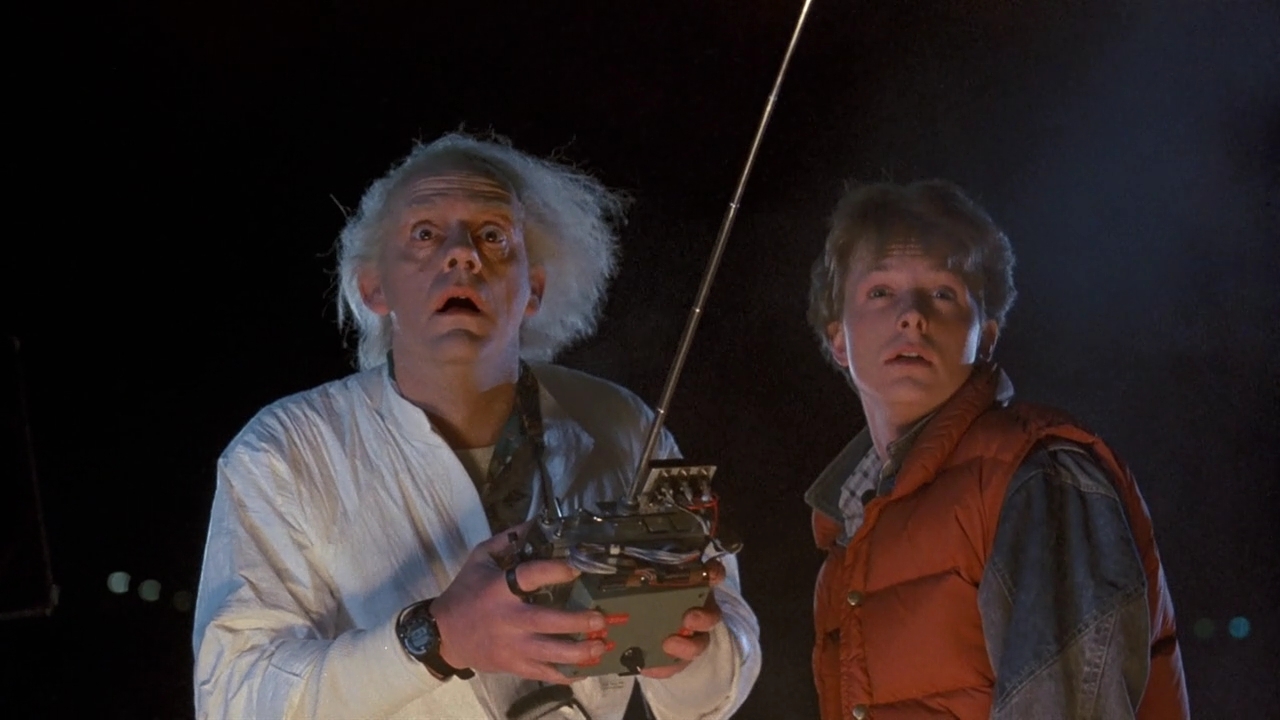
The real standout is Christopher Lloyd as Doc.  Mad scientists characters are tough to portray without coming off as over-the-top, but Christopher Lloyd keeps his Doc intelligent and fast-thinking.  There’s a rhyme and reason to his eccentricities.  His moments of sincerity and genuine care for Marty is balanced with his quirks and bursts of ideas.
This movie has a surprising amount of subtly.  It will introduce things such as a clock tower or a neighborhood sign by having Marty pass by them without spelling out for us that those items will be important later.  This respects the audience’s intelligence without being too cryptic.
Finally the comedy is spot-on!  Every joke is well timed, the witty banter never wears out its welcome, and the heartwarming relationship between Marty and Doc never feels contrived or emotionally-manipulative.  The movie’s self-awareness keeps it from being campy, allowing it to be an entertaining adventure story.

The Only Setback
My only complaint is that I wish we learned how Marty met Doc.  Is Doc a family friend or a former science teacher or something?  The most that we learn is that Doc lets Marty use his garage so that he can practice his music.  I know this isn’t an origin story of Marty and Doc, which is totally fine, but I would have liked some context regarding how these two characters came to know each other.

Overall Back to the Future is my new favorite retro movie.   To quote my mother, “It’s as funny today as it was 30 years ago!”  I couldn’t agree more.

Saint John Bosco, pray for us.

CGB Review of Ex_Machina

“To be human is to be ‘a’ human, a specific person with a life history and idiosyncrasy and point of view; artificial intelligence suggest that the line between intelligent machines and people blurs most when a puree is made of that identity.”
–Brian Christian, The Most Human Human

This is my review of Ex_Machina!

ex-machina

When a young coder named Caleb (Domhall Gleeson) wins at raffle because–potatoes!–at the Google-esque company where he works, he gets to spend one week with Nathan (Oscar Isaac), the eccentric CEO of the company.   Nathan reveals to Caleb his latest creation: A humanoid cyborg named Ava (Alicia Vikander).  Nathan assigns Caleb to conduct a series of interviews with Ava and apply the Turing Test; to put it simply, he has to measure Ava’s ability to persuade him that she is human even though she is actually AI (Artificial Intelligence).

So I watched this movie on my lunch break and was almost late getting back to work because this is an intelligent and engrossing film.

The Hits
Move over, Fantastic Chore–I mean Bore–I mean Four; THIS is the sci-fi film of the year!
I can’t wait to see Oscar Isaac in Star Wars: The Force Awakens because he is fantastic as Nathan.  He brings to life a secluded genius who feels a need to mentor and guide others as a way to overcompensate for the fact that he fails to connect with others on a daily basis.
Alicia Vikander gives one of the best performances as a robotic protagonist I’ve seen in a while.  Her voice is low-key and slightly monotone, hence reminding us that she is a cyborg, but her movements, facial expressions and careful changing of voice pitch makes her a convincing human.
Caleb starts out as a blank slate, but slowly evolves into a distrusting man who ends up questioning his own humanity in one particular scene where [SPOILER] he cuts himself with a razor to see if he is all wires or water and bone.  Self-injury is tough to do in cinema without looking exploitive, but this scene was well handled and served a purpose to his character development.
I want the soundtrack for this movie because the music matches the cool, low-lit atmosphere of Nathan’s research facility.   The eerie soundtrack has that “someone is watching you from a dark corner” kind of vibe that a clausterphobic sci-fi film needs.
A while ago, Father Robert Barron posted a video called “Planned Parenthood and the Loss of Human Dignity.”  In it, he mentioned how when the value of human life is not determined by God, but rather by who society says has the right to life, the loss of human dignity is sure to follow.
Anyway, I bring this up because there are quite a few times where I felt that some pro-life thinking worked its way into the script.
Here’s a quick example: One of my favorite scenes is when Caleb and Ava are conversing and then this happens:
AVA: “What will happen to me if I don’t pass?  What if I don’t function like I’m supposed to?”
CALEB: “Ava, I don’t know…”
AVA: “Do you have people who switch you off?”
CALEB: “No–”
AVA: “If you can’t be switched off, then why can I?”
Father Barron said that there is dangers to letting sentimentality (our feelings towards others) or productivity (someone’s usefulness in society) be a determining factor in who is deserving of human dignity and who is not.

The Misses
I didn’t feel that Nathan’s assignment to Caleb was explained very well.  By that, I mean Nathan explains it with too much techno-babble instead of keeping the explanation plain and simple.
There are a few times where the dialogue audio is drowned out by the musical score.  It’s not “God forbid a character turns their head from the camera” bad like Tim Burton’s Alice in Wonderland; more like “God forbid a character mumbles” bad.  It’s not a constant problem, but I don’t like having to turn my volume up at 60 just to hear Nathan say, “I’m hung over.”
Any time you write a story that is essentially a think-piece, you run the risk of the ideas trying to be the story instead of the story having ideas.  Old Fashioned had this problem, and Ex_Machina faces this roadblock, as well.  Honestly I don’t think there’s a perfect solution for this issue in think-piece stories, but being aware of it would be helpful to aspiring filmmakers who want to make their audience ponder new ideas.

Overall Ex_Machina is a top-notch film from a first-time director.   An engaging script with thoughtful performances and great musical score make this worth all the praise and accolades it has received.

Saint Thomas Aquinas, pray for us.

CGB Review of Gone Girl (2014)

There is a major spoiler about one of the characters in this review, so SPOILER AHEAD.

This is my review of Gone Girl!

gonegirlposter

I love Gillian Flynn’s novel “Gone Girl,” which this movie was based on.  I’ve read that book so many times and I’m sure I’ll be reading it again real soon.  Before I ramble on and on about how awesome the book is, let’s talk about the movie.
On the morning of Nick and Amy Dunne’s 5th wedding anniversary, Nick discovers that Amy has disappeared.  From there, a nationwide search for her is launched and Nick must deal with Detective Rhonda Boney and Detective Jim Gilpin, who begin to suspect that he [Nick] murdered his wife [Amy].  While that’s going on, we get to look into Amy’s diary, where the Dunnes’ troubled marriage is chronicled.

As a fan of the book, I am happy to say that this is one of the most faithful book-to-film adaptations that I have seen in a while.

The Hits
David Fincher’s use of a cool color palate, an eerie musical score that sounds like someone is just around the corner, waiting to get you (we have Atticus Ross to thank for that), and smooth camera pans fit this movie like a glove.  In the writing category, I have great respect for Gillian Flynn, who wrote the screenplay for the film.  I’m sure it wasn’t easy deciding which things to cut and which story elements to keep, but I can tell that she put the time and effort to making sure that the film matches her vision as accurately as possible.  There’s an old adage, “If you want something done right, do it yourself.”
Rosamund Pike was born to play Amy Elliott Dunne, the most disturbing femme fatale in recent memory.   This icy Hitchcockian blond with a haunting voice that would make anybody look over their shoulder if they heard her speak is calculating, methodical and armed with 20/20 foresight.  She thinks of everything and spares no one in her path; Satan asks her for advice.  She will ruin you and then reassemble you to fit her vision.  She doesn’t need to point a gun to hurt you; all she has to do is know you.   That is how she begins to destroy you.
Ben Affleck not only understands Nick Dunne, but he even does a better job at representing Nick than the book.  He exceeded all expectation with his portrayal of a lazy, pathetic, country-boy adulterer who avoids any and all conflict, even if it’s staring him right in the face.
Tyler Perry gives a surprisingly stellar performance as the cocky slimeball Tanner Bolt, Carrie Coon is grounded and down-to-earth as Margo “Go” Dunne, and although he seems a bit miscast, Neil Patrick Harris does a good job as the creepy Desi Collings.

A Word of Caution
Are you discerning married life?  Is your own marriage in a rough patch?   Are you unsure or even suspicious of the institution of marriage?  If you answered “yes” to any of these questions, then this movie might get under your skin.  Both the movie and especially the book lean towards an anti-marriage point of view.  In both versions, married characters are either miserable or idiotic, Amy Dunne makes plenty of “don’t-get-married” statements, and the Dunnes’ marriage freefalls from passionate to insufferable.
That all being said, do keep in mind that this is a work of fiction, and Gillian Flynn herself is a married woman.  She even gives her husband a glowing acknowledgment at the end of the book.

Overall Gone Girl is one of the best thrillers in recent years that will quite literally keep you guessing until its gut-wrenching conclusion.

Christian Movie Reviews: Do You Believe?

My Fant4stic Four review was written at 1 o’clock in the morning and despite being very tired, I pushed myself to talk about a movie that couldn’t care less about its own existence.
Now it is 11am, I am well rested and ready to review a risk-taking, gut-wrenching Christian film called Do You Believe?

Do-You-Believe

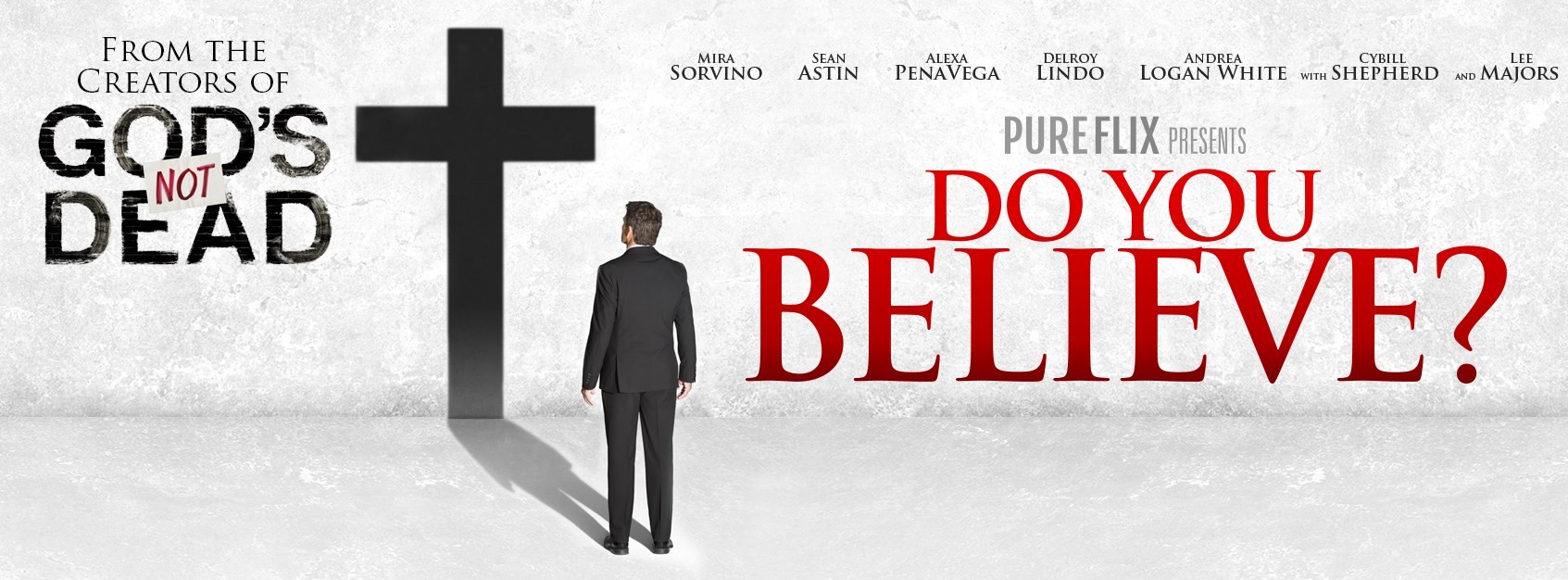
Do You Believe?, which was created by the same people who made God’s Not Dead, tells the story of twelve desperate characters whose lives will inevitably intertwine as they come to see the power of the Cross.
I have no idea why this movie wasn’t a hit like God’s Not Dead because this is another genre-saving movie that Christian filmmakers need to imitate.

How many Christian films do you see take on homelessness, self-mutilation, gang violence, PTSD, familial abandonment, loss of a child, teenage pregnancy and other heavy topics in just two hours?  Now while they never get R-rated graphic with the self-cutting or the gang violence, just having those elements in a Christian film is pretty bold.
All of the performances are excellent with every single actor being fully invested in their roles.  There’s a sense that the director and screenwriters (two people wrote this movie) know that this film isn’t going to appeal to everyone, but they’re willing to take that chance so that they can passionately tell the story that they want to tell.  Quite frankly, I can’t help but admire everyone involved with this project.
I was biting my nails because telling multiple storylines is a difficult formula and it has more failures than successes.  However I am delighted to announce that this is a brilliant multiple-character study.   Each storyline is well-developed and the pacing–hallelujah!–the pacing is smooth sailing.  There is never a dull moment because every scene has a rhyme and reason for existing.   The film transitions very well because each story arch ties into another story arch, woven like a quilt of cinematic competence.
Thank you, Lord Jesus, for a Christian film that FINALLY tackles “faith without works is dead.”  That is shockingly rare in Christian movies, so for a film in this genre to acknowledge that belief in Jesus requires action is a much needed breath of fresh air.

Okay, now I’ve praised the film to death, there are some things I have to address.  Like Amelie, this is a niche film.  Atheists will not like this movie because the non-believing characters range from militant jerks (Sean Astin’s doctor character) to vaguely defined semi-atheists (Andrea Logan-White’s lawyer character).  The agnostic characters are more like sort-of agnostic-ish who just need the kindness of a Christian friend in order to convert.  Also some of the dialogue can get preachy and one of the storylines ends with a miracle that kind of comes out of left field.

I remember one of the teens at my LifeTeen youth group telling me that she saw this film in theaters and was blown away by it.  Having watched it, I can see why.  Passion and talent permeate every frame of this film.  Unlike the people who slogged through Fant4stic Four, everyone put their all into this movie and that’s really all I could ask for.

The movie challenges viewers with the question: “If you believe in the power of the Cross, then the question is…what are you gonna do about it?”
Your move; what’s your answer?