CGB Review of American Hustle (2013)

I loved Silver Lining Playbook and I despised Joy, so I had no idea what to expect from this David O. Russell flick.

This is my review of American Hustle!

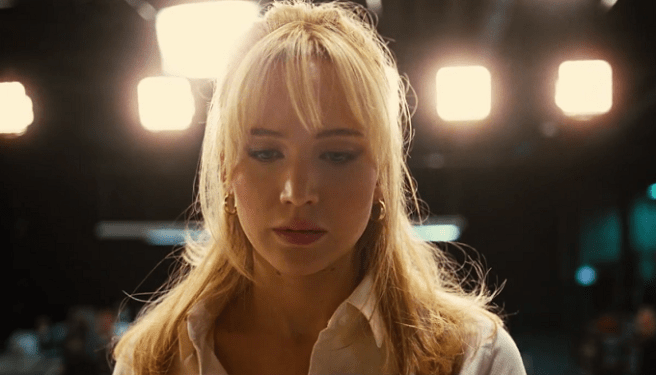
american_hustle_movie-1920x1080

Between this and Joy, I’m starting to see a pattern with David O. Russell films: His movies can be hard to summarize.  Alas, I will do the best I can to provide a summary.
American Hustle is the wild story of Irving Rosenfeld and Sydney Prosser, two con artists who are forced by F.B.I agent Richie DiMaso to set up elaborate sting operations on corrupt politicians, which include Camden, New Jersey, Mayor Carmine Polito.  While that’s going on, Irving must balance his tumultuous romance with Sydney and his troubled marriage to Rosalyn, an unstable woman who may have Histrionic personality disorder (“a mental condition in which people act in a very emotional and dramatic way that draws attention to themselves…” https://www.nlm.nih.gov/medlineplus/ency/article/001531.htm).

I remember coming home one night and my parents were watching this movie.  “How’s the movie?” I asked.  My mom gave it a thumbs down while my dad had fallen asleep.
After watching this flick, I can see why.

The Hits
This is what film reviewers called “an actor’s piece.”  It’s the kind of the film that is made specifically to showcase an ensemble cast of A-list actors.  I kept watching this flick for the performances.  I commend Christian Bale for putting on all that weight and he sells the character of Irving as a scheming, self-preserving con man.
Jennifer Lawrence’s Rosalyn is the only character I cared about.  With a believable Boston accent, Jennifer Lawrence portrays Rosalyn as an endearing basket case.  She is manic without becoming annoying, immature without coming off as too childish, and incredibly sympathetic.  Honestly, I wish the movie was told from her perspective.  I could watch her confrontation with Amy Adams’ Sydney over and over again.
The costumes, hair styles and make-up in this movie all resemble the craziness of the late 70’s and early 80’s.   If there’s one thing David O. Russell does really well, it is dressing his actors in a way that captures the mood of the era that his movie is set in.
Finally, I would like to point out that David O. Russell does handle his unlikable characters correctly.  Basically an unlikable character is made easy to root for if:
A. They get their comeuppance
B. They are forced to rise above their flaws.
C. Their reasons for being scum is well explained.
American Hustles takes Option C by writing Irving and Sydney as survivalists.  These characters are con artists because they have both grown up knowing the world to be a cruel and corrupt place where survival is the only option.

The Misses
It’s pretty obvious that Amy Adams doesn’t curse often in real life.  Granted, cussing excessively isn’t exactly a desired talent, but if you are making a movie and you want your actors to use choice language, make sure that they’re convincing at it.  Also, and I don’t mean to pick on the talented Ms. Adams, but was her character written to be British or American?  She keeps changing her accent sporadically.  This makes sense when she is pretending to be Lady Edith Greensly, but when she keeps changing accents during an intense argument with Irving, it comes off as odd.
Oh, Bradley Cooper, I don’t like picking on you (I’ve done it three times now with Aloha, Burnt and Joy), but am I the only one who feels that Bradley Cooper didn’t have much to work with in this film?  Irving, Sydney and Rosalyn are fleshed-out, but Richie (Cooper) and Carmine (Renner) are only identifiable by their hairstyles and not by their personalities.
It has been said that you can make a good story about anything.  However, to pull this off, good writing is a requirement.  American Hustle is a case of great actors trying to make do with a scrambled story.  Just like Joy, American Hustle is the equivalent of walking in on an intense conversation between strangers and having absolutely no idea what’s being said.  I was totally lost during the first five minutes of American Hustle and that’s because it throws us into a convoluted argument between characters we’ve just met.  A storyteller doesn’t have to spell out every minute detail, but there need to be some clarity about what’s going on and what’s at stake.  I couldn’t be engaged in the story because it’s poorly structured with gigantic leaps in time and too many characters.  By the second act, scenes either go on for an eternity or move so quickly that you’ll miss something if you blink.

If you enjoy movies that showcase a large cast of A-list actors, then you might like American Hustle.  However, personally, I could only be invested for so long before the scattered story became difficult to follow and I just stop caring.

Saint Matthew, pray for us.
CGB Review of War Room (2015)

Hmm, a Christian film about trying to save one’s marriage with prayer.  Hey, Kendrick brothers, you’ve made this movie before: It’s called Fireproof…
And it was way better than this flick.

This is my review of War Room!

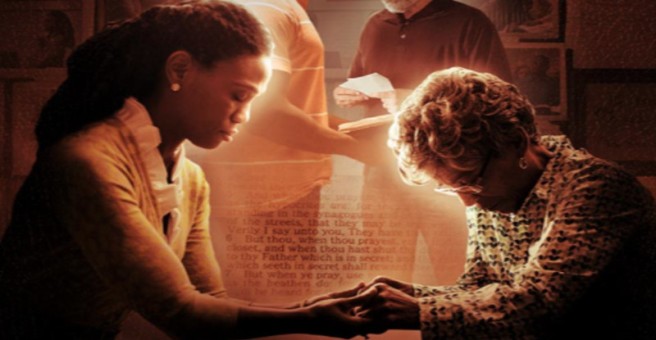
war-room

War Room is the latest film from Alex and Stephen Kendrick, the same guys behind Flywheel (2003), Facing the Giants (2006), Fireproof (2008) and Courageous (2011). The best way to summarize this film is it’s basically Fireproof from the wife’s point of view and with an old lady thrown into the mix.

The last Kendrick brothers movie that I reviewed here on CGB was Courageous, which was made to be a pro-fatherhood film, but sadly, ended up being a poorly-paced, unfocused narrative.

Let’s see how War Room holds up!

The Hits
This is one of the very few Christian films that attempts to tackle spiritual warfare.  Given that Satan’s influence is considered taboo, I do commend this film for taking on the fight against the devil.  There’s a great scene where Elizabeth is confronting the devil, telling him to leave her family alone and that God is in charge of her household.  I was actually invested in this one sequence.
Unlike Courageous, the pacing in this film is much better.  Hence they’ve learned something since Courageous.  There’s still some filler here and there, but those are few and far between.  Scenes don’t drag on, the plot stays focused for the most part, and the acting is actually pretty good.  So War Room is a slight improvement in terms of the technical aspects.  Also, while I did find Miss Clara’s character to be a bit abrupt and intrusive, I can tell you that feisty old ladies have earned the right to have no filter.  🙂

The Misses
I hate to say it, but a lot of secular critics were right when they said, “The message of this movie is that if your spouse doesn’t treat you right, it’s because you’re not praying hard enough.”  Yep, that is exactly how the first hour of this movie plays out.   There’s even one scene where after Elizabeth vents about her husband Tony, Miss Clara snaps, “Everything you’ve said about your husband is negative!”  Well, yeah, because the first act shows Tony berating Elizabeth in front of their daughter Danielle and then making hurtful remarks to Danielle about how she’s too old to be jump-roping (she’s part of a jump-roping team).  He also scolds Elizabeth for taking money out of their account to help her (off-screen) financially-troubled sister and tells her that their money is his money.
To understand why this movie is frustrating, let’s first look at why Fireproof worked.  The script had both spouses biting at each other’s ankles, not one unreasonably cruel spouse constantly tearing the other submissive spouse.  Caleb and Catherine both gave each other grief and, while Caleb had to do a lot of the work to save their marriage, Catherine was also challenged to forgive her husband.  I’ve never been married, but even I know that marriage is a team effort.  It takes two to tango, after all.
So why does War Room fail at where Fireproof succeeded?  Because the husband Tony is verbally and even financially abusive towards Elizabeth.  Their daughter Danielle is also a victim of Tony’s emotional abuse.  By the way he treats them, it comes across that Tony flat-out hates his own family.  Elizabeth doesn’t do anything to get him worked up.   Also, I did cringe when Elizabeth tells her gal pals, “I just don’t know how to submit to him…” Yeah, it’s generally a bad idea to have a female character say something like this.
Look, Kendrick brothers and every other Christian filmmaker, I can totally get on board with using cinema to combat the alarmingly high divorce rate in this country, but if you’re going to make movies about defending the indissolubility of marriage, please learn the difference between a flawed spouse and an abusive one.  I get that we’re trying to teach our generation to fight for their marriages and not throw in the towel, which is a noble cause, but when it is presented incorrectly, it can come across that Christian films are advocating staying in toxic relationships.

I do commend this film for taking on spiritual warfare and for its message of the power of prayer.  However, its mishandling of a dysfunctional relationship is troubling enough to keep me from recommending War Room.
If I ever have a daughter and she wanted to watch this movie, I would say “absolutely not, Gemma or Gianna or Scholastica Ecclesia” or whatever I name her.
In all seriousness, keep your daughters away from this movie.

Saint Monica of Hippo, pray for us.

CGB Review of Joy (2015)

Two hours after seeing Joy…

ME: (walks into living room, sits on the couch in a exasperated fashion)
MOM: What’s wrong?  How was the movie?  You saw Joy right?
ME: (Tired nod) Yeah, I did…
MOM: Jennifer Lawrence, right?
ME: (Takes Fandango ticket out of my pocket) Oh, yes!  I saw Joy with (rips ticket in half) Jennifer Lawrence–(rips ticket again) filmed by–(rips violently) David stupid O’Russell–(throws shreds on the couch) with Bradley Cooper!  (Takes deep breath)
MOM: So…it wasn’t very good.
ME: (Stands up) This is the worst movie of 2015.

This is my review of Joy!

jennifer-lawrence-bradley-cooper-star-in-joy-2015-movie-trailer-photos-videos

Let me tell you what this movie was supposed to be about.  Joy was originally the true life story of Miracle Mop inventor Joy Mangano.
Then director David O’Russell said, “Nah, that’s not interesting enough.” So now Joy is a film loosely based on the life of Ms. Mangano (they never use her last name in the movie for reasons I still don’t understand) with the other stories of different businesswomen mixed in with Joy’s story.

The result is a clusterflick narrative, a projectile idea vomit, an overacted and overdirected story with so much going on that I gave up caring about any of the characters long before the credits rolled.

The Hits
Bradley Cooper, why do you keep showing up in my bad movie reviews? Do you think I like picking on your work?
The only good parts were the few and far between scenes with Jennifer Lawrence and Bradley Cooper.  They are the only people in this entire production who knew what they were doing.  The three coherent scenes were the ones they were in.
Before I go into Super Saiyan rant mode, I will say that if you grew up with a ridiculously dysfunctional family, I guess you might relate to Joy and her struggles.  If anything, this movie does attempt to capture the chaos of a quirky, yelling family.
However, if you are a person who has trouble staying focused, this movie will not be kind to you.  Here is why…

The Misses/Everything Else
Have you ever walked in on a conversation where the people involved knew what they were talking about, but no one was filling you in on the things being said, so you’re stuck and surrounded by competing voices? Imagine enduring this scenario for TWO HOURS!
Focus is an urban legend in this movie’s universe.  David O. Russell uses fifteen different filming styles in just the first act alone.  The editing is frenetic, the story is riddled with way too many leaps in time and there are two random dream sequences that come right out of nowhere and are never mentioned again.  Less is more, dude!
The dialogue is all trailer-fodder (i.e. catchphrases that are great for the movie’s trailer, but have no reason for being there in the finished film). It’s not even clunky expositional sentences; it’s just a random collection of words that no one would ever say in real life.
All right, I’m going to say what every other reviewer has said: Jennifer Lawrence is too young to be playing a divorcee with young children.  She is playing a woman who invented the Miracle Mop in her mid-30’s.  Jennifer Lawrence is unable to give a fleshed-out performance because every other actor around her seems to have guzzled down eighteen cups of coffee before coming on set and are suffocating the screen with over-the-top performances.
Joy’s family is insufferable to watch.  Robert de Niro is the despicably selfish father who berates his ex-wife in front of his grandchildren, Virginia Madsen is the weak, TV-obsessed mother who never once asks Joy, whose roof she is living under, “Hey, can I help you out in any way?” Joy’s sister Peggy, played by Elisabeth Rohm, is annoyingly bitter.  Not once do any of these unlikable people get their coumppence or rise above their flaws to band together as a family.
One more thing: Joy has two young children and she is wonderful to her daughter Christie, but basically ignores her son Tommy.  Now I’m not a mother myself, but I was getting pretty mad at Joy for casting her young son off to the side with no explanation.

This movie was practically begging me to walk out on it, but I said, “No. I’m going to stick with it.  It has to get better.  It just has to…”
To my dismay, it never did.

This being Bradley’s third strike (see my reviews for Aloha and Burnt) and Jennifer’s first strike, it is with a heavy heart and a pounding migraine that I cast Joy into the nether regions of atrocious cinema.

Now if you’ll excuse me, I’m off to heal my brain by seeing Star Wars: The Force Awakens (a good movie) for a second time.

Saint Elizabeth of Portugal, pray for us.

CGB Review of Star Wars Episode III: Revenge of the Sith (2005)

Merry Christmas, CGB fans!  Boy, do I have a present for you!
Well, we’ve made it.  We had to get through two crummy prequels, but at last we’ve come to the third and final film in the Star Wars prequel trilogy. Will this one be better than the last two or will jerk Anakin drag another movie down with his childish complaints?

This is my review of Star Wars Episode III: Revenge of the Sith!

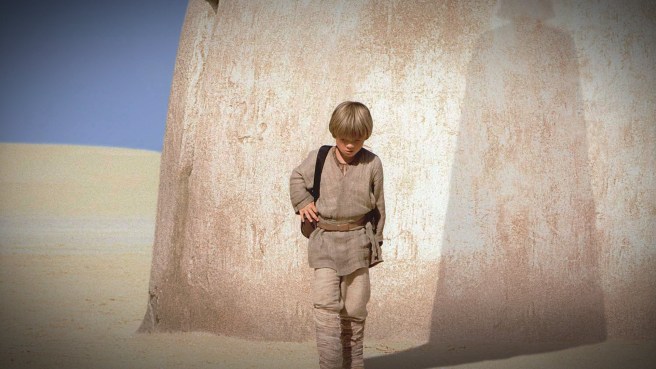
revenge-of-the-sith

The film opens with Obi-Wan Kenobi and his apprentice Anakin Skywalker on a rescue mission to save Chancellor Sheev Palpatine from General Grievous and Count Dooku.  From there, a maturing Anakin learns that his secret wife, Padme Amidala is pregnant with his child.  Chancellor Palpatine begins to take Anakin under his wing and slowly but surely poison the young Jedi’s mind into giving in to the Dark Side, leading him on the path to becoming Darth Vader.

I will come right out with it: Fourteen-year old me loved this movie when it came out.  I saw it twice in theaters and it was the first time I had experienced the “good-guy-turning-evil” narrative as a teenager.
I will be turning twenty-four in five days, so let’s see if this Star Wars prequel still holds up for me as an adult.

The Hits
The first fifteen minutes are filled with promise.  Gone are the taxation talks and expositional drawls.  This time, we open with the kind of action that you would expect from a Star Wars film.
Finally we get some banter between Anakin and Obi-Wan!  They actually have a rapport that you would want to see between two friends.
The moment when Padme tells Anakin that she is pregnant is well acted.  With few words, Hayden Christansen and Natalie Portman express excitement, fear, anxiety and joy with their facial expressions.  Also I will give Anakin extra brownie points for his line to Padme, “Our baby is a blessing.”
The plot of this film is way simpler than the storylines of Phantom Menace and Attack of the Clones.  I could actually follow what was being said, what was taking place, who was fighting who and so on.
Okay, okay, I know that I spent a good chunk of my Attack of the Clones review bashing Anakin.  However I think Hayden Christiansen gives a pretty good performance here…when he doesn’t open his mouth.  He is quite expressive and can convey so much with just a simple knit of his brow or tightening of his lips.  This is the pre-Darth Vader Anakin that I’ve been waiting for; a troubled young man conflicted by his growing disillusionment with the Jedi, tormented over the possible death of his pregnant wife, and vulnerable to Palpatine’s deception.  A Shakespearean villain like Darth Vader deserves an origin story of the same caliber.  Good bye, whiny lustful Anakin!  Hello, complex tortured soul Anakin!
Finally, finally, FINALLY we get an emotional Lightsaber duel between Anakin and Obi-Wan!  One of the biggest problems with these prequels is that the Lightsaber duels severely lacked the internal battle of the characters fighting.  Where the Lightsaber fights in Empire Strikes Back and Return of the Jedi were rich with depth and drama between Luke and his astray father, the battles in Phantom Menace and Attack of the Clones only had stylized choreography and obstacles, lacking the tension needed to make the audience emotionally invested.   In Revenge of the Sith’s climactic confrontation, you can hear Obi-Wan’s heart break with each swing of his Lightsaber while the surrounding lava and brimstone reflect the hatred and rage boiling within Anakin.

The Misses
Am I the only one who feels that Palpatine’s interest in Anakin is a bit too abrupt?  I kind of wish that the last two films had establish some kind of rapport between Anakin and Palpatine so that the friendship they form in this film would feel more natural.  It’s like he had little interest in Anakin in the last two movies and now that we’re at prequel #3, he’s suddenly taking Anakin under his guidance.
Okay, I’m really getting sick of this in movies: Other characters keep telling Anakin that he’s a great Jedi, but honestly he hasn’t done anything different from any other Jedi.  His fighting skills aren’t different, he can do the same things that his fellow Jedi do; other than his exponential midichlorian count (even now, that sounds so stupid), what exactly is Anakin doing that makes him so special?  Just because you have other characters telling me over and over that such-n-such is the best thing since sliced bread doesn’t make said character a special snowflake.

Guys and gals, it took two shizzy prequels to get here, but we finally have ourselves a satisfying conclusion to the Star Wars prequel trilogy.  Given that I love the Darth Vader character, I was quite pleased to see justice done with Anakin’s tragic tale.

Merry Christmas and Saint Ignatius of Loyala, pray for us.

CGB Review of Star Wars Episode I: The Phantom Menace (1999)

Yes, we are going there.  Just as I reviewed the original trilogy, I will also travel to the Dark Side of the saga:
The Prequel Trilogy.

This is my review of Star Wars Episode I: The Phantom Menace!

star-wars-episode-i-the-phantom-menace-original

Okay, so given that halfway through the movie, I found myself having no idea what the heck was going on, I will summarize it the best I can.
Young Obi-Wan Kenobi and his master Qui-Gon Jinn are on a trade negotiation mission because–potatoes–and things don’t go so well, so they have to rescue the teenage Queen Amidala and hide her on the remote planet of Tatooine, where they encounter a boy named Anakin Skywalker.  Through a blood test, Qui-Gon discovers that Anakin’s (irritable sigh) midichlorian count is higher than even Master Yoda’s and so begins the origins of the boy who would go on to become the most iconic villain in cinematic history, Darth Vader.

I cannot believe that this crummy movie is a part of the Star Wars universe.  Sure, the original trilogy had hocky special effects and some okay dialogue, but it also had a good story, likable characters and, of course, an engaging internal conflict between Luke Skywalker and his evil father Darth Vader that is so rich in development and complexity that I could do a whole CGB editorial on those two guys alone.
What does Phantom Menace have in comparison?
Well, let’s just get on to the review.

The Very Few Hits
Fine, I’ll say it.  The Podracing scene is fine.  It does very little to move the narrative, but hey; something is happening.  Yes, the duel of the fates sequence is also fun to watch.  It’s devoid of emotion and significance, but again, at least something is going on and it’s not bogged down by expositional speeches and trade negotiations.
To be fair, I did sort of like the friendship between Anakin and Padme.  I can see where George Lucas was going with that and Natalie Portman does the best that she can.

The Plethora of Misses
In my reviews for Empire Strikes Back and Return of the Jedi, I had so much to say about the evolution of Luke and Darth Vader as father and son.  I could have gone on for hours about the peaks and valleys of their relationship.   Why?  Because both are well-written characters portrayed by capable actors.  Because the idea of having a protagonist offspring go up against their antagonist parent is interesting and full of depth.
In contrast, I have absolutely nothing to say about any of the characters in Phantom Menace.  Character evolution is traded for expositional speeches.  The people talking are just pawns with the sole purpose of explaining to plot.  The only relationship I kind of care about is the one between Qui-Gon and Obi-Wan.  I say “kind of” because they don’t spend enough time together.  They only have a handful of Jedi fights together and when they’re not fighting, they’re just spouting off exposition.  Yes, Liam Neeson and Ewan McGregor are enjoyable to watch, but even a great actor can’t make terrible dialogue compelling to listen to.
I did like the Duel of the Fates somewhat, but what kept it from being epic is that there’s nothing emotional about it.  In Empire Strikes Back, you could feel Luke’s anxiety as he fights Vader for the first time.  You could sense the conflict within Vader as he dukes it out with Luke all while trying to keep his son alive.  Once the big reveal comes, it puts Vader in a new light as a man consumed by darkness and can only be saved by his son’s goodness.  I adore Return of the Jedi because the philosophical and spiritual conflict between Luke and Darth Vader comes to a boiling point.  It becomes a battle for the souls of both characters.
In the duel of the fates, there’s no emotional depth to be found.  Even when Darth Maul kills Qui-Gon, it happens too quickly for me to care and there’s no enough time for Obi-Wan to convey the kind of hatred needed to get the audience invested.
Jar Jar…OH. MY. GOSH.  I’ve always known that Jar Jar is the most despised Star Wars character, but now I understand.  I see now why this alien squeak toy whose dialogue I can barely comprehend and who has the IQ of a stick of butter is loathed by the majority of Star Wars fans. Yet, as much as Jar Jar makes me want to stick a fork in my eye, I can’t place all of the blame on him because he is a victim of bad writing.  C-3PO was written to be annoying, but all three films in the original trilogy gave him a reason to be uptight and anxious about everything.  Also annoying characters are watchable when they have another character to play off of.  R2-D2 put C-3PO’s annoyance into perspective; R2-D2 was the straight man to C-3PO’s Debby Downer persona.  Jar Jar has no straight man to set him straight, so he is a screw-up character who never gets his comeuppance, making him unlikable at best and insufferable at worst.

Good Lord, Phantom Menace is difficult to sit through.  How this boring, not-engaging chore of a film has anything to do with the awesome Star Wars universe is mind-boggling to me.   Now if you’ll excuse me, I’m going to go suffer through Attack of the Clones.

Saint Catherine of Alexandria, pray for us.

CGB Review of Star Wars Episode VI: Return of the Jedi (1983)

Now we get to the film that had to live up to the awesomeness of Empire Strikes Back.

This is my review of Star Wars Episode VI: Return of the Jedi!

FatherAndSon

The Galactic Empire has begun constructing on a second Death Star, one that will be more powerful and deadlier than the first one.  Upon completion, this second Death Star will crush the rebel alliance once and for all.
After learning that the most evil man in the galaxy is his father, Luke Skywalker has returned to his home planet Tatooine to rescue his friend (and coolest character ever) Han Solo from crime lord Jabba the Hutt and he has Leia, Lando, C-3PO and R2-D2 helping him along the way. All the while Luke must find a way to save his father’s soul and bring him back from the Dark Side.

Before I begin, I would like to thank you, the reader, for your patience.  My day job has kept me busy, which is why it is taking a while for me to review these movies.

The Hits
Okay, I just love that the first character we start off the movie with is Darth Vader.  I will always get shivers down my spine every time I see him walk down a hallway or off of a ramp.   Interestingly, the revelation that he is Luke’s father makes me see him in a new light.  The fact that this sinister character was once capable of loving another human being (Padme Amidala) and creating new life with her is quite chilling.
Hey fellow Star Wars fans, I ask you: When Luke is trying to bargain with Jabba, have you ever noticed how he is wearing a black hood and cloak, as well as saying things that you would normally hear Darth Vader say?  For me, this is both disturbing and brilliant.  It shows how similar Luke and Darth Vader are without ever compromising Luke’s character arch.
Speaking of Luke and Darth Vader, the best and most complex scenes in this film are the ones with those two.  Luke confronting Darth Vader on the bridge is by far the most depressing scene in any film.  I say depressing because it’s clear that Darth Vader is too far gone, yet it is admirable to see Luke give it everything he’s got to try to bring his father back to the light.  My heart sank when Darth Vader said, “It’s too late for me, son.”  I can tell you that from experience, I know that when someone says that, it truly is too late.
I absolutely love the internal conflict that plays when Luke is watching the rebel ships being ambushed.  How Palpatine taunts him, tempts him [Luke] to strike him with his Lightsaber; what I adore is how Palpatine urges him to kill him out of anger and hatred, not for the sake of righteousness.  I love how Luke’s innate goodness shields him from the lure of the Dark Side.   The internal conflict ignites once Darth Vader discovers that Luke has a twin sister, forcing Luke to fight his father to protect those he cares for.  Yes, I did cry when Luke took off Darth Vader’s mask and the father got to get a good look at his son for the first and last time.

The Misses
Please tell me I’m not the only person who finds Jabba’s Max Rebo Band annoying as all heck.  I have no issue with taking time to establish a sense of place, but the look into Jabba’s lair goes on for too long.
Okay, can we talk about Emperor Sheev Palpatine’s plan?   Him trying to turn Luke over to the Dark Side is not my issue.  This is my issue: Long-term wise, does Palpatine plan on replacing his apprentices over and over until the end of time?  So he wants to make Luke his new servant by having him turn to the Dark Side and kill off his current apprentice Vader, but then how does he plan on acquiring new apprentices?  Let’s assume for a minute that Luke were to turn over to the Dark Side and kill his own father like Palpatine wanted.  I assume that Palpatine wouldn’t allow Luke to have children of his own, so would Luke just be his apprentice or would Palpatine readily replace him?  Also if Luke is the last Jedi, how would he have gotten his own apprentice if said apprentice would have to be a Jedi?
I guess in hindsight, these questions are pointless given that Luke resisted the Dark Side and now Palpatine is dead, but I wouldn’t be a movie reviewer if I didn’t raise these kinds of questions.

Going into this third film, I thought Empire Strikes Back was my favorite Star Wars movie.  However, after watching it, Return of the Jedi is my favorite film in the original Star Wars trilogy.  The emotional struggle between Luke and Darth Vader is mesmerizing to watch, the supporting characters are lovable and memorable as always, and Mark Hamill’s evolving performance brings Luke Skywalker’s character full circle.

Saint John the Baptist, pray for us.

BONUS FEATURE!
Enjoy this animation from How It Should Have Ended!

CGB Review of Pixels (2015)

I now understand why so many people hate this movie.

This is my review of Pixels!

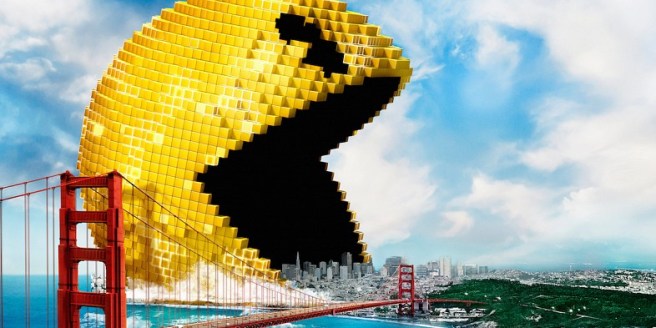
Pixels-Movie-Pac-Man

In Pixels, Sam Brenner (Adam Sandler) is a former video game champion turned home-theater installer who gets involved in a war between planet Earth and aliens who have misinterpreted video feeds of classic arcade games as a declaration of war.
I remember the wave of scatching reviews that came out after the movie opened.  If you go on Rotten Tomatoes and type in “Pixels,” you will see its 17% score and a plethora of negative reviews.
So is it really 17% awful?  Well, yes and no.  I say this because Pixels is the boring kind of bad.
At least with Aloha, Pan and Fant4stic Four, I had a plethora of grievances to rant about.  Those movies made me mad and were painful to sit through, but they were never boring.

The biggest problem with this film is that the main characters should have been children.  Take out the military and Kevin James being President of the United States (yes, that is a thing that happens) and just have four twelve-year olds instead of forty-somethings going up against pixelated antagonists.   Sure, it would feel like “The Goonies” crossed with “Super Mario Brothers,” but I have a feeling that it would be a far better movie than this.
However, if the script demands that the main characters be adults, then they should have been YouTube Let’s-Players or, at the very least, professional video game players.  It shouldn’t be too hard to create characters based off of real life Let’s-Players like Markiplier and PewDiePie.  This would make the characters feel more modern and less insulting to gamers. Instead Adam Sandler, Kevin James, Josh Gad and Peter Dinklage are all annoying nerd stereotypes of what people think gamers are.
The reason Pixels is boring is because the “comedy” is stale.  With the exception of one or two jokes that got me to chuckle, the majority of the comedy is misplaced.  Look, Mr. Sandler, having a nine-year old boy casually talk about how his father cheated on his mother with a nineteen-year old yoga instructer and has since left the family is not funny.  If Pixels was written as a dark comedy, then I could see the humor, but this is a bouncy, slapstick adventure, so jokes about serious subjects aren’t going to work.

Between this and “The Cobbler,” I think I’ve figured out why current Adam Sandler movies don’t work.  It is because all of his movies are concepts, not fleshed-out stories.  When you are planning out a story, your concept is the basic premise; “Pixelated characters attack the world,” “Boy goes to magical school,” “Monkey washes a cat,” and so on.  The job of a writer is to take said concept and turn it into a cohesive story with a beginning, middle and end.  If you have a concept and just roll with it without figuring out how it flows as a story, then you’re going to end up with Pixels: A sad and boring flick riddled with tired clichés and stereotypes.

CGB Review of Star Wars Episode IV: A New Hope (1977) (With Special Appearance by Leia the dog)

Welcome to Part I of the Catholic Girl Bloggin’ Star-Wars-a-thon!

This is my review of Star Wars: A New Hope!

r3nfhxfxyhgecb1pmhu6

A civil war between the Galactic Empire and the Rebel Alliance has put the galaxy in turmoil.  Princess Leia Organa, one of the leaders of the rebellion, has been taken captive by Darth Vader.  A series of coincidences bring together a Tatooine resident named Luke Skywalker, two droids named R2-D2 and C-3PO, a wise Jedi named Obi-Wan Kenobi and Han Solo, captain of the Millennium Falcon, as well as his companion Chewbacca “Chewy.”  This group of odd souls must rescue Princess Leia and help the Rebel Alliance destroy the Galactic Empire’s secret weapon, the Death Star.

The Star Wars saga has been a part of my family since I was a kid.  We have the Star Wars DVD collection on Blue-Ray (yes, this includes the prequels).  My brother and future sister-in-law even named their dog Leia and they brought her home on May 4th (May the 4th be with you)!

IMG_1202
My “fur-niece” Leia Amidala!  🙂

However, this is my first time watching Star Wars as an adult.  So after watching the movie that started it all, let’s see how this cinematic game-changer holds up after all these years.

The Hits
I now see why Han Solo is such a popular character.  The guy is just so freaking cool!  Harrison Ford steals the show as the suave, confident pilot with a ton of heart.  His rapport with Chewbacca is charming and entertaining.  I love how he goes from stubborn smuggler to protective friend in a natural way without the use of cliched lines or plot contrivances. I adore the relationship between the nagging but well-meaning C-3PO and the little rascal R2-D2.  I like their parent-child camaraderie.  As for Leia, I like her spunk and resolve.  She is a capable, strong-minded leader and I’m glad my “niece” bears her name.
I will admit, when we first meet Luke Skywalker on Tatooine, I had to text my brother and ask him about Luke’s age.  Luke starts off with a few whiny lines of dialogue that made me question how old he is supposed to be.  Luckily the movie makes him believably naive, yet good-hearted and only uses the few whiny lines he has to establish his youth.  From then on, we see Luke mature into the role he was born to play: warrior and hero.  By the way, when I asked about Luke’s age, my brother answered back, “19-21.” Personally I think that Episode IV Luke is 19, which is a realistic age to have your main character be if you want him/her to be going on perilous death-defying adventure.
I love that the plot gets going right away.  Within the first five minutes, we’re already in the Death Star, watching Leia confront Darth Vader.  I prefer the storytelling method of getting the main conflict started right off the bat and then develop the characters throughout the story. It seems that nowadays, the storylines of American films either explain too much (Ex. Jupiter Ascending) or explain too little (Ex. Tomorrowland).  A New Hope has the right balance of showing us the exposition instead of having characters spout off expositional speeches.
Yes, Darth Vader is intimidating in every way, shape and form.  James Earl Jones’ authoritative voice demands your attention while his mask makes him more monster than man.  Faceless villains are always frightening because if you can’t look into the eyes of evil, you have no idea if you’re dealing with a rational human or a terrifying creature.

The Misses
Okay, maybe my fellow Star Wars mega-fans can answer this for me: Exactly what is Darth Vader’s role in Episode IV?  I know that in Empire Strikes Back, he’s commander of the bad guys, but that’s not the case in New Hope.  This movie has other people ordering him around while at the same time, everyone is afraid of him.  If I didn’t know anything about the other films, I would be confused as to what Darth Vader’s role is.

I can see why Star Wars: A New Hope was a groundbreaking game changer for American cinema.  It is a fun, exciting space opera with fully-realized characters, an engaging story and a plethora of lore and imagination.
I love the world-building, the loyal fanbase that this franchise has, and I want to see more of these characters and ideas as I continue on with the saga.


Saint Luke the Apostle, pray for us.

CGB Double-Feature Review of The Hunger Games: Mockingjay Parts 1 & 2

The series may be over, but the fire it started will burn forever.

This is my review of The Hunger Games: Mockingjay Parts 1 & 2!

The_Hunger_Games__Mockingjay___Part_1_Ne_2024760000_8113213_ver1.0_640_480

The Hunger Games: Mockingjay is the third/fourth and final chapter in the Hunger Games film series.  This is where Katniss must cope with the trauma of the Games while being the reluctant symbol of the uprising against President Snow and the Capitol.  In Part 1, Katniss is psychologically tormented by Peeta Mellark’s imprisonment at the Capitol.

Yes, this is a first-ever double feature movie review here on Catholic Girl Bloggin’!  I will have to say good-bye to this film series that I fell in love with just three years ago.

Let us begin.

Part 1 Hits
Jennifer Lawrence is amazing as usual.  Her performance tells me that to her, Katniss isn’t just another character she’s being paid to portray; Katniss is a person she respects and understands. This movie allows Katniss to fall apart and descend into her trauma, and Jennifer Lawrence knew how to deliver some powerful acting without getting too carried away (i.e. overacting). I cried three times during this movie, and two of those times were because of Jennifer Lawrence’s facial expressions and inflections. When an actor can make me feel distressed over the fate of fictional characters, that’s the sign of a strong performer.
This movie really knows how to sum up its supporting characters in a few scenes or less. Effie Trinket’s first scene in the movie is the best summary of her character that I’ve seen since the last two films. Haymitch’s entrance into the plot is downright awesome. I will say that I was wrong about Julianne Moore being miscast as President Alma Coin. Nope, she was the right choice. She manages to be semi-warm and welcoming, while carrying an iciness that Katniss can sense from a mile away.
If you’re a fan of House of Cards or any genre involving political intrigue, then you’re gonna like this movie. President Snow has made my Favorite Villains List. I would put him at #3 of that list. He is one evil son of a gun. The villain who can hurt you without being in the room is a dangerous person. I thought it was smart for both District 13 and the Capitol to use propaganda as their weapon of choice.

Part 2 Hits
Jennifer Lawrence always has been and forever will be Katniss Everdeen. She brings Katniss’ character arch full circle with a locked-down, quiet performance.  Along with being stunningly beautiful, Jennifer Lawrence brings a sense of vulnerability to her gravitas as she effortlessly brings Katniss to life one last time.
The heart of the franchise is Katniss and Peeta’s relationship.  I love the chaste and tender nature of their bond.  Their ordeal in the first Games and in the Quarter Quell have bound them to each other.  Jennifer Lawrence and Josh Hutcherson both sell Katniss and Peeta’s care for one another with the believable depth of their performances.
While the pacing can be punishing for moviegoers who prefer stories that move faster, once the action starts, it will take your breath away.  The traps that Katniss and her crew have to go through are everything that you would expect from the extravagant, excessive Capitol.  There’s one great, nail-biting sequence that takes place in the sewers.  If you’re a fan of the horror genre, you’re going to love this scene.  Though if you suffer from clausterphobia as I do, then you might want to shut your eyes when Katniss and company first walk through the very narrow tunnel which has the ceiling really close to their scalps.  It only takes them two minutes to walk through the tunnel, but clausterphobia-sufferers might feel a tad uncomfortable.
President Snow…good Lord, this guy is diabolical.  Donald Sutherland is having the time of his life playing Snow.  I have enjoyed watching his rivarly with Katniss over the course of the series and I do hope that Mr. Sutherland continues to play villains from here on out.

The Misses with Parts 1 & 2 
Everything wrong with Mockingjay has to do with the fact that it was split into two parts.  The actual book Mockingjay is only 390 pages and is in fact one page shorter than Catching Fire, which is 391 pages.  Because of this, both film do suffer from filler-riddled scenes.  If you’re not a fan of films that take their time, both films might test your patience.
It seems as though the weaknesses of the Hunger Games franchise remain unimproved.  Prim still lacks presence outside of being a plot device, Gale is not fleshed out very well and the two-part split means sitting through some filler.

All that being said, let the record show that I feel Mockingjay Parts 1 & 2 are actually better than the book itself.  The filmmakers knew they had a huge challenge facing them in making a dialogue-heavy book with minimal action and making it cinematic.  I feel that director Francis Lawrence and everyone else involved stepped up to the plate and brought to us a truly satisfying conclusion to an influential series.

This brings us to the end of the CGB Hunger Games Extravaganza.  I have thoroughly enjoyed reminiscing and reviewing my favorite film series for you guys and gals.
Happy Hunger Games and may the odds be ever in your favor always.


Saint Catherine of Siena, pray for us.

CGB Review/Explanation of The Theory of Everything (2014)

Is it possible for a movie to be so gut-wrenchingly beautiful that it breaks you in the best possible way?

This is my review of The Theory of Everything!

The-Theory-Of-Everything-Images

The Theory of Everything is based on the memoir, Travelling to Infinity: My Life with Stephen by Jane Wilde Hawking.  In the 1960’s Stephen Hawking and Jane Wilde meet at Cambridge during a party.  They begin an intellect-centered friendship that blossoms into a romance.  However all seems lost when Stephen learns he has a motor-neuron disease (ALS/Lou Gehrig’s disease) at the age of 21.  In spite of this, Jane makes the decision to confess her love for him and becomes his wife, vowing to be his staunchest ally in the fight against his disease.

After watching the film, I have come to the conclusion that I cannot use my usual “Hits and Misses” system.  This is the first film I have seen that needs to be reviewed on an entirely different standard.   The reason for this is everything right with the film is objective and everything wrong with the film is subjective, a matter of personal taste.

The Objective Good
Good Lord, the lighting and cinematography is exceptional!  The opening shot of the film is a soft gold color pallate, while the night scenes are a lovely shade of turquoise.  There’s a great scene where Stephen is sitting alone, watching TV and the red color pallate expresses his inner turmoil over the diagnosis.
Eddie Redmayne won the Oscar for playing Stephen Hawking and frankly, he earned it.  His extraordinary physical performance is heartbreaking, while his vulnerablity and willingness to have other actors carry his body had me sobbing. Eddie Redmayne becomes Stephen, a lover of the sciences.  Fluent in physics and mathematical theory, he pursues an understanding of the structure of the universe with every fiber of his being.
Not only does Felicity Jones have the same gentle beauty as Lily James in Cinderella, but she is also as empathetic as Keira Knightly in The Imitation Game. In the Hawking marriage, Stephen is the head and Jane is the heart.  Felicity Jones brings Jane to life as an angelic flower with an iron will.  She knows what is at stake, but honors her vows by refusing to abandon her ailing husband for her own personal comfort.
If you love the piano and classical music in general, you will want to buy the soundtrack immediately.  The musical score here is just as great as The Imitation Game soundtrack.  It has an epic vibe, illustrating the marriage of Stephen and Jane as a daring, intellectual adventure.
In fact, if you are a fan of The Imitation Game, you might enjoy this movie, as well. The script is very intimate with Stephen and Jane, giving the impression that the director knows these two people personally and wants you to know and love them as much as he does.
I am going to go out on a limb here and recommend this movie to newlyweds and long-time married couples.  The Theory of Everything is the best portrayal of marriage I have ever seen.  It neither advocates nor argues against marriage; it only demonstrates the trials and triumphs that marriage entails in an honest, humanistic way.

The Subjective Bad
If you have endured the trauma of watching a family member decline, this movie will be a very difficult experience.  The deterioration of Stephen’s body is agonizing.  I had to take quite a few walking breaks.
One scene in particular shows Stephen trying to get up a flight of stairs while his toddler son Robert watches.  I don’t want to talk about it for too long, otherwise I’ll start crying again.  This scene is that painful.
Oddly enough, as the movie nears the third act, I found myself becoming desensitized to Stephen’s collapsing body until he gets pneumonia and ends up needing an operation that will make him unable to speak ever again.   My heart was broken in two all over again.
All that being said, to tell you not to watch this movie would be a disservice. Instead, I will advise that you exercise good judgment.  Know your limits in terms of what you can handle to see on screen and go from there.

Guys and gals, The Theory of Everything broke me in the most beautiful way.  I love it and I hate it all at the same time.  With inspired performances, wonderful music and an excellent script, The Theory of Everything is a tragically victorious story of how love really can overcome all obstacles.  This is an exceptional film that I never want to see again, but am sure glad that I gave it a shot.

Saint Jude, pray for us.