CGB Review of Black Mass (As Originally Published on The Catholic Response) http://www.thecatholicresponse.us/tcr-review-black-mass/

The second greatest trick the Devil has ever pulled is appearing in broad daylight to a world that is too desensitized to notice.

This is my review of Black Mass, as originally published on The Catholic Response (TCR).  http://www.thecatholicresponse.us/tcr-review-black-mass/
black-mass-johnny-depp

Based on the 2001 book titled, Black Mass: Whitey Bulger, the FBI and a Devil’s Deal co-written by Dick Lehr and Gerard O’Neill, Black Mass is the true story of notorious Boston mobster Jimmy “Whitey” Bulger, the leader of the Irish-American Winter Hill Gang who goes from small town hoodlum to full-on kingpin; he’s like the Godfather of Boston.  In the 1970’s, Bulger formed an alliance with the FBI through his childhood friend/agent, John Connelly.  The purpose was to have Bulger be an informant and help the FBI nab the main Italian-American gang, the Angiulo Brothers, who had Mafia ties.  This allowed Bulger and the Winter Hill Gang to run amok and do what they pleased behind the FBI’s back. 

The Hits

If you want to see some superb acting, you’re going to enjoy this film.  All of the actors are at the top of their game.

Joel Egerton was a pleasant surprise as the scumbag John Connelly.  His descent into moral ambiguity and selfishness was illustrated perfectly by Egerton’s thoughtful performance.  His unwillingness to see Whitey Bulger’s clear-as-day deception is a perfect example of William Wilberforce’s poignant words, “You may choose to look the other way, but you can never say again that you did not know.”

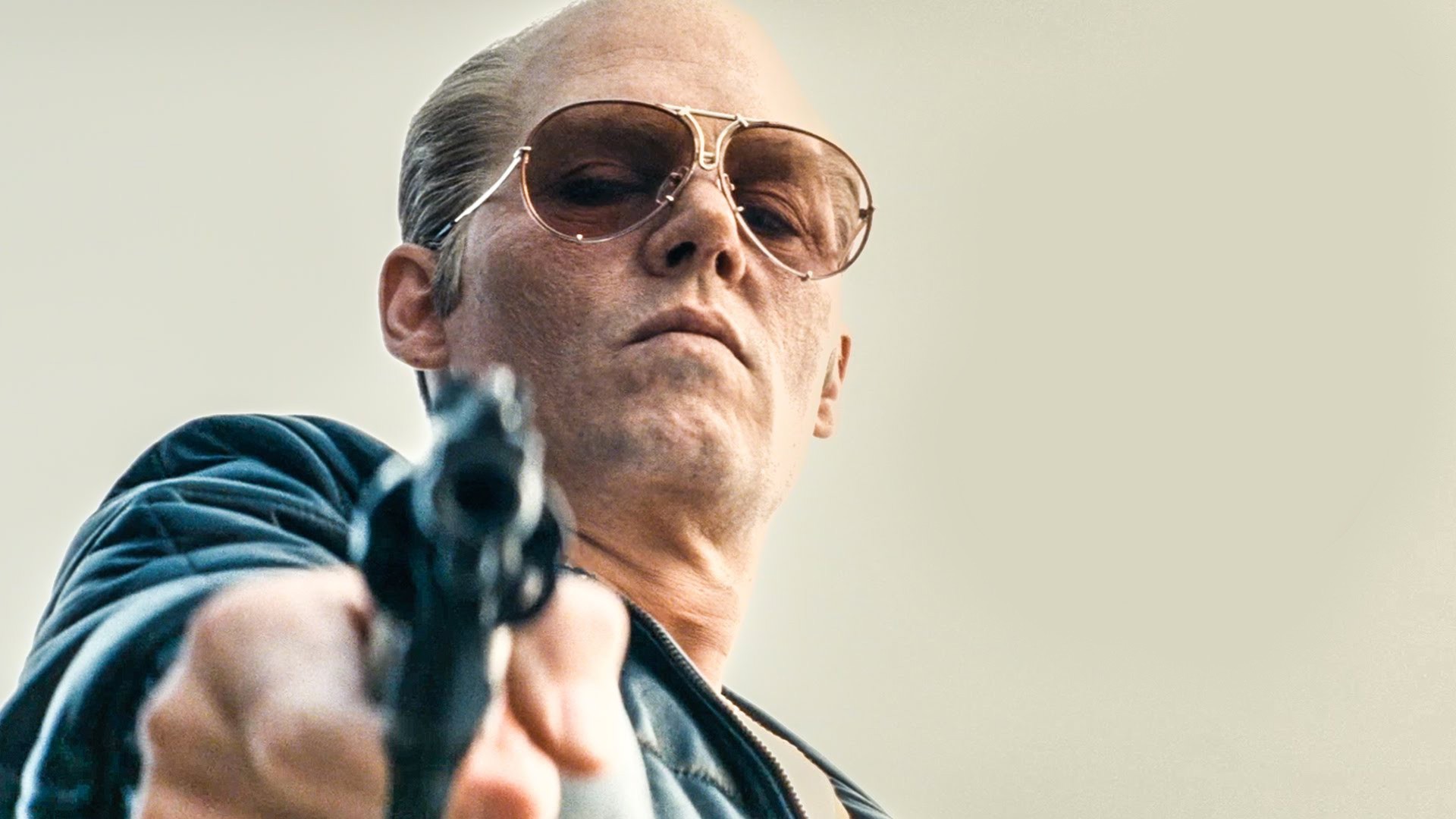
I owe Johnny Depp a thousand apologies for discounting him.  I had lost hope after seeing him play too many cartoonish characters.  Johnny, you need to be picking roles like these more often.  He is unrecognizable as Jimmy Bulger.   The choice to give him charcoal gray eyes and stiff, thin hair gives him a menacing presence throughout.  Jimmy “Whitey” Bulger is the Devil incarnate, the Prince of Darkness walking in flesh.   What makes him frightening is how he is both very human and demonic at the same time.  He’s not a mentally-unstable lunatic who is incapable of empathy.  He is capable of making the choice to love another person, such as the mother of his only child and his brother.  He is capable of caring for others and being loyal to them.  Living honorably is not out of his reach.  He could turn his life around and do what is right if he wanted to.  So why doesn’t he?  Because he lives by his own code.   The personal boundaries of others mean nothing to him.  The world is his stage and everyone in his life is an uneasy audience member who must comply.  He makes rules that are pleasing to him and if you don’t go along with his self-serving sanctions, you are dead.   He tells his son, “It’s not what you do, it’s when and where you do it, and who you do it to or with.  If nobody sees it, it didn’t happen.”  Remember this quote, because I’m going to talk about it later.

I happen to be a huge fan of The Imitation Game starring Benedict Cumberbatch.   When we are first introduced to Billy Bulger, I was very happy to see that the actor playing Senator Bulger is Benedict Cumberbatch.  Like in the Imitation Game, Cumberbatch delivers a great performance.  Then again, it’s Benedict Cumberbatch; you could cast him as a pizza guy and he would still steal the show.

The music is amazing.  It’s a dark, sweeping score that settles into your ears and chills you to the bone.  The cinematography is gives the movie a sense of place.  You really feel like you’re treading the damp streets of Boston, looking over your shoulder for the shadow of Whitey Bulger.  There are so many memorable scenes with powerful performances that I wish I could do a scene-by-scene analysis of the film.  For now, I’ll just say that I’m still thinking about a lot of the scenes long after I’ve seen the movie.

The Misses

Joel Egerton’s character John Connelly never tires of reminding we, the audience, that he’s a “Southie,” that he grew up with Jimmy and Billy Bulger and their loyalty knows no bounds.   Repetition gets annoying and can hinder the cinematic experience.

This movie is trying to be both a gangster movie and a character study of Jimmy “Whitey” Bulger, but places more emphasis on the gangster crime drama element than the character study.  American Sniper and The Imitation Game succeeded in delving into the psychology of Chris Kyle and Alan Turing, but Black Mass shows us that Whitey Bulger is the Devil on earth without getting inside his head.  I know that he plays by his own rules, but I don’t know what led him to be that way.   I know that he has an unquenchable thirst for violence, but I don’t know what motivates his bloodlust.  Then again, it could be like the Screwtape Letters, where trying to get into the anti-hero’s head is basically giving Satan himself an invitation into your brain.

The Catholic Response

This movie is the greatest portrayal of Satan that I have ever seen.  The entire movie reminded me of 1 Peter 5:8,“Be sober and vigilant.  Your opponent the devil is prowling around like a roaring lion looking for someone to devour.”  One of Whitey Bulger’s tactics is luring his victims to a calm, quiet location, making them feel that they are safe with him before he violently strangles them to death.  If one of his associates crosses him, he will accept their apologies and trick them into thinking they have been forgiven.  That is when Bulger will put a bullet through said person’s head.  Like Amy Elliot Dunne in last year’s Gone Girl, once Bulger knows you, your life is his to ruin.  As Christians, we acknowledge that this is how Satan operates; he seeks to command our lives by enticing us into a false sense of security the way a spider wraps its meal into a warm webbed cocoon so that it rests peacefully while being eaten alive.
Another similarity between Whitey Bulger and Satan is how they use their words to justify their actions.  Throughout the film, Bulger uses careful wording to make his actions seem like they are intended for a greater good.   Even in the third act, he tells someone, “You’re going to hear a lot of stuff about me—that I killed people and did a bunch of stuff—that’s not true.  You know me.”   He agrees to help the FBI nab the Italian mob, making himself seem like an agent of good when in reality he is continuing to build his own evil empire behind their backs.  John 8:44 speaks of Satan in this way: “He was a murderer from the beginning and does not stand in truth, because there is no truth in him.  When he tells a lie, he speaks in character, because he is a liar and the father of lies.”  Hmm, a murderer from the beginning…looks like Satan and Bulger have plenty in common.  Remember that line that Bulger says to his only child, “It’s not what you do, it’s when and where you do it, and who you do it to or with.  If nobody sees it, it didn’t happen”?   He is basically saying that the morality of an act, whether it is inherently good and evil, is dependent on the circumstances surrounding the act in question; this is one of Satan’s favorite lies.  Also notice how Bulger is telling this to an impressionable child; Satan also targets the young and naive.  He tempted Eve when she was young and vulnerable.  He attacked Saint Padre Pio ever since he was five-years old.  The youthful Saint Gemma Galgani awoke to Satan’s hands on her bed.  Satan starts his temptations early and will not relent, especially when it comes to targeting God’s most faithful servants.
During my second viewing of the film, I noticed something that I hadn’t picked up on; There are three times where Bulger is seen standing near an image of Jesus, and one time where he is close to a statue of Our Lady of Fatima.   When he is near the Fatima statue, he is turned away from it and standing in the darkened area of a hallway while Our Lady is facing the light.  Meanwhile, in the three times where he is standing by a picture of Jesus, his back is always turned away from Him.  The one time that he does say Jesus’ name, it is hissed through his teeth in a moment of anger.
Our Faith assures us that Satan despises Our Blessed Mother more than anything, and that he flees at the very mention of Jesus’ name.

It’s been said that the greatest trick the Devil ever pulled was convincing the world that he doesn’t exist.  However, I think the second greatest trick the Devil has pulled off is appearing in broad daylight to a world that is too desensitized to recognize him.  Today’s secular audience will probably never see Whitey Bulger as a type of the Prince of Darkness in the flesh, and if that’s not a sign of the times… I don’t know what is.

That being said, I think that it would serve a lot of practicing Christians well to see Black Mass.  If there’s any movie that shows the darkness that we are up against it, it’s this one.  Johnny Depp’s menacing performance makes Jimmy “Whitey” Bulger more monster than man and depicts the true nature of Satan’s power.  Seeing the enemy is the first step in knowing how to fight back.

Saint Padre Pio of Pietrelcina and Saint Monica of Hippo, pray for us.

CGB Review of Maze Runner: The Scorch Trials

This movie made me hate flashlights.  Why?  Because three times, the characters are in chase sequences that involve them running through dark rooms while swinging around their flashlights with reckless abandon.

This is my review of Maze Runner: The Scorch Trials!

scorchtrials-7

Maze Runner: The Scorch Trials is the sequel to last year’s The Maze Runner.  In this installment, Thomas and his friends, Newt, Minho, Teresa, Frypan, and Winston have survived living in a large maze while fending off, for lack of a better term, mechanicle beetles called Grievers.  Now they have escaped the maze and are staying in a facility run by Mr. Janson.  They are hiding from the organization WCKD (pronounced as “Wicked” like the Broadway play), but when Thomas and company discover that Janson and his cohorts have, well, wicked intentions in store, they flee the facility and travel across a scorched wasteland that was once the U.S of A.

The Hits
Everything good about the movie is in the first act.  The conflict is well-established and the chase sequence is action-packed and perfectly paced.  The facility develops its own character as a cold, unsettling sanctuary with hidden secrets abound.
Dylan O’Brien plays Thomas and makes the character a vast improvement from the first film, as well as the book.  He doesn’t have a complex arch, but he is curious, fast-thinking, and as someone who is prone to anxiety attacks, I can tell that Thomas may suffer from high anxiety.  O’Brien does what he can with the chracter he’s working with, and for the most part, he does a passable job.
I’ve always wanted to see characters actually walk into destroyed post-apolcalyptic skyscrapers and in this movie, they do!  There’s one pretty cool sequence in the second act where Thomas and Brenda (Rosa Salazar) have to outrun the infected CGI zombie people in a collapsed skyscraper.
Honestly, if this was a short film on YouTube, it would be amazing.  Just use the entire first act and then use the skyscraper fight as the climax, and you’ve got yourself a YouTube short film that gets a bajillion views.

The Misses
This movie gets really repetitive really fast.  In my intro, I mentioned how this movie made me hate flashlights.  There are far too many scenes of characters running in dark places while wildly swinging their flashlights.  A lot of scenes play out the exact same way: Thomas and the gang go to some rusty place, they turn the lights and CGI zombie brouhaha chase after them.  Rinse and repeat.  Even the Hunger Games have variety in their scene set-ups!
This movie has a major development problem, as in nothing gets a chance to develop.  The movie attempts character development with Thomas, but because the script is so hellbent on keeping the story as mysterious as possible, very little is revealed about him or the circumstances surrounding him and his friends.  The wasteland, aka the scorch, has no sense of place; it’s just a lot of sand and heat that never feels threatening.  Actually, now that I think about it, they don’t spend a whole lot of time outside in the scorch until the third act.  They just run across it from one broken-down building to the next.
I’m getting real sick and tired of the “good kids and shady adults” arch that contaminate these young adult movie adaptations, and this movie definitely falls into the trap.  I’m all for the “kid trusts adults, but then sees their imperfections” narrative, but when EVERY. SINGLE. ADULT character is a Bond-villain wannabe and there’s no strong adult mentor on the good side, it gets pretentious as all heck.
This movie was doing just fine when it was Thomas & company versus WCKD and even the resistance run by Jorge and Brenda was all right, but then comes this Right Arm group comes in and now you have WCKD, the Right Arm, the kids and all the while, I’m just so worn out from all the drama with underdeveloped characters who I really don’t care about that I’m just waiting for the credits to roll.

Overall, Maze Runner: The Scorch Trials slogs more than sprints.  The action will definitely keep your attention, but the forgettable characters makes rooting for anyone a challenge.

CGB Review of Guardians of the Galaxy (2014)

I know this seems like a random CGB post.  This movie isn’t in theaters anymore and I didn’t even announce that I’d be reviewing this movie on the CGB Facebook page.  However, there is an explanation as to why I’m reviewing this today.
On Friday, I wrote my first article for The Catholic Response.  It was an op-ed about Kim Davis, the Kentucky County Clerk who refused to issue marriage licenses to both homosexual and heterosexual couples.  When I posted the article on my personal FB page, it didn’t take long for a war to break out in the comments section between my conservative friends and my liberal friends.  Anywho, playing defense for two days wore me out, so I thought I’d do a more light-hearted post.

This is my review of Guardians of the Galaxy!

GotG1
Guardians of the Galaxy is the movie that had Marvel Studios bitting their nails. Based on an obscure series of comics, Guardians of the Galaxy tells the story of Peter Quill, aka Starlord, a fast-talking, brash space collector who ends up coming across three misfits; an alien named Gamora and two genetically engineered creatures, Rocket the racoon and his tree hybrid friend, Groot.  The four of them are taken into custody after a brief quarrel with one another and meet another outcast named Drax.  From there, this ragtag group must come together to save the world.

I’ve seen this movie four times and it wasn’t until my fourth viewing when I finally gave in to the film’s charms and embraced it as my favorite Marvel movie.  This is the ultimate popcorn flick!

The Hits
I have always had a soft spot for stories about a group of oddball people who have to set aside their differences and stick together.  The five leads are well-established and identifiable not just because of their unique designs, but also because of their personalities and backstories.  Peter/Starlord, Gamora, Drax, Rocket and Groot are all fleshed-out characters and never come across as cliched tropes.
I LOVE Rocket and Groot!  Rocket is hilarious with his sardonic humor and quips. Groot is just charming with his humility and classic line, “I am Groot.”  I appreciate how his one line never becomes annoying.  It’s made clear that he has a limited vocabulary through no fault of his own, so him saying “I am Groot” all the time is understandable.
Guardians of the Galaxy does what Fant4stic Four couldn’t achieve; it establishes Starlord, Gamora, Drax, Rocket and Groot as a family unit.  They bicker and argue without bailing on each other.  They disagree, but begrugingly come to necessary compromises.  There’s a dynamic within the group.  They have a rapport with one another.  What’s interesting is that the five characters start out using each other, but as a journey goes on, their selfish agendas are gradually replaced with sincere loyalty and a sense that sticking together is essential for their survival.  Actually, this movie depicts how everything falls apart when people come together for self-serving reasons, and that the greater good can be accomplished once those same people put aside personal gain.
C.S. Lewis once said, “How monotonously alike all the great tyrants and conquerors have been; how gloriously different are the saints.”  This movie is a great example of that.  The villains, Thanos, Ronan and Nebula have the same demeanor and are all self-centered.  Meanwhile, Starlord, Gamora, Drax, Rocket and Groot all have distinct personalities and different backstories, yet come together for the same cause.
Yes, I love the Guardians of the Galaxy soundtrack.  I’ve listen to “Hooked on a Feeling,” “Cherry Bomb” and “Come and Get Your Love” about a dozen times. Making Peter Quill/Starlord a lover of 80’s rock music was a brilliant way to incorporate the songs into the film.

The Misses
Why did it take four viewings for me to like Guardians of the Galaxy?  Well, for one, you almost have to watch it a second time because the plot gets convoluted, especially with its space talk and technobabble.  I found myself caring more about the characters than the actual conflict.  Despite all the emphasis placed on the Inifinity Stone thingamajig, the object itself doesn’t have much presence.  I kept forgetting that the Infinity Stone was even a thing unless characters brought it up via expositional dialogue.
Am I the only one getting sick of weak villains?  I understand that no one is born evil, but come on, screenwriters, step up your game when it comes to writing villains!  Mind you, the MCU (Marvel Cinematic Universe) is handled by the same people who gave us the entertaining, yet intimidating Loki (Thor’s brother).  Loki is the best comedic villain that I’ve seen in a while, so I know that Marvel Studios is capable of bringing great villains to the big screen.  As for Guardians, Ronan the Accuser is the reason why I didn’t care for the story’s conflict.  The script tries to make him a narrow-minded traditionalist, but that arch goes nowhere.  His rivalry with Thanos is partially realized.  Two villains who don’t like each other is an interesting concept, but the movie doesn’t execute it very well. Ronan himself is just not very interesting.  His design is passable and the actor portraying him is fine, but the character never frightened me.  How am I supposed to be concerned about the safety of the protagonist(s) if the villain isn’t an intimidating threat?
Finally, there is one thing I should mention.  The movie opens with a hospital scene in which young Peter Quill says good-bye to his dying mother.  This scene might be uncomfortable for those who have lost a family member (specifically a mother or grandmother) recently.  The scene is only a few minutes long, but I thought I’d give you all a heads-up.

Honestly, I love this movie because of the five titular Guardians.  Their evolution from selfish outcasts to a family unit that would go through Hell and back for each other is executed wonderfully.  Other than the heartwrenching opening scene, the majority of the movie is an exciting action comedy with heart and humor.

Saint Ignatius of Loyala, pray for us.

Is Kim Davis A Martyr? (Originally Published at The Catholic Response)– http://www.thecatholicresponse.us/is-kim-davis-a-martyr/

http://www.thecatholicresponse.us/is-kim-davis-a-martyr/

If you are like me and happen to have both liberal and conservative friends, you have heard heated—well, let’s call them— “discussions” about a woman in Kentucky named Kim Davis, the Rowan County Clerk who refused to issue marriage licenses to both gay and straight couples after the Supreme Court legalized same-sex marriage in all 50 states. Some call her a martyr. Others call her a fool.

I would like to argue that she is neither a martyr nor a fool.
She is simply wrong.

635767271720138593-AP-Gay-Marriage-Kentucky-KYT

It all began on June 29th, 2015, just three days after the Supreme Court ruled that same-sex marriage was legal in all 50 states. Kim Davis, the Clerk of Rowan County, denied David Moore and David Ermold, a same-sex couple, a marriage license. She also withheld licenses from three heterosexual couples. In August federal district Judge David Bunning ordered Davis to issue licenses to all who applied, whether they be gay or straight. However, Davis’ defiance continued as she repeatedly turned away marriage license applicants regardless of sexual orientation. As a result, she was found in contempt and was taken into custody.

Some would question why an elected official would defy the law.

I never imagined a day like this would come, where I would be asked to violate a central teaching of Scripture and of Jesus Himself regarding marriage. To issue a marriage license which conflicts with God’s definition of marriage, with my name affixed to the certificate, would violate my conscience. It is not a light issue for me. It is a Heaven or Hell decision. For me it is a decision of obedience. I have no animosity toward anyone and harbor no ill will. To me this has never been a gay or lesbian issue. It is about marriage and God’s Word. – Kim Davis

Not A Martyr

I happen to be an English major, which means I have a responsibility to be accurate in my use of various words. In politics, it is not uncommon for loaded words to be tossed around by both sides with reckless abandon. In Kim Davis’ case, some well-meaning conservative people have proposed the idea that she is a martyr for the cause of religious liberty. This makes me cringe because “martyr” is not a term that should be used lightly.
How does the Catechism of the Catholic Church define martyrdom?

Martyrdom is the supreme witness given to the truth of the faith: it means bearing witness even unto death. The martyr bears witness to Christ who died and rose, to whom he is united by charity. He bears witness to the truth of the faith and of Christian doctrine. He endures death through an act of fortitude. ‘Let me become the food of the beasts, through whom it will be given me to reach God.’ (2473)

Just for the sake of emphasis, I will place a secular definition, as provided by Random House Dictionary, “A person who chooses to suffer death rather than renounce his or her religion.”

Based on these two definitions, I can say with certainty that Kim Davis does not qualify as a martyr. While going to jail was undoubtedly an unpleasant experience, she was not incarcerated for being a Christian. No one in a position of authority has threatened her life. She has not been coerced to renounce her religion. As an individual citizen, she has a right to disagree with the law. As an elected official, she does not have the right to go against it.

Let’s take another look at her quote, “It is not a light issue for me. It is a Heaven or Hell decision. For me it is a decision of obedience.” Her issue is that by affixing her name to these certificates, she is condoning what clearly goes against Scripture. However, she was not only denying licenses to homosexual couples, but to heterosexual couples, as well, in defiance of the law.

In Matthew 22, Jesus warned against anarchy by urging the Pharisees, “Render unto Caesar that which belongs to Caesar, and to God what belongs to God.” We, as private citizens, can and should hold true to our beliefs and stand firmly upon Christian doctrine. However, as citizens of this great country, we all must follow the law of the land.

Not A Fool, Just Wrong

Going back to definitions, Random House defines a fool as, “A silly or stupid person.” Ms. Davis is neither silly nor stupid. Her statement above is articulate and purposeful. She seems to be fully aware of the consequences of her actions, and has the resolve to see it through to the end. One might argue that she has become a puppet whose strings are being pulled by those who seek to benefit from her conservative stance, but it is clear that she is a true believer.

All that being said, she is simply wrong.

When she became the County Clerk, an elected position, this is what she signed up for. Her duty is to serve whoever walks through her doors, regardless of her personal convictions. When confronted with what she believed was a moral dilemma, she had a choice. That choice was not to deny what has been legally afforded to same sex couples of her county by the Supreme Court and thereby break the law. That choice was to step down from her position.

As a Catholic, I hold firm to what both Sacred Scripture and Sacred Tradition say about the sanctity of marriage, a sacramental bond, instituted by God. As an American citizen, I believe that no one is above the law, whether we agree with it or not. After all, Jesus said, “Render unto Caesar,” or in our case, the Supreme Court. And at the end of all this, I’m not sure if we can say who ‘won’ and who ‘lost’. In the realm of public policy, there will be many casualties and Mrs. Davis might have been one of them; but we ought not consider her a martyr for her faith. When an age of martyrdom becomes a reality for America’s Christians… you’ll know.

The Belle of Peru: Saint Rose of Lima

I once read a book on Saints that described Saint Rose of Lima as being so beautiful that she would literally turn heads and have her fellow villagers staring at her as she walked into town.  If you’re a fan of Disney’s Beauty and the Beast, this description will probably remind you of the Little Town/Belle song: “there she goes again, that girl is so peculiar…”
Thanks to scientists from the University of Saint Martin de Porres and the Brazilian Anthropological and Dental Legal Forensics Team who reconstructed her face, it turns out that Rose was indeed a head-turning beauty.
http://www.catholicnewsagency.com/news/is-this-what-saint-rose-of-lima-looked-like-43764/

This is the story of Saint Rose of Lima!

Santa_Rosa_de_Lima_Ebrafol
The reconstructed face of Saint Rose of Lima.

What if I told you that her name wasn’t really Rose?  Actually, her real name was Isabel de Santa Maria de Flores…or Isabel de Flores for short.  She was one of Gaspar de Flores and Maria d’Olivia’s ten children.  She was named after her godmother, Isabel de Herrara, but she was such a beautiful baby that she was often called “Rose.”

If it feels like I’m beating you over the head with how beautiful she was, that is an intentional move because Rose herself was constantly reminded of her beauty. Her mother made a wreath of flowers that she placed on her daughter’s head.  She couldn’t take two steps without someone commenting on how lovely she was.
Rose was the kind of person who was uncomfortable with praise.  She was a humble soul, so vanity and superficiality did not sit well with her.  Another factor could be that she was being praised for the wrong reasons.  Her family gained popularity by having a gorgeous daughter and being the town eye-candy made her uneasy.

Rose was a working girl.  When her family fell on hard times economically, Rose pitched in by selling the laces and garments that she sewed.  She grew flowers and sold them at the market.  Like Saint Joseph, she was content with working hard and using her earnings to help out her family.

Rose was also a devout Catholic.  She looked up to Saint Catherine of Siena and spent hours in front of the Blessed Sacrament, falling in love with Jesus.  To be loved by her Savior was more rewarding to her than the compliments of her fellow Peruvians.  The sincerity of seeing inner beauty and rejecting the world’s definition of attractiveness reasonated with her.  Rose sought to please Jesus with the beauty of her soul, even if it meant sacrificing her physical appeal.
When she was old enough to be pursued by suitors, that was when she knew that she had to act fast if she was going to be a faithful bride of Christ.  It became her mission to make herself look as unattractive as possible.

Her fair complextion was the first to go when she smeared pepper all over her face. Long hair was the mark of feminine youth, so she chopped off her dark locks, and I can imagine that her short hair didn’t look like the stylized pixie-cut of Hollywood actresses.  She rubbed lime on her delicate hands, inducing terrible pain.  To put it lightly, she looked like a wreck by the time she was done de-beautifying.
The townspeople couldn’t understand why she would want to do such damage to her appearance.  Her parents, who had planned on marrying her off, were not thrilled when she told them her desire to be a perpetual bride of Jesus.  The only person who took the time to understand where she was coming from was her brother Ferdinand.  All we know about him is that he readily defended his sister whenever he came across the uncharitable gossip of others.

They say that weak people don’t end things themselves; rather, they wait for others to put an end to things for them.  However, Rose was anything but weak.
The array of suitors who sought to court her continued to grow and being single wasn’t an option in her day.  To put an end to the pursuit of her once and for all, she entered the Third Order of Saint Dominic.  Donning the habit and taking a vow of perpetual virginity, she confined herself to a small garden hut that became her oratory.

Now here comes the part of her life that often gives people the perception of Rose as being too extreme; the self-mortification.  She wore a silver wreath with sharp points on the inside, symbolizing the crown of thorns on Jesus’ head.  She cut back on sleeping to just two hours a night so that she could devote more time to prayer. Meat was not on her personal menu, for meat was a delicacy that she felt undeserving of.  Instead she took to chewing on bitter herbs in order to weaken her tastebuds.  When she was outside, she would drag a heavy wooden cross across the garden.
Are all of these actions extreme?  Yes, they are.  However, look at it this way: Think of someone in your life who you really love and admire.  It could be a friend, a family member, anyone you want.  Imagine that person was in the hospital, suffering tremendous pain.  You care for this person, so you want to stick by them and go through their journey with them.
Rose loved Jesus.  He was her friend, her mentor, her inspiration, her everything. His Crucifixion was an agonizing ordeal and He had to endure it alone.  The thought of her Savior being struck and humiliated broke her heart.  She felt unworthy of the comforts of life because her soul was paid for by Jesus’ sacrifice. Her practice of self-mortification was her way of going through Jesus’ Passion alongside Him.

Rose’s own personal Passion came to an end when she was called home to Heaven on August 24, 1617 at the age of 31.

CGB Review of How to Train Your Dragon (2010) (In Loving Memory of Sophie)

I’ve actually seen this movie twice; the first time was last year when my dog Sophie was alive.  I was sick with the flu and Sophie was sitting on her blankets in front of the TV.  “Tell me what happens, Sophie,” I said while trying not to throw up. Sophie just tilted her head and yawned.  I think she took a nap during the climactic battle in the dragons’ nest.
My second viewing was last night during our LifeTeen movie night.  Every time Toothless would tilt his head or lick Hiccup’s face, I smiled because I thought of Sophie, who passed away on May 11th of this year.

This is my review of How to Train Your Dragon!

httyd

Also this review will be dedicated to Sophie.

DSC06218

How to Train Your Dragon is based on a series of twelve children’s books of the same name written by Cressida Cowell.  It tells the story of Hiccup, a Viking teenager who lives in the island of Berk.  On the island, dragons come periodically to steal Berk’s livestock.  As a result, the Viking villagers hate dragons and train to slay them.  Hiccup, the awkward son of the village leader, Stoick the Vast, sets out to kill a dragon in order to gain acceptance, but when he catches the dreaded Nightfury dragon, he can’t bring himself to do it and instead begins to form a friendship with the Nightfury that he names “Toothless.”

I can see why so many people adore this movie.  This is a fantastic and charming animated film!

The Hits
Holy cow, the animation is gorgeous!  The fire effects look like real fire.  The water looks realistic.  Even the clouds are stunning!  I like how the Vikings characters are designed to look brutish and macho, but are still easy on the eyes.
The opening scene is one of the best that I’ve seen in a while.  Everything we need to know is summarized with exciting visuals and Hiccup’s narration giving us context.  From there, the story never skips a beat and moves at a smooth pace with no filler scenes to slow down the plot.
This movie is a must-see for pet owners especially because it understands the relationship that forms between a human and their animal friend.  It capture how hard you have to work on gaining your pet’s trust when you first bring them home, as well as their unbreakable loyalty to you once you’ve earned their respect.  I love how Toothless becomes protective of Hiccup because it reminds me of how during our walks, Sophie would bark and stand in front of me if she suspected that something was wrong.   The bond between Hiccup and Toothless is genuine and heart-warming.  Every scene they have together is used to show the organic development of their relationship.  This allows the scenes where Hiccup and Toothless have to go through Hell and back for each other to feel believable.

The One and Only Miss
The only hiccup (ba boom pssh!) of this movie is that Hiccup’s change of heart is too abrupt.  When we first meet him, he’s gung-ho about catching a dragon and killing it in order to prove his worth.  Then when he has Toothless in his grasp, he goes for the kill and then within seconds, he changes his mind and decides that he just can’t kill a dragon.
Now to the movie’s credit, it is explained in the third act why he did a 180, but I think because in the beginning, his character was set up as being hellbent on killing a dragon, his change of heart felt too quick.  If he had been first established as not really wanting to kill dragons, but feeling obligated to do so, then it would have felt in-character for him to not go through with it.  Another alternative could be have Hiccup let Toothless go, but then show him continue to wrestle with the idea of killing him at the next opportunity.  He could begin to bond with Toothless while undergoing this internal struggle over the course of the movie.  I understand that this is a kids’ movie and that there are other story elements that they need to cover, but I think it would good for children to see that not everyone turns over a new leaf that quickly.  Children need to know that it’s sometimes hard for people to change their ways and that conversion of the heart comes gradually, not instantly.

Overall, How to Train Your Dragon is a great animated gem that has something for both kids and adults to enjoy.   The topic of two opposing forces is handled with tact and grace and the love between Hiccup and Toothless is centered on loyalty and the courage to stand against public opinion in order to protect each other.

Saint Francis of Assisi, pray for us.

Rest in peace, Sophie (11/10/99-5/11/15)
DSC06308

DSC06372

IMG_0555

CGB Review of Pan’s Labyrinth/El Laberinto del Fauno (1,000 likes special!)

So when the Catholic Girl Bloggin’ Facebook page hit 1,000 likes, I knew I had to do something special to celebrate.  I decided to do a review of my favorite movie of all time.

This is my review of Pan’s Labyrinth/El Laberinto del Fauno!

pans_labyrinth-HD

Pan’s Labyrinth opens with a fairy tale about Princess Moanna, the daughter of the king of the underworld.  One day she escapes from the underworld and enters the human world.  The minute the sunlight touches her eyes, she is blinded and all memory of her time as royalty is forgotten.  She lives among the mortals until sickness claims her life.  Her father believes that her spirit will one day find its way home.
Fast-forward to post-Civil War Spain in 1944; a young girl named Ofelia and her pregnant mother Carmen have moved to the countryside to live with Ofelia’s new stepfather Captain Vidal.  Lonely and isolated, Ofelia seeks refuge in the mill’s abandoned labyrinth, where she comes across a Faun who tells her that she is Princess Moanna and that in order to return to the underworld, she must complete three tasks before the full moon rises.

Guys and gals, I’ve been wanting to review this movie for a very long time.  I love this movie to pieces.  I discovered it six years ago and I’ve watched it 20 times ever since.  This movie was a turning point in my life and really changed my outlook on storytelling, so I have a lot to say about this gem.

The Hits
If you want to see some quality acting, look no further.  Every actor in this movie is exceptional; even the supporting characters give great performances!
Ivana Baquero plays Ofelia/Princess Moanna and she is wonderful.  A lover of fairy tales who finds comfort in her books, Ofelia is a lonesome innocent trapped in the brutal world of her stepfather’s mill.   Ofelia was originally written as an 8-year old, but 11-year old Baquero impressed Guillermo del Toro so much that he made revisions to the script so that he could cast Baquero, which was a wise decision in my opinion.  She looks young enough to still be reading fairy tale books, but is also old enough to be going on perilous quests.
Ariadna Gil plays her mother Carmen, who is sedated for a good chunk of the movie.  I like that the movie makes her a grounded, world-weary adult instead of villifying her for dismissing Ofelia’s obessesion with fairy tales.   Maribel Verdu is warm and empathetic as Mercedes, a housekeeper/revoluntionary who is conspiring with a group of rebels to take down Captain Vidal.
The most impressive performance comes from Sergei Lopez as Captain Vidal. What makes him stand out is that he is actually a comedic actor in his native Catalonia and producers had warned Del Toro that he might not fit the role of Vidal.  Lopez has said, “He [Vidal] is the most evil character I’ve ever played in my career.”  He’s right on the money because Captain Vidal is one sadistic son of a gun.  A cold and deranged fascist who is addicted to violence, Captain Vidal rules the mill with an iron fist that has been heated by the flames of Hell.
This movie came out in 2007, yet the special effects have aged gracefully.  The creatures are brilliantly designed and feel like unique monsters, especially the Pale Man (that guy with eyes on his hands).  I love that the fairies have earth-tone skin with leaf wings.  A lot of the scenes take place at night, so the use of midnight turquoise lighting instead of midnight blue makes it easy to see all that’s going on. Oh, and did I mention that the music is a hypnotic, melancholic lullaby that will haunt your ears long after the credits roll?

The Misses
No film is perfect.  As much as I praise this movie to high Heaven, there are some drawbacks.
I’ve always felt that Ofelia is not connected enough to the violence that surrounds her.  There’s never a scene where she witnesses her stepfather committing a violent act.  Yes, there’s a scene where Captain Vidal murders a man and his grown son, but Ofelia is absent from this scene.  I’m not saying that I would’ve preferred having her shoehorned into a scene where she’s not needed, but still, her disconnect has always been a problem for me.
There’s one major continuity error that if CinemaSins ever did an “Everything Wrong with Pan’s Labyrinth” video, they would pick up on it.
Also it’s sort of a SPOILER, so…SPOILER ALERT in 3…2…1…
After Ofelia completes the first task, she has to open the Book of Crossroads to find out what the second task is.  Shades of red explode across the pages and Ofelia hears her mother gasping.  She finds her very pregnant mother bleeding profusely.  Later that night, Ofelia, who is now sleeping in the attic, is visited by the Faun who says, “You did not complete the task,” to which Ofelia responds, “No, my mother–she was sick…”
This scene has always bothered me because after she defeated the Toad in the tree and got the golden key, the Faun told her to be patient and wait for her next assignment.  The next day, Ofelia opens the Book of Crossroads and then shiz goes down with her mother.  I don’t remember the Faun telling her there was something she needed to do before the second task; he just told her to be patient.
My guess is that this problem got overlooked in the screenwriting process. Director Guillermo del Toro did a lot of the work himself; directing, screenwriting, editing, giving up his salary to avoid budget constraints, even writing the subtitles! When a project as massive as this falls on the shoulders of one person, it’s easy for something to get overlooked.

Pan’s Labyrinth will always and forever be my #1 favorite film.  It’s a dark and poetic story with well-defined characters portrayed by great actors, a beautiful musical score and stunning visuals.  It doesn’t need a sequel, a prequel or a reboot. Just let it be the gothic fairy tale that it was always meant to be.

Saint Rose of Lima, pray for us.

CGB Review of To The Wonder (Guest Starring Leia the Dog!)

Hey indie filmmakers, why are you so afraid of dialogue?  What did dialogue ever do to you?

This is my review of To The Wonder!

570_Ben-Affleck-in-new-To-the-Wonder-poster-2372
Also, I’d like to welcome a very special guest: My “niece” Leia the dog!
image
To The Wonder chronicles the whirlwind romance of an American man and a French woman played by Ben Affleck and Olga Kurylenko.  At first everything is awesome and they’re all in love and shiz, but when Kurylenko moves to Oklahoma with Affleck, shiz hits the fan and their love is tested.  Things get even more complicated when Affleck reconnects with Rachel McAdams.
So before I start, I’m going to do something a little different with this review. Along with my “hits and misses” system, I’m also going to use reaction pictures of Leia to explain what the movie does right and what it does wrong.

The Hits
This movie is surprisingly Catholic without even trying to be!
11949485_1021268321240029_4141030830977364671_n
For one, this movie has the most compassionate, humanistic portrayal of a priest character in a secular film that I’ve ever seen.  Javier Bardem plays a priest who is experiencing a dark night of the soul.  He feels disconnected and uncared for by God, yet finds peace and healing through ministering to others.
So I’m guessing the screenwriter found inspiration from Mother Teresa’s spiritual darkness.  😉
Like Melancholia, this film is a cinematography student’s dream come true.   There are a lot of beautiful nature shots.  This would be the greatest nature documentary ever made if director Terrance Malick had just said, “Frick it, let’s just throw the script away and make an Earth Day movie for Disney!”
To The Wonder is the best representation of the “love just happens” philosophy in action.  It makes a good cautionary tale about what happens when people dismiss the fact that love is a choice and not just an emotional high.  Affleck and Kurylenko are committed to each other…when everything is fine and dandy. When life kicks in and the real challenges arise, what they think is love is suddenly gone. When we abandon the personal responsibility aspect of love, we end up with fleeting relationships that are great for the moment, but can be easily replaced when things get dull or tough.  In a way, the film argues that looking for love using self-serving actions leave us empty-handed, and that true love exists once we look outside ourselves and serve those who are less fortunate than us.

The Misses
A friend of mine once said, “I could watch a movie on mute as long as Rachel McAdams is in it.”
Hey, M.P., guess what?  You’re in luck because this movie is SEVERELY ALLERGIC TO DIALOGUE!
11261203_1021268331240028_3913814755104511634_n
Yeah, I was also tilting my head at the startling lack of dialogue.  Tell me, when you’re walking around at the mall or the beach or somewhere with your friend, do you just awkwardly stare at each other and then gaze at the pretty flowers as if posing for a photoshoot?   I sure don’t!  The characters in this film will literally walk to each other and just exchange glances without even saying “hello.”  In the rare times that they do talk, they whisper to each other because–Terrence Malick!
You may have noticed in my summary that I used the actors’ names and not the names of their characters.  That’s because nobody in this film calls each other by their names.
Sixteen minutes into the film, I said aloud, “Hey, what are your guys’ names?”
Thirty minutes into the film, as Ben Affleck silently walks across a construction site, I ask, “Dude, what’s your character name?”
An hour later…”I’d love to connect with ya’ll, but I have no idea what your names are!”  Watching an entire movie and never knowing who is who is kind of a problem.
Why is pacing such a common problem in cinema?  To The Wonder and Melancholia are two movies that really like to drag out their running time.   Scenes will go on for longer than they’re supposed to and there are so many silent periods throughout the movie that I actually started doing my math homework without ever feeling like I was missing something important.
By the end, Leia and I just dozed off…
11924221_1021268324573362_2331275760405209656_n

All of that being said, To The Wonder is a conflicting movie.  There is a lot of good stuff here and as an arthouse indie flick, it succeeds in having its own unique style.  However, the unrealistic silence between the characters and the “drag-your-feet” pacing will test your patience as it did mine.
On the bright side, I got to spend some quality time with my fur-niece.

11890941_1018865641480297_9143009589639131053_n

Saint Valentine, pray for us.

Authentic Voice: An Editorial on Prayer

So I want to give you a little peek into the workings of my brain.  It’s a scary place, I know, but I’m sure you’ll meet colorful little people named Joy, Sadness, Fear, Anger and Disgust.  (Product placement for “Inside Out!”)
Anyway, so whenever I write a CGB post, the first thing I do is think to myself, “Okay, which one of my bijillion favorite Saints would be the best person to ask for guidance?” So I opened my little book of Saints quotes and I found a few gems:

Saint Padre Pio of Pietrelcina: “Pray, hope and don’t worry. The Lord is merciful and will hear your prayers.”

Saint Therese of Lisieux: “For me, prayer is a surge of the heart; it is a simple look turned toward heaven, it is a cry of recognition and of love, embracing both trial and joy.”

Saint Ambrose’s words to Saint Monica when she was praying for her then-wayward son Augustine, “It is not possible that the child of so many tears should perish.”

Hmm, there’s a certain word that keeps popping up with these quotes. Do you know what it is?

Prayer.

The prayer lives of Padre Pio, Therese and Monica were the center of who they were.
Pio was known for his deep and lofty prayers that would go on for hours—and were sometimes said in Latin. Praying to the Blessed Mother brought tears to his eyes, while praying to Michael the Archangel empowered him to take on the skeptics.
Therese was a humble person who felt so small in comparison to our great God, so her prayers were more like a natural conversation with a friend.
Monica was worried about her son Augustine’s immortal soul, so her prayers were the raw desperate cries of a pleading mother.

It’s interesting to note that these three people prayed in different ways, but they all did the same thing: They communicated with God and shared with Him what was on their hearts. So what do the different prayer lives of these famous Saints tell us about prayer?
It tells us that there is no right way or wrong way to pray. You don’t have to sit in a special position or speak in Latin when you pray.  Your prayers can be as long as the Great Wall of China or as short as your pinky finger.
You can tell God something trivial, such as, “God, thank you for stopping the rain on my way to school/work.” You can say, “That’s a nice flower.  Thanks for creating it, God–squirrel!  Oh, yeah, thank you for the squirrel.”  You can tell God something super important that’s bothering you.
Speaking of which, guess what?  You don’t even have to be happy when you pray. Yes, Christians are called to be joyful, but inner joy, which is found by knowing and loving God, is different than daily happiness.
I hope I don’t sound harsh, but if you only say what you think God wants to hear—the nice, fluffy stuff—that’s not prayer, that’s putting on a show.
He wants the real you.  Don’t be afraid to get angry at God or cry uncontrollably when you pray.  In fact, you don’t have to agree with Him.  Heck, you can argue with Him, doubt Him and question Him.  Trust me, He can handle the uncomfortable emotions that He created.  What He wants to know is what you’re really thinking and feeling.  Like Therese said, He meets us where we are.
Your age doesn’t matter. Whether you got that degree or not; it doesn’t matter. Whether you have an unshakable faith in Him or you’re doubting His existence, it doesn’t matter.  All He wants is you just the way you are.
You have a million thoughts in your head throughout the day, so why not share them with the One who put them there? He doesn’t care where you are, whether you’re at the mall, school or church. He just wants to hear from you. He wants to know what’s on your heart. He wants to hear your authentic voice.

prayer

CGB Review of Melancholia (2011)

“Lord, can I just click out of Netflix, go downstairs and put The Imitation Game back in the Blue-Ray machine?” I said aloud as I endured Melancholia’s overly-long wedding reception.

This is my review of Melancholia!

Lars Von Trier - Melancholia 2

Melancholia tells the story of two sisters, Justine and Claire and the disintegration of their co-dependent relationship as they await the inevitable destruction of Earth once it collides with the planet Melancholia.
This movie is directed by Lars Von Trier, a Danish filmmaker who has his own approach and style to his films (just look up Dogme 95).  In a nutshell, he loves handheld cameras, nudity and being artsy.  I think one of his more recent films features a girl walking up some stairs and then 3+5 appears on the screen because–Von Trier.
Guys and gals, I really wanted to love Melancholia.  After The Imitation Game gave me an incredible experience, I was ready to be wowed by another indie movie.  But once the credits rolled with Melancholia, I felt drained from slogging through this one.
Okay, let’s go over the few things this movie got right and where it took a nosedive.

The Hits
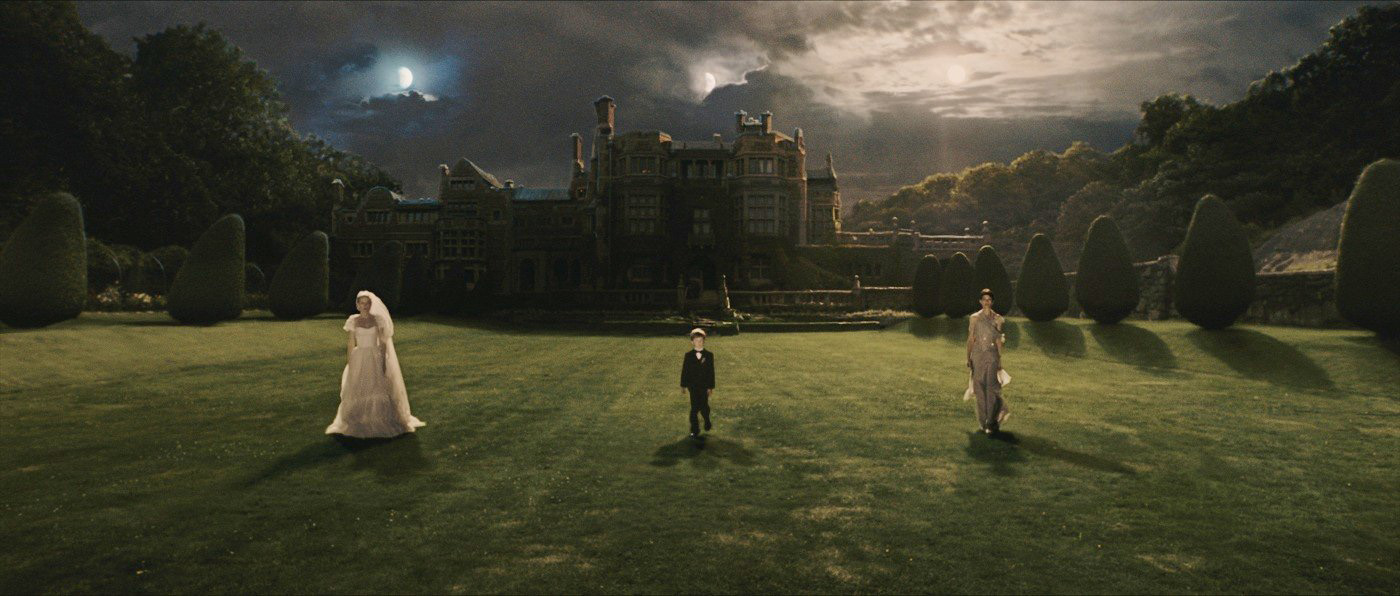
The opening scene is amazing!  We see some beautifully choreographed montages of our main characters treading nature landscapes in slow motion, accompanied by Triston and Isolde musical score.  I’ll give the movie this: If you’re studying cinematography, then you’re gonna love this film because there are some really gorgeous shots of the courtyard, the moon, and especially of the sky.
Kirsten Dunst and Charlotte Gainsbourg (who shows up in a lot of Von Trier’s films) give everything they’ve got to make the film watchable.  They are believable as two sisters with a strained relationship.  You may find it odd that Claire has a British accent while Justine doesn’t, but then we see that their mother is British and the father is American, so this potential issue is fixed right away.
The story of two characters coping with an inevitable coming doom is a compelling story arch that can make for some great character studies if done well.  The actual plot of Melancholia is pretty original and the fantastic opening scene made me feel hopeful for a surreal experience.
Well, I had an experience, all right…a frustrating one.

The Misses
WHY IS PACING SUCH AN ISSUE?!
The wedding reception…ugh!  This is where the pacing suffers greatly.  I asked my mother, “Are wedding receptions this long?”  Justine’s wedding reception has got to be the longest, most drawn-out movie wedding reception in cinematic history.  What makes it drag is that there are segments that could have been cut out.  I have no problem with Justine sitting silently in the bathtub during her reception or the sisters’ mother ranting about the woes of modern marriage.  These are necessary moments for character development.  However, do I really need to know that Justine and Claire’s dad collects spoons?  Is it essential to the plot that we watch Justine try to drive the wedding limo?  Was Justine’s boss/the best man even needed in this story?  I understand that boss characters typically represent greed and corporatism, but his character has one long wedding toast speech and then a handful of sentences before he leaves the plot, never to be seen again.  If you’re going to have your main character stand up to someone, make sure that the person they’re confronting has done something to negatively impact them.  Have Justine confront her hateful mother or Claire’s husband who never shuts up about how much the wedding cost.
In my past reviews, I’ve complained about too much dialogue.  Aloha’s use of dialogue involved characters walking up to each other and explaining exposition.  Courageous used ten lines of dialogue to explain something that could’ve been summed up in five words or less.  Melancholia has the opposite problem; there is not enough dialogue.  When characters do talk, the conversations stop the story because characters will talk about the food or the music, basically things that have little to no connection to advancing the story or developing character.

I did some research on Lars Von Trier and this seems to be a guy who really loves cinema.  “I’m afraid of everything except filmmaking,” he has said.
I know you have a lot of phobias, Lars, but pacing is your friend, not your foe.