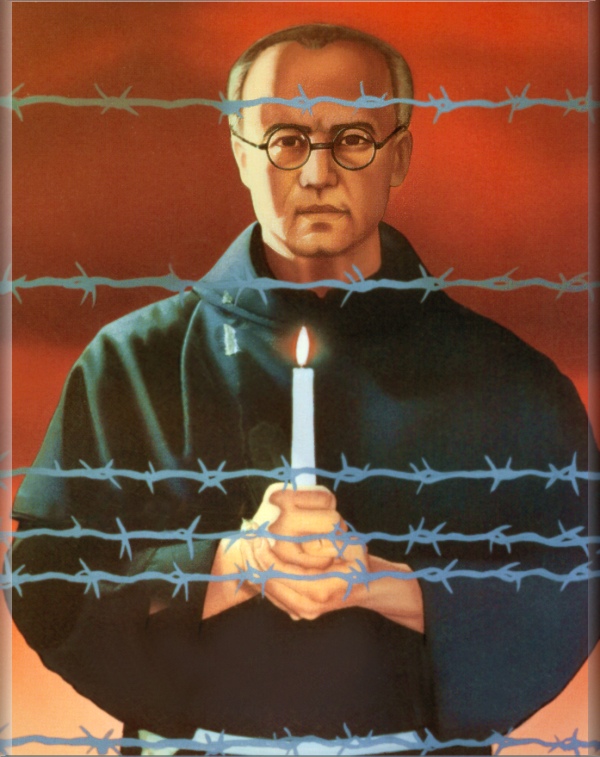
Equals, Not Enemies: How Men and Women Complement One Another

original

It has occurred to me that there is a hostility between men and women these days.  In one corner, you have self-proclaimed feminists who reject their body’s ability to carry life and view men as either cheating oppressors or dimwitted and lazy.
In another corner, an underground generation of disgruntled men who loathe the advancements of women in modern society and believe that women should be submissive sex objects (I’m looking at you, Return of Kings) has formed.
Both of these mindsets show that our seemingly “progressive” society has not advanced in teaching boys and girls how to relate to one another.

As a millennial woman, I feel the need to say that men should not dominate over women and women should not dominate over men. Neither of the sexes should compete for superiority over one another.  Both men and women are human beings deserving of dignity and equality. Masculinity and femininity are beautiful and are unique in their own way.  Both genders have different roles to play.  No, I’m not talking about stock gender roles imposed by society.  Actually, by “different roles,” I’m talking about something much deeper and beyond the surface.
In the words of Venerable Archbishop Fulton J. Sheen, “A man may stand for the justice of God, but a woman stands for His Mercy.” Now this quote does not mean that “men are strong and women are weak.” Quite the contrary, my friends.  Let’s take a look.

Interpreting the first part of the quote, “A man may stand for the justice of God,” we see that men do have a natural inclination to protect. It’s just something that lies within the heart of men. Ask any man who is a husband, boyfriend, father, brother or uncle. Their first instinct is to protect the important women of their lives (wives, girlfriends, daughters, sisters, nieces, etc.)  Saint Pope John Paul II once said, “It is the duty of every man to uphold the dignity of every woman.” Now there are men in our world who commit horrendous acts against women, there’s no denying that. However acting against your true nature does not make the natural inclination disappear. The exception does not change or invalidate the rule. Men are called to uphold and protect the human dignity of women and when a man objectifies a woman, he is acting against justice and violating his true nature.

Interpreting the second part of the quote, “but a woman stands for His mercy,” we must first address that mercy does not mean weakness or subservience. Mercy is compassion and tenderness. Ever wonder why many women (not all women, but a good number of women) are more likely to show leniency towards someone who makes a dumb mistake than men are?  It’s because there’s something within the feminine heart that leans towards mercy. With mercy comes nurturing and we should note that it is not sexist to say that within the heart of every woman is the inclination to nurture. Again, nurturing is not a suggestion of weakness. In fact, one of the definitions of nurture is “to feed and protect” (You can check it out here if you are so inclined http://dictionary.reference.com/browse/nurture). Within the nurturing inclination is to protect, so women are also called to protect the people of their lives, which includes the men.  Just as men are tasked with defending the dignity of women, women are also tasked to uphold the dignity of men.

The men and women of today need to rise above this “us vs. them” mentality. Both of the sexes must build one another up instead of tearing each other down.  Men and women are called to affirm and uphold one another.  When men and women work together for the sake of human dignity, this is how peace will be achieved.

Saint Benedict and Saint Scholastica, pray for us.

A Lamb Among Lions: Saint Agnes of Rome

Saint Agnes holds a special place in my heart.  She was the first Saint I ever learned about.
As a little girl, I remember being inspired by her strength and faith in Jesus.  Whenever a teacher asked me what I wanted to be when I grew up, I would reply, “I want to be like Saint Agnes.” As you can imagine, the response was usually a polite smile from the teacher and snickering from my classmates.
As a teenager, when it came time for me to pick a Confirmation Saint, Agnes was my very first choice.  Granted, the winner was Saint Monica, but I still consider Agnes to be my spiritual sister.  Honestly, if it weren’t for her, I probably wouldn’t have a devotion to the Saints in the first place.
Without further ado, I’d like to introduce you to my spiritual sister, Agnes of Rome.

8bc38818b3523be0b93fd06a07c3b438

In 291 AD, a Christian family of Roman nobility was blessed with a beautiful baby girl.  The child was named Agnes, which comes from the Latin agnus, meaning “lamb.”
Little is known about Agnes’ childhood, but what we do know is that she was very beautiful.  It has been said that she was graced with a cascade of silky hair that draped over her shoulders like a shawl and a tender smile.  By the time she was twelve, she already had a good amount of high-ranking men competing for her hand in marriage.
However, when she was approached by a potential suitor, her answer was always, “Jesus Christ is my only Spouse.”

As a child raised in a devout household, Agnes had come to know Jesus as her Savior.  In an era where daughters were married off for advantage and power, Agnes made a countercultural choice: She claimed Christ as her spouse.  Her body, mind and soul belonged to the One who created her.
Her commitment to Jesus did not go over well with the men who wanted her.  For example, a man named Procop saw Agnes’ purity as a challenge for him to conquer.  He showered her with flowers, jewels and the finest clothes.  He filled her ears with promises of power, wealth and pleasure.
Agnes fought back with this defense, “I am already promised to the Lord of the Universe. He is more splendid than the sun and the stars, and He has said He will never leave me!” Her body belonged to no man; only God.

Another rejected suitor was the son of Prefect Sempronius.  The Prefect himself tried to persuade Agnes to accept his son’s hand in marriage.  As expected, Agnes kept her eyes on Heaven and turned away from the prospect of earthly matrimony.
It is unclear who ratted her out to the authorities.  Some have guessed it to have been Procop, others say that Prefect Sempronius himself was the catalyst of Agnes’ demise.  What we do know for sure is that Agnes was arrested for professing Christianity.

Agnes was ordered to pray to the Pagan gods in exchange for her freedom.  Filled with resolve, she stayed faithful to her Spouse and refused to worship any other god.  The brave twelve-year old was thrown into a brothel to be violated.  When the men attempted to have their way with her, Agnes’ hair grew to an exponential length and shielded her body.  Within minutes, their lustful eyes were struck blind.  Some accounts have claimed that among the would-be rapists was Prefect Sempronius’ son and that Agnes healed him with a prayer.
The next trial Agnes faced was being stripped naked and burned at the stake.  Just like in the brothel, Agnes’ Rapunzel-esque hair cloaked her body.  Then when the soldiers tried to ignite the flames, the wood surrounding her wouldn’t burn.  This miracle shocked the onlookers and the sympathy of the citizens turned to Agnes.
It was a sword to the throat that brought an end to Agnes’ life.

In our modern world, people use “choice” as a buzzword for expediency.  Agnes, whose expedient choice would have been to give in to societal expectation, chose the more difficult path, one that led to great suffering and to Eternal Life.  In many respects, Agnes was a woman ahead of her time.

Saint Agnes of Rome, pray for us.

I Am The Handmaid of the Lord: Blessed Virgin Mary

The CGB Saints posts are back!  The last Saints post I did was on Saint Rose of Lima and now that I’m off from school until February, why not kick off 2016 with the triumphant return of CGB Saints posts?!  🙂

I decided to reopen this segment with a Super Saiyan Saint, the Queen of Heaven and Earth herself…
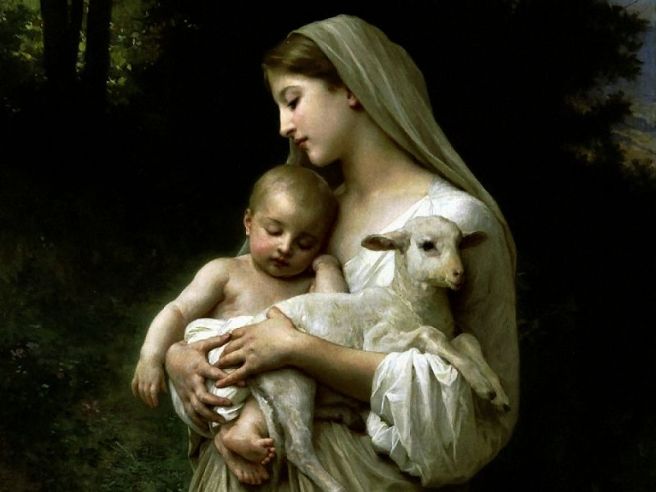
virgin-mary-pics-0917

Once upon a time, in the Galilean town of Nazareth, there was a girl named Mary.  She was the only child of Anne and Joachim.  We can assume that she lived the typical life of a Nazarene girl.  She said her prayers every night, carried water from the local well, tended to her father’s animals, helped her mother clean up after dinner, and so on.  When we meet Mary in the New Testament, she is betrothed to Joseph, the carpenter who everyone respected.  By all accounts, everything was going well in Mary’s life.  Her parents adored her, her fiancée was a hard-working gentleman, and she had a squeaky-clean reputation among her fellow Nazarenes as being Anne and Joachim’s sweet, polite daughter.

If there’s one thing I’ve learned in my twenty-four years of life, it’s that God likes to make a grand entrance on our lives when everything is a little too steady and certain.

Meet Gabriel the Archangel.  He is the messenger chosen by God to deliver a very important message to the Nazarene girl.  This is how I imagine that conversation went:
GOD: Everything is in motion, Gabriel.  Mary’s engaged to Joseph, she’s just the right age–she is ready.
GABRIEL: Okay, my Lord, do you believe she will accept?
GOD: (smiles) Go to Nazareth, Gabriel.  It is time.

Mary is home alone.  Anne and Joachim have gone into town to run some errands.  Luckily, Joseph is just down the road if Mary needs anything.
She wipes the last dirty dish with an old rag.  She looks up at the window, relishing the warmth of the sunlight as it pours onto the walls of her humble abode.  She turns around and freezes.
“Rejoice, O highly favored daughter!  The Lord is with you.  Blessed are you among women.” Gabriel announces.  A trembling Mary stares at the mighty angel.  An angel?  Here in Nazareth?  What does he trying to tell me? she wonders.
Sensing her troubled thoughts, Gabriel lowers himself just inches above the ground, “Do not fear, Mary.  You have found favor with God.  You shall conceive and bear a son and give him the name JESUS.  He will be called Son of the Most High.  The Lord God will give him the throne of David his father.  He will rule over the house of Jacob forever and His reign will be without end.”
Mary shakes her head in disbelief, “How can this be since I do not know man?”
Gabriel smiles gently, “The Holy Spirit will come upon you and the power of the Most High will overshadow you; hence, the holy offspring to be born will be called Son of God.  Know that Elizabeth your kinswoman [cousin] has conceived a son in her old age; she who was thought to be sterile is now in her sixth month, for nothing is impossible with God.”
Mary is assumed to have been thirteen or fourteen when the Annunciation took place.   She was old enough to have an understanding of what was being asked of her, but was also still a young girl with her whole life ahead of her.  To have an angel basically tell her that God has chosen her to carry His child had the potential of derailing her life plans.  Would her parents believe her?  Would Joseph stand by her and take her as his wife?  How would the other Nazarenes react?
There were no crisis pregnancy centers in Mary’s day.  Outreach efforts to pregnant teenagers was nonexistent.  Everyone would assume that Mary had relations with another man and she could find herself in the town square, having stones hurled at her from angry townspeople.
Mary may be the mother of God, but she was still human.  It is possible that these consequences raised her levels of anxiety.
However, Mary also knew of God from her parents.  She had learned that God was wise and righteous.  Within her heart, Mary had the grace to realize that to find favor with God meant that whatever He wanted her to do, He would help her accomplish it.  She had a feeling that God did not want to destroy her, but to invite her to take part in something greater than herself.
This is the best explanation as to why Mary, a teenage girl, would so readily say to Gabriel, “I am the handmaid of the Lord.  Let it be done unto me according to Your word.” Gabriel left her, his task complete.

Shortly after accepting her mission, Mary took a trip to the town of Judah.  Mind you, there was no Uber ride service in her day.  Also, Elizabeth and Zechariah had no way of knowing that Mary was on her way.  To quote my mentor Fr. Dave, “She couldn’t send a text.  She couldn’t send an email or a message on Facebook.  She couldn’t call Elizabeth and say, ‘Oh, hey, cousin, I’ve heard that you’re pregnant.  I’m on my way!'”
It is not clear how long it took Mary to get from Nazareth to the city of Judah.   It has been approximated that the journey was about 130 km or 80 miles.
What matters is that she got there and so begins the Visitation, the event in which Mary meets with her cousin Elizabeth, who is six months pregnant with a son.  When Elizabeth saw Mary, she exclaimed, “Most blessed are you among women, and blessed is the fruit of your womb.  And how does this happen to me, that the mother of my Lord should come to me?”  In that moment, the child in Elizabeth’s womb leapt for joy.  The unborn child, who we know to be John the Baptist, knew that the Son of God was in their midst.
Mary stayed with Elizabeth until John was born.  By this time, Mary was three months along in her own pregnancy.  She returned home to her mother, her father, and Joseph.

Yes, Joseph did learn of Mary’s pregnancy.  While I do go into detail about this in my Saint Joseph post last year, I will briefly summarize Joseph’s turmoil.
As we can imagine, the circumstances of Mary’s pregnancy were hard for even Joseph, a man of steadfast devotion, to believe.   He loved Mary and figured that the best way to protect her would be to divorce her quietly.
One night, as Joseph slept, an angel appeared to him in a dream.  This angel told the carpenter, “Joseph son of David, do not be afraid to take Mary home as your wife, because what is conceived in her is from the Holy Spirit.  She will give birth to a son, and you are to give him the name Jesus, because He will save His people from their sins.”  If there’s one thing Joseph knew for sure, it is that when an angel tells you something is true, then it’s best to take their word for it.
Joseph and Mary were wed soon after.  For all everyone knew, the child in her womb was his and all seemed well.
Roman Emperor Augustus issued a decree that forced Joseph to return to Bethlehem, his hometown, in order to register for a Roman census.  By this point, it has been five months since Mary visited Elizabeth and she is beginning to show.  Joseph and Mary set off for Bethlehem, with Joseph leading his family on foot while Mary sat on their donkey (which can’t be comfortable for a pregnant woman).   According to Fr. Oscar Lukefahr, author of “Christ’s Mother and Ours: a Catholic Guide to Mary” it was a three day journey, approximately 70-80 miles. 

Mary lifted her veil to her face, trying to keep the wind and rainwater from her eyes.  As they entered into Bethlehem, mild discomfort turned to pain.  The time for Mary’s child to be brought into the world was drawing near.
Joseph sprinted to every house, the mud sticking to his sandals.  “Help, help!  Please, we need shelter!” he pleaded to every person who opened their door.
No one would take them in.  All doors were closed to the Holy Family.
An inn keeper offered to let them stay in the manger where the animals resided.  As Mary’s contractions grew stronger, Joseph rushed his wife into the manger.
On that cold winter’s night, the Son of God was born.

While Mary’s story certainly doesn’t end here, the purpose of this piece was to humanize this woman who fearlessly accepted a great calling from God.  Mary was not afraid to be inconvenienced, to have her typical Nazarene life turned upside down.  She knew the risks that would come with her “Yes.”  She knew that her world would never be the same.
If she could do it all over again, Mary would say “Yes” in a heartbeat.

Saint Mary of Nazareth, pray for us.

Is Kim Davis A Martyr? (Originally Published at The Catholic Response)– http://www.thecatholicresponse.us/is-kim-davis-a-martyr/

http://www.thecatholicresponse.us/is-kim-davis-a-martyr/

If you are like me and happen to have both liberal and conservative friends, you have heard heated—well, let’s call them— “discussions” about a woman in Kentucky named Kim Davis, the Rowan County Clerk who refused to issue marriage licenses to both gay and straight couples after the Supreme Court legalized same-sex marriage in all 50 states. Some call her a martyr. Others call her a fool.

I would like to argue that she is neither a martyr nor a fool.
She is simply wrong.

635767271720138593-AP-Gay-Marriage-Kentucky-KYT

It all began on June 29th, 2015, just three days after the Supreme Court ruled that same-sex marriage was legal in all 50 states. Kim Davis, the Clerk of Rowan County, denied David Moore and David Ermold, a same-sex couple, a marriage license. She also withheld licenses from three heterosexual couples. In August federal district Judge David Bunning ordered Davis to issue licenses to all who applied, whether they be gay or straight. However, Davis’ defiance continued as she repeatedly turned away marriage license applicants regardless of sexual orientation. As a result, she was found in contempt and was taken into custody.

Some would question why an elected official would defy the law.

I never imagined a day like this would come, where I would be asked to violate a central teaching of Scripture and of Jesus Himself regarding marriage. To issue a marriage license which conflicts with God’s definition of marriage, with my name affixed to the certificate, would violate my conscience. It is not a light issue for me. It is a Heaven or Hell decision. For me it is a decision of obedience. I have no animosity toward anyone and harbor no ill will. To me this has never been a gay or lesbian issue. It is about marriage and God’s Word. – Kim Davis

Not A Martyr

I happen to be an English major, which means I have a responsibility to be accurate in my use of various words. In politics, it is not uncommon for loaded words to be tossed around by both sides with reckless abandon. In Kim Davis’ case, some well-meaning conservative people have proposed the idea that she is a martyr for the cause of religious liberty. This makes me cringe because “martyr” is not a term that should be used lightly.
How does the Catechism of the Catholic Church define martyrdom?

Martyrdom is the supreme witness given to the truth of the faith: it means bearing witness even unto death. The martyr bears witness to Christ who died and rose, to whom he is united by charity. He bears witness to the truth of the faith and of Christian doctrine. He endures death through an act of fortitude. ‘Let me become the food of the beasts, through whom it will be given me to reach God.’ (2473)

Just for the sake of emphasis, I will place a secular definition, as provided by Random House Dictionary, “A person who chooses to suffer death rather than renounce his or her religion.”

Based on these two definitions, I can say with certainty that Kim Davis does not qualify as a martyr. While going to jail was undoubtedly an unpleasant experience, she was not incarcerated for being a Christian. No one in a position of authority has threatened her life. She has not been coerced to renounce her religion. As an individual citizen, she has a right to disagree with the law. As an elected official, she does not have the right to go against it.

Let’s take another look at her quote, “It is not a light issue for me. It is a Heaven or Hell decision. For me it is a decision of obedience.” Her issue is that by affixing her name to these certificates, she is condoning what clearly goes against Scripture. However, she was not only denying licenses to homosexual couples, but to heterosexual couples, as well, in defiance of the law.

In Matthew 22, Jesus warned against anarchy by urging the Pharisees, “Render unto Caesar that which belongs to Caesar, and to God what belongs to God.” We, as private citizens, can and should hold true to our beliefs and stand firmly upon Christian doctrine. However, as citizens of this great country, we all must follow the law of the land.

Not A Fool, Just Wrong

Going back to definitions, Random House defines a fool as, “A silly or stupid person.” Ms. Davis is neither silly nor stupid. Her statement above is articulate and purposeful. She seems to be fully aware of the consequences of her actions, and has the resolve to see it through to the end. One might argue that she has become a puppet whose strings are being pulled by those who seek to benefit from her conservative stance, but it is clear that she is a true believer.

All that being said, she is simply wrong.

When she became the County Clerk, an elected position, this is what she signed up for. Her duty is to serve whoever walks through her doors, regardless of her personal convictions. When confronted with what she believed was a moral dilemma, she had a choice. That choice was not to deny what has been legally afforded to same sex couples of her county by the Supreme Court and thereby break the law. That choice was to step down from her position.

As a Catholic, I hold firm to what both Sacred Scripture and Sacred Tradition say about the sanctity of marriage, a sacramental bond, instituted by God. As an American citizen, I believe that no one is above the law, whether we agree with it or not. After all, Jesus said, “Render unto Caesar,” or in our case, the Supreme Court. And at the end of all this, I’m not sure if we can say who ‘won’ and who ‘lost’. In the realm of public policy, there will be many casualties and Mrs. Davis might have been one of them; but we ought not consider her a martyr for her faith. When an age of martyrdom becomes a reality for America’s Christians… you’ll know.

CGB Review of To The Wonder (Guest Starring Leia the Dog!)

Hey indie filmmakers, why are you so afraid of dialogue?  What did dialogue ever do to you?

This is my review of To The Wonder!

570_Ben-Affleck-in-new-To-the-Wonder-poster-2372
Also, I’d like to welcome a very special guest: My “niece” Leia the dog!
image
To The Wonder chronicles the whirlwind romance of an American man and a French woman played by Ben Affleck and Olga Kurylenko.  At first everything is awesome and they’re all in love and shiz, but when Kurylenko moves to Oklahoma with Affleck, shiz hits the fan and their love is tested.  Things get even more complicated when Affleck reconnects with Rachel McAdams.
So before I start, I’m going to do something a little different with this review. Along with my “hits and misses” system, I’m also going to use reaction pictures of Leia to explain what the movie does right and what it does wrong.

The Hits
This movie is surprisingly Catholic without even trying to be!
11949485_1021268321240029_4141030830977364671_n
For one, this movie has the most compassionate, humanistic portrayal of a priest character in a secular film that I’ve ever seen.  Javier Bardem plays a priest who is experiencing a dark night of the soul.  He feels disconnected and uncared for by God, yet finds peace and healing through ministering to others.
So I’m guessing the screenwriter found inspiration from Mother Teresa’s spiritual darkness.  😉
Like Melancholia, this film is a cinematography student’s dream come true.   There are a lot of beautiful nature shots.  This would be the greatest nature documentary ever made if director Terrance Malick had just said, “Frick it, let’s just throw the script away and make an Earth Day movie for Disney!”
To The Wonder is the best representation of the “love just happens” philosophy in action.  It makes a good cautionary tale about what happens when people dismiss the fact that love is a choice and not just an emotional high.  Affleck and Kurylenko are committed to each other…when everything is fine and dandy. When life kicks in and the real challenges arise, what they think is love is suddenly gone. When we abandon the personal responsibility aspect of love, we end up with fleeting relationships that are great for the moment, but can be easily replaced when things get dull or tough.  In a way, the film argues that looking for love using self-serving actions leave us empty-handed, and that true love exists once we look outside ourselves and serve those who are less fortunate than us.

The Misses
A friend of mine once said, “I could watch a movie on mute as long as Rachel McAdams is in it.”
Hey, M.P., guess what?  You’re in luck because this movie is SEVERELY ALLERGIC TO DIALOGUE!
11261203_1021268331240028_3913814755104511634_n
Yeah, I was also tilting my head at the startling lack of dialogue.  Tell me, when you’re walking around at the mall or the beach or somewhere with your friend, do you just awkwardly stare at each other and then gaze at the pretty flowers as if posing for a photoshoot?   I sure don’t!  The characters in this film will literally walk to each other and just exchange glances without even saying “hello.”  In the rare times that they do talk, they whisper to each other because–Terrence Malick!
You may have noticed in my summary that I used the actors’ names and not the names of their characters.  That’s because nobody in this film calls each other by their names.
Sixteen minutes into the film, I said aloud, “Hey, what are your guys’ names?”
Thirty minutes into the film, as Ben Affleck silently walks across a construction site, I ask, “Dude, what’s your character name?”
An hour later…”I’d love to connect with ya’ll, but I have no idea what your names are!”  Watching an entire movie and never knowing who is who is kind of a problem.
Why is pacing such a common problem in cinema?  To The Wonder and Melancholia are two movies that really like to drag out their running time.   Scenes will go on for longer than they’re supposed to and there are so many silent periods throughout the movie that I actually started doing my math homework without ever feeling like I was missing something important.
By the end, Leia and I just dozed off…
11924221_1021268324573362_2331275760405209656_n

All of that being said, To The Wonder is a conflicting movie.  There is a lot of good stuff here and as an arthouse indie flick, it succeeds in having its own unique style.  However, the unrealistic silence between the characters and the “drag-your-feet” pacing will test your patience as it did mine.
On the bright side, I got to spend some quality time with my fur-niece.

11890941_1018865641480297_9143009589639131053_n

Saint Valentine, pray for us.

Authentic Voice: An Editorial on Prayer

So I want to give you a little peek into the workings of my brain.  It’s a scary place, I know, but I’m sure you’ll meet colorful little people named Joy, Sadness, Fear, Anger and Disgust.  (Product placement for “Inside Out!”)
Anyway, so whenever I write a CGB post, the first thing I do is think to myself, “Okay, which one of my bijillion favorite Saints would be the best person to ask for guidance?” So I opened my little book of Saints quotes and I found a few gems:

Saint Padre Pio of Pietrelcina: “Pray, hope and don’t worry. The Lord is merciful and will hear your prayers.”

Saint Therese of Lisieux: “For me, prayer is a surge of the heart; it is a simple look turned toward heaven, it is a cry of recognition and of love, embracing both trial and joy.”

Saint Ambrose’s words to Saint Monica when she was praying for her then-wayward son Augustine, “It is not possible that the child of so many tears should perish.”

Hmm, there’s a certain word that keeps popping up with these quotes. Do you know what it is?

Prayer.

The prayer lives of Padre Pio, Therese and Monica were the center of who they were.
Pio was known for his deep and lofty prayers that would go on for hours—and were sometimes said in Latin. Praying to the Blessed Mother brought tears to his eyes, while praying to Michael the Archangel empowered him to take on the skeptics.
Therese was a humble person who felt so small in comparison to our great God, so her prayers were more like a natural conversation with a friend.
Monica was worried about her son Augustine’s immortal soul, so her prayers were the raw desperate cries of a pleading mother.

It’s interesting to note that these three people prayed in different ways, but they all did the same thing: They communicated with God and shared with Him what was on their hearts. So what do the different prayer lives of these famous Saints tell us about prayer?
It tells us that there is no right way or wrong way to pray. You don’t have to sit in a special position or speak in Latin when you pray.  Your prayers can be as long as the Great Wall of China or as short as your pinky finger.
You can tell God something trivial, such as, “God, thank you for stopping the rain on my way to school/work.” You can say, “That’s a nice flower.  Thanks for creating it, God–squirrel!  Oh, yeah, thank you for the squirrel.”  You can tell God something super important that’s bothering you.
Speaking of which, guess what?  You don’t even have to be happy when you pray. Yes, Christians are called to be joyful, but inner joy, which is found by knowing and loving God, is different than daily happiness.
I hope I don’t sound harsh, but if you only say what you think God wants to hear—the nice, fluffy stuff—that’s not prayer, that’s putting on a show.
He wants the real you.  Don’t be afraid to get angry at God or cry uncontrollably when you pray.  In fact, you don’t have to agree with Him.  Heck, you can argue with Him, doubt Him and question Him.  Trust me, He can handle the uncomfortable emotions that He created.  What He wants to know is what you’re really thinking and feeling.  Like Therese said, He meets us where we are.
Your age doesn’t matter. Whether you got that degree or not; it doesn’t matter. Whether you have an unshakable faith in Him or you’re doubting His existence, it doesn’t matter.  All He wants is you just the way you are.
You have a million thoughts in your head throughout the day, so why not share them with the One who put them there? He doesn’t care where you are, whether you’re at the mall, school or church. He just wants to hear from you. He wants to know what’s on your heart. He wants to hear your authentic voice.

prayer

A Mother’s Love: Saint Monica

I was sixteen-years old when I was going through the Confirmation program. When it came time for me to pick a saint, I was torn between all the single saintly ladies: Teresa of Avila and Catherine of Siena were my top picks, but so were Agnes of Rome, Maria Goretti, and Cecilia.  Joan of Arc is cool, but Lucy of Syracuse is like a sister to me.  Then there’s my parish patron Kateri Tekakwitha to consider, but then again, Faustina Kowalska is the patroness of the Divine Mercy!  AAAAHHHHH!!!!
As you can see, I was quite stressed.  So many awesome ladies to choose from and I only had so much time.  I remember flipping through my Saints book in a panic.  I ended up dropping it and watched it cracked open on the tile.  When I picked it up, I saw the page on Saint Monica.
I skimmed through her chapter, “She doesn’t seem very interesting.”  She wasn’t a soldier like Joan or a martyr like Lucy, Maria or Agnes.  I put Monica on the backburner for a while.
However, the longer I resisted, the more she crept up on me.  One night I went online and read up on Monica.  I scratched my head, “God, why should I pick her?  We have nothing in common.”
At first glance, Monica and I were incompatible as candidate and patron.
She was a married woman.  I am single.
She lived in Africa.  I am a born-and-raised California girl.
She was an obedient old woman.  I am a headstrong young woman.
In spite of all these differences between us, I couldn’t bring myself to click out of her info page just yet.  So I sighed and took a second look at her story.

Saint Monica portrayed by actress Monica Guerritore in Restless Heart.

Saint Monica was born in 331 AD in Tagaste, which is now known as Souk Ahras, Algeria.  Not much is known about Monica’s childhood, but we do know that she was born after Constantine legalized Christianity.
You may have noticed that in a lot of my Saints bios, many of these guys and gals were either in arranged marriages (ex. Cecilia) or were arranged to be married to somebody (ex. Lucy).  Monica is no exception.
She was twenty-two (a year younger than me) when she was betrothed to a Pagan man named Patricius.  By all accounts, Monica was a generous and obedient girl, so she was married off without hesitation.
To put it simply, Monica got a pretty raw deal because Patricius was the biggest jerk in Tagaste.  Violent, with an explosive temper, he verbally and physically abused Monica during his outbursts.  To add insult to injury, he was the kind of guy who would be a regular Ashley Madison customer if he lived in the year 2015.  Oh, and did I mention that his mother/Monica’s mother-in-law also worse than Nurse Ratchet from “One Flew Over the Cuckoo’s Nest?”  Needless to say, the apple didn’t fall far from the tree.
Now, you’re probably thinking, “Ditch this guy, Monica,” but divorce court wasn’t a thing in AD Tagaste.  These were the days where a man could leave his wife if she wasn’t a virgin, but a woman was stuck with a hot-headed cheater.
Monica was a Christian and she was especially drawn to Christianity’s emphasis on kindness and humility.  She was also very smart, so she figured that if she couldn’t leave Patricius, she would kill him with kindness.  She knew she couldn’t fight back when he hit her because she would end up on the streets as a beggar woman, so she said her prayers aloud, ignoring him as he stormed off.   When he came home after visiting one of his “lady friends,” Patricius scratched his head when he saw a lavish meal prepared for him by the wife he was betraying.
Monica’s charitible approach won over Patricius’ respect and admiration, to where his punches became less frequent and he began walking out of the room instead of screaming at her.

Monica had three children with Patricius; Augustine, Navigius and Perpetua. There’s very little info on Navigius and Perpetua (I did find out that Navigius entered the monastery), but Augustine–oh, yes–there is a plethora of info on Augustine.  Why?  Because her Augustine just so happens to be THE great Saint Augustine of Hippo.  What a twist!
Monica did the best job she could at raising her children in the faith, but remember, Patricius was an aggressive Pagan and it was his way or the highway. Augustine was the oldest son and it’s not uncommon for the oldest son to gravitate towards his father.  This means that Augustine was very much his father’s son in his actions…and in his beliefs.
Monica knew that her son was a fast-learner, but her heart broke when she saw how disinterested he was in her Christian faith.  She was even more distressed when she realized that Paganism was more enticing to her impressionable son.

After years of being bound to his sinful ways, Patricius converted to Christianity on his deathbed.  However, Monica still had one more thing to do: Save her Pagan-party boy son!  (Plays Superman theme music)
When Augustine grew up, he traveled to Carthage.  In those days, saying “I’m going to Carthage” was like saying, “I’m going to Harvard.”  It was where all the great thinkers went to, well, think and trade abstract ideas.  It was also where many heresies and questionable theological theories sprang up and resided.  These ideas influenced Augustine and led him astray for oh-so-many years.  To his chagrin, Augustine wasn’t alone.  Right behind him on the boat to Carthage was his mother.

As she followed him on his travels, Monica witnessed Augustine’s sinful ways.  She watched him drink himself into a stupor on multiple occasions.  She watched him blaspheme against God and the Church.  She watched him impregnate a woman he wasn’t married to.  She watched him abandon the woman and their infant son.  Her heart broke with each sin.  Every day she offered up her son in prayer.  She asked God to forgive Augustine and to change his hardened heart.  Sometimes her prayers were calm and contemplative; other times they were shouted in desperation and anger. Every prayer came with tears for her wayward son.  Monica’s valiant praying caught the attention of Saint Ambrose, the bishop of Milan.  Monica went to him and poured out her story about the abuse she suffered and of her fear for Augustine’s immortal soul.  Ambrose was so moved by Monica’s courage and all that she had sacrificed that he assured her, “It is not possible that the child of so many tears should perish.”

Monica’s prayers finally paid off.  Augustine had a powerful “come-to-Jesus” experience that changed his life.  He abandoned his selfish ways and became a Christian.  Monica could live in peace at last.  She was called home to Heaven shortly after.

Let’s Talk about Chastity!

I was thirteen when I was given my chastity ring and made a promise to God that I would save myself for marriage.  Now that I think about it, making this promise wasn’t hard at all because as a teenager, I was never interested in sexuality.  I was that girl who would write a short story during Sex Ed instead of taking notes on human anatomy.  A book about Helen Keller was more interesting to me than a magazine with scantily-clad models.
I misplaced my chastity ring during my first year of college.  I couldn’t find it until the night before I broke up with my first boyfriend, who couldn’t handle my “no-sex-till-marriage” rule.  The tiny golden ring shimmered at the bottom of my jewelry box.
It was on my finger when I told him that we were done.
I’ve worn it every day ever since.

After ending a relationship that had posed a threat to my promise to God, I decided to investigate the true meaning of chastity.  “I should be good to go.  I always dress modestly, I never watch steamy movies, so I’m fine,” I thought.  Mind you, this was before I became a movie-reviewing blogger, which requires me to watch movies with some steamy content, but that’s another story for another day.   Reading the segment on chastity in the Catechism (talk about “light reading,” huh?) was a major eye-opener for me.  I learned that chastity is so much more than just dressing modestly and not watching movies that contain sex scenes.

Chastity is the successful integration of sexuality into the individual’s innermost being.  In other words, the natural sexual urges and desires are something that you control and not the other way around.
The Catechism points out that, “Chastity is an apprenticeship in self-mastery, which is training in human freedom.  The alternative is clear: either man governs his passions and finds peace, or he lets himself be dominated by them and becomes unhappy.” (CCC 2339, pg. 562).
Here’s an example: A wife is too tired for intimacy and just wants to go to bed. Now while the husband may want to be intimate with her, the self-mastery brought on by chastity allows him to control his urges and respect his wife’s wishes.
Some argue that chastity contrasts with human freedom, but part of being a free person is being free within yourself.  For instance, no one is free from becoming angry, but if you let that anger overpower you and cause you to scream at a loved one or start throwing things, then you’re not really free within yourself.
No one is free from sexual desire.  Sexuality is a gift from God that is a part of our biology.  What you do with those natural desires is where self-mastery or lack thereof comes into play.
Now there are those who argue that chastity falls in line with sexual repression.  To that, I say not necessarily.  Chastity doesn’t call for an all-out embargo on desire, but rather a mastery over them.  You acknowledge that they are present, but you don’t let them rule your life.  You give yourself the freedom to choose whether to control your hormones or let your hormones dictate you.
Self-mastery in chastity is like self-mastery in every other arena of your life.  The self-mastery to stop eating when you’re full instead of gorging yourself, the self-mastery to have one or two drinks instead of getting ridiculously drunk, the self-mastery to get yourself up for your 6 am job instead of sleeping in and being late for work.
Is chastity a difficult proposition?  Yes, especially in our culture, which has a stalker’s obsession with sex.  However just because something is difficult doesn’t make it impossible.
The world defines the body as a tool for lust; Chastity says the body is a temple.  Chastity allows us to see each other not as objects for pleasure, but as the unique, multifaceted human beings that God created us to be.

I Volunteer as Tribute: Saint Maximilian Maria Kolbe

As a Catholic fan of the Hunger Games, I can’t help but wonder if author Suzanne Collins was inspired by Saint Maximilian Kolbe to have Katniss take her sister Prim’s place in the 74th Games.
Well, Suzanne Collins is Roman Catholic…
Anything is possible, I suppose.

This is the story of Saint Maximilian Maria Kolbe!

kolbe

There once was a boy named Raymund, who was born in Zduńska Wola, Poland with his father Julius, his mother Maria and four brothers.  Not long after he was born, Raymund and his family moved to another town called Pabianice.
Raymund was an aimless boy; he went to school, helped out around the house, walked around town, etc.  He didn’t seem to have any particular talents that would make him famous or important by the world’s standards.

Then in 1906, the Virgin Mary appeared to him in an apparition that would change the course of his life forever.

“That night I asked the Mother of God what was to become of me. Then she came to me holding two crowns, one white, the other red. She asked me if I was willing to accept either of these crowns. The white one meant that I should persevere in purity, and the red that I should become a martyr.  I said that I would accept them both.”

Raymund joined the Conventual Franciscan minor seminary with his older brother Francis one year later.
Then in 1910, Raymund Kolbe entered the novitiate with a new name: Maximilian.

Now Maximilian and the Virgin Mary were BFFs.  After all, she saved him from a dull life as a directionless country boy by revealing his purpose in life.   Naturally whenever someone impacts your life in a positive way, you feel a desire to repay them and show your gratitude.
In Maximilian’s case, he felt so much love and respect for the Blessed Mother that he not only added “Maria” to his full name (Maximilian Maria Kolbe), not only did he openly promote the veneration of Mary, but he even started the Militia Immaculata (MI) in her honor.  The purpose of MI is to evangelize to the world and convert hearts by relying on Mary’s intercession.  In fact, to become a member of MI, you have to make a personal act of consecration to Mama Mary.
Yep, that’s the sexist Catholic Church; we’re so misogynistic that we canonized a guy who was inspired by a woman to change his life and then started an organization where members consecrate themselves to that same woman.
Just let that sink in for a moment.

Maximilian’s missionary work took him all over the world; China, Japan, and eventually to India.  For reasons unknown, he couldn’t gather a following in China, but he did get a lot of work done in Japan.  He build a monastery on the outskirts of Nagasaki.
Interesting trivia: The atomic bomb that was dropped on Hiroshima and Nagasaki obliterated everything in its path…except for the monastery that Maximilian had built.  In the midst of death and destruction, the monastery was still standing.
Even when tuberculosis forced him to end his travels and return to Poland, Maximilian remained active by starting a radio station in–(do not ask me how to pronounce this) Niepokalanow.
I’ll bet you Satan got ticked with Maximilian; “you have freaking tuberculosis; how are you still moving?  These Mary-loving types are always the hardest to axe off.”

Then everything changed when the Fire Nation–I mean–the Nazis attacked.  In addition to slaughtering innocent Jews, the Third Reich had a particular hatred of the Catholic Church and anyone associated with her (I say “her” because the Church is the bride of Christ).  Maximilian and four other priests were arrested on Feburary 17th, 1941.  When Maximilian was sent to Auschwitz, he was given another new name: Prisoner #16670.

One of the twisted policies of Auschwitz was that if a prisoner escaped, ten prisoners would pay with their lives.  So when three prisoners fled Auschwitz, ten men were randomly selected to spend their days in an underground bunker, where they would left to die from starvation and dehydration.
One of the chosen was Prisoner #26273, also known as Franciszek Gajowniczek.  In a panic, Franciszek cried out, “My wife!  My children!”  Haunted by the fear of leaving his wife to fend for herself with two fatherless child, he begged for mercy.  The Gestapo officers held their batons, ready to strike him to end his pleading.

A man with glasses and a long white beard stepped up and faced the Gestapo.
“I am a Catholic priest from Poland; I would like to take his place, because he has a wife and children.”
The switch was made and Franciszek was sent back in line to live another day.  Wiping off the sweat from his face, he turned to get a look at his rescuer, Father Maximilian Maria Kolbe.
During his final days, Maximilian kept his fellow prisoners in high spirits with prayer and fasting.  He evangelized to the men, giving them hope by telling them of Jesus and His mother Mary and praying with them.
Two weeks later, the guards entered the bunker to collect the bodies.  They froze when Maximilian Kolbe looked up at them, still alive.
A calm Maximilian lifted his left arm and received a deadly injection of carbolic acid.  His body was cremated on August 15th, the feast day of the Assumption of his beloved friend, Mary.

Saint Maximilian Maria Kolbe, pray for us.

How Do You Solve a Problem like Cecilia?: Saint Cecilia

This Saints post exists because I owe Saint Cecilia a favor.  First, here’s some backstory:
Last weekend, I was on a LifeTeen retreat (not as a teen, of course.  I’m a Core member).  On Friday my throat felt scratchy and by “lights out” time, my voice was heading down the drain.  All day Saturday, I had a raspy, chain-smoker voice and it hurt to talk.  As luck would have it, I had to give a teaching on authentic prayer.  Normally Saint Blaise is an obvious person to go to for throat trouble because that’s his patronage, but then Saint Cecilia, patroness of music, came to mind.  I said, “Okay, Cecilia, if you can help me deliver my talk in the exact way that I had practiced it, I will bump you up in my posting schedule and you will be the next CGB Saints post.”

I delivered my talk without forgetting a single word.  Remember when I said that it hurt to talk?  As I gave my teaching, my throat felt just fine.

The hills are alive with the sound of Cecilia!

Saint Cecilia has the typical 2nd century A.D. Roman girl backstory; she was born into a wealthy family.  They were all Christians, but she had been betrothed to Valerian, a Pagan man who had a brother named Tibertius, who will be important later, so remember him.  Anyway, between this and my Saint Lucy post, you have figured out by now that in those days, love was not a central ingredient to marriage.  It takes two prominent families to get their younglings to tango.

Of course, Cecilia had promised God that she would be His bride, consecrating her virginity to Him alone.  Instead of adorning herself in the fine dresses and jewels that her family could afford, a sackcloth was her clothing of choice.
Cecilia and Valerian were married and so began the wedding night.  I’m just gonna paraphrase how I think their conversation went:

CECILIA: Honey, I know I’m your wife now and I have to fulfill my duty to you, BUT…I consecrated my virginity to God and because of that, my guardian angel will be standing guard to protect my purity.
VALERIAN: Uh…all right, prove it.  I want to see the angel.
CECILIA: Tell you what; you go visit Pope Urban and get yourself baptized.  When you get back, you will see my angel.
VALERIAN: Well, it is fashionable to see the Holy Father and such a visit could benefit our families, so why not?

I came so close to referring “the angel of music” from Phantom of the Opera as I was typing this.

Valerian visited Pope Urban and was baptized.  When he returned, his jaw hit the floor.  A magnificent angel was standing alongside his new wife while she played the piano.
I’m just gonna go ahead and sing this: “Then I saw her face.  Now I’m a believer!  Without a trace or doubt in my mind…I’m a believer, I couldn’t leave her if I tried!”
The angel had two crowns, one for Cecilia and the other for Valerian.  The crowns were placed on the heads of husband and wife.

Earlier I told you to remember Valerian’s brother Tibertius.  That’s because Tibertius also became a believer once he saw the crowns on Cecilia and Valerian’s heads.  Two is plenty, but three’s a crowd.

Now in their day, Christians were being martyred left and right.  The prefect of their city had a serious case of bloodlust; not only were Christians were being killed off faster than a Game of Thrones character, but their bodies were left on the streets as a warning to Roman citizens.  Valerian and Tibertius were persuaded by Cecilia to bury the martyrs.  When onlookers would approach them, the brothers would direct them to Valerian’s home, where Cecilia would tell them about Jesus Christ.  A woman in love with Jesus, her eloquence and compassion for nonbelievers brought visitors to their knees as they converted to Christianity.

There is no exact timeline of when shiz went down, but we do know that the prefect of the city put a stop to Valerian and Tibertius’ martyr-burial operation.  The brothers were captured, brought before the prefect, and joined the dead.

Preparing her home to be a church, Cecilia turned around when she heard the door open, thinking it was her husband and brother-in-law.  Her smile left her face when Roman soldiers stood at her door.  She took a breath, entrusting her fate to God.

Standing before the prefect as Valerian and Tibertius had, Cecilia was ordered to be executed by suffocation in the bathhouse.  Thrown into the bathhouse, she was locked inside and the flames arose, whipping at her skin and hair.  The guards waited for the agonizing screams of the woman caged in the inferno.
They didn’t hear a peep from her.
Then the fires were cooled, the doors unlocked and reopened; Cecilia stood very much alive.

His mind blown from this incident, the prefect ordered her to be beheaded.  The executioner approached her, armed with a sword that promised to impale flesh and bone.
The first strike hit her neck, but was ineffective.
The second strike cut through skin and nothing else.
The third strike caught the jugular, but her vocal cords remained.
He ran away after the third blow.

Mortally wounded, Cecilia was left to die in a cell.  She was in dire pain, but continued to preach the Gospel as blood flowed down from her maimed neck, soaked up by the sponges and cloths of those who came to hear her speak.  She used her final breath to share the Good News.

Saint Cecilia, pray for us.