CGB Review of The Hunger Games (2012) (Part 1 of the CGB Hunger Games Extravaganza!)

Happy Hunger Games month and may the CGB reviews be ever in your favor.
By the way, I just realized that this is Jennifer Lawrence’s third appearance here on CGB (see my reviews for Silver Linings Playbook and Serena).

This is my review of The Hunger Games!

784c6a3f05b3126e_-strongfemalehungergames.jpg20120727.xxxlarge_2x

I am a mega fan of The Hunger Games trilogy.  I am also blessed that my parents, my brother and my sister-in-law are also HG fans.  This trilogy got me through my first semester of college and I’ve read all three books multiple times.  Alas, I am so glad to launch Hunger Games month on Catholic Girl Bloggin’!
Anywho, so in the Hunger Games, America is now called Panem, which comes from the Latin, “panem et circenses,” meaning “bread and circuses.”  The country is divided into twelve segregated districts all controlled by the Capitol.  Every year, two children between the ages of 12 and 18 from each of the twelve districts are selected for a televised fight to the death known as The Hunger Games.
Katniss Everdeen is a sixteen-year old denizen of the coal-mining District 12.  If this story took place during Jesus’ ministry, District 12 would be an exile for lepers.  It’s the poorest, most looked-down-upon district.  Katniss is a fatherless teenager who basically runs the Everdeen household by being the primary caregiver of her twelve-year old sister Primrose “Prim” and doing all the work that her emotionally-fragile mother can’t bring herself to do.
On the day of the Reaping, when tributes are selected for the Games, Prim’s name is called.  Unwillingly to let her little sister be slaughtered, Katniss volunteers to take Prim’s place, a move that could arguably be interpreted as paying homage to Saint Maximilian Kolbe.  Katniss finds herself thrown into the entertainment culture of the Capitol and ends up in the ultimate fight for her life as a Hunger Games tribute.
I saw this movie during my first year as a LifeTeen Core member with my fellow Core members.  We all dressed up in camoflague attire (keeping up with the HG theme), carpooled together and headed for Arclight Hollywood for the premiere. We were so excited when all the previews were done and the opening sequence began AND…

Two and a half hours later, we walked out of the theater with very mixed feelings.

The Hits
Jennifer Lawrence.  Need I say more?  She was born to play Katniss.  Her smokey eyes pop any time she goes brunette, she has the youth and vunerablity to portray a teenager while also having the strength and maturity that Katniss needs in order to be taken seriously by the adults around her.
In fact, all of the casting choices are top notch.  Josh Hutcherson is capable and believable as fellow District 12 tribute Peeta Mellark, Woody Harrelson embraces his role as the hardened, drunken, weary-from-living Haymitch Abernathy and Elizabeth Banks delivers a both classy and fun performance as the always-stylish Effie Trinket.  I really appreciate how Ms. Banks watched Audrey Hepburn films and channeled Hepburn’s acting style when playing Effie.  This keeps the innocently superficial Effie from being flanderized.  For the record, flanderization is a TV trope that can also apply to cinema, defined by the TV Tropes website as “The act of taking a single (often minor) action or trait of a character within a work and exaggerating it more and more over time until it completely consumes the character. Most always, the trait/action becomes completely outlandish and it becomes their defining characteristic” (http://tvtropes.org/pmwiki/pmwiki.php/Main/Flanderization).
Even though he only has a few scenes, Doland Sutherland is terrifying as President Coriolanus Snow, the dictatorial ruler of all of Panem.  His deep, authoritative voice is enough to send chills down my spine.  Fun fact: Donald Sutherland emailed to director Gary Ross a three-page letter titled “Letters from the Rose Garden” that outlined his [Sutherland’s] arguments for why he should be cast as President Snow.  In three pages, Mr. Sutherland discussed power, Ted Bundy and his own interpretation of President Snow.  I know that if I was a director and got a three-page magnum opus from THE Donald Sutherland, I’d cast him in my movie, too.  Also, as a bonus feature, I will post the letter at the end of this review!  🙂

The Misses
This is my least favorite of the films.  Why?  Because as my brother and sister-in-law pointed out, this movie really should have been called “The Hunger Games: Sparknotes Edition.”  The issue is this movie has the major scenes from the first book (Katniss hunting, Katniss volunteering as tribute, the training montage, interviews with Ceaser Flickerman, etc.), but there are way too many changes to the point where you begin to wonder if they even read the book at all.  I don’t want to go into SPOILER territory, so I’ll just say this: How Katniss gets the iconic Mockingjay pin not only requires the elimination of a supporting character, but happens in a way that wouldn’t fly in a tyrannical regime.  There’s a comic relief ancedote during the Reaping that doesn’t happen in the movie.  There are quite a few supporting characters in the books who are completely dropped from the film. In the book, there’s a crucial line of dialogue delivered by Peeta’s mother that serves as character development for both Katniss and Peeta.  This line is never said by Mama Mellark or even mentioned by Peeta to Katniss in the film.
I counted exactly 31 changes that they made to the story, and sure enough, I’m not the only person.  Check out this list by Film.com which outlines the 31 changes that I’m talking about.  http://www.film.com/movies/differences-between-the-hunger-games-book-and-movie

All of that being said, The Hunger Games is still a good intro into Katniss’ world. The major scenes that need to be there are present, the casting is excellent and the action is intense and exciting to watch.  While it’s not as stellar as the later films, The Hunger Games is a worthy entry into the HG film saga.

As promised, here is Donald Sutherland’s “Letters from the Rose Garden.”

Dear Gary Ross: 

Power. That’s what this is about? Yes? Power and the forces that are manipulated by the powerful men and bureaucracies trying to maintain control and possession of that power?
Power perpetrates war and oppression to maintain itself until it finally topples over with the bureaucratic weight of itself and sinks into the pages of history (except in Texas), leaving lessons that need to be learned unlearned.
Power corrupts, and, in many cases, absolute power makes you really horny. Clinton, Chirac, Mao, Mitterrand.
Not so, I think, with Coriolanus Snow. His obsession, his passion, is his rose garden. There’s a rose named Sterling Silver that’s lilac in colour with the most extraordinarily powerful fragrance – incredibly beautiful – I loved it in the seventies when it first appeared. They’ve made a lot of off shoots of it since then.
I didn’t want to write to you until I’d read the trilogy and now I have so: roses are of great importance. And Coriolanus’s eyes. And his smile. Those three elements are vibrant and vital in Snow. Everything else is, by and large, perfectly still and ruthlessly contained. What delight she [Katniss] gives him. He knows her so perfectly. Nothing, absolutely nothing, surprises him. He sees and understands everything. he was, quite probably, a brilliant man who’s succumbed to the siren song of power.
How will you dramatize the interior narrative running in Katniss’s head that describes and consistently updates her relationship with the President who is ubiquitous in her mind? With omniscient calm he knows her perfectly. She knows he does and she knows that he will go to any necessary end to maintain his power because she knows that he believes that she’s a real threat to his fragile hold on his control of that power. She’s more dangerous than Joan of Arc.
Her interior dialogue/monologue defines Snow. It’s that old theatrical turnip: you can’t ‘play’ a king, you need everybody else on stage saying to each other, and therefore to the audience, stuff like “There goes the King, isn’t he a piece of work, how evil, how lovely, how benevolent, how cruel, how brilliant he is!” The idea of him, the definition of him, the audience’s perception of him, is primarily instilled by the observations of others and once that idea is set, the audience’s view of the character is pretty much unyielding. And in Snow’s case, that definition, of course, comes from Katniss.
Evil looks like our understanding of the history of the men we’re looking at. It’s not what we see: it’s what we’ve been led to believe. Simple as that. Look at the face of Ted Bundy before you knew what he did and after you knew.
Snow doesn’t look evil to the people in Panem’s Capitol. Bundy didn’t look evil to those girls. My wife and I were driving through Colorado when he escaped from jail there. The car radio’s warning was constant. ‘Don’t pick up any young men. The escapee looks like the nicest young man imaginable’. Snow’s evil shows up in the form of the complacently confident threat that’s ever present in his eyes. His resolute stillness. Have you seen a film I did years ago? ‘The Eye of the Needle’. That fellow had some of what I’m looking for.
The woman who lived up the street from us in Brentwood came over to ask my wife a question when my wife was dropping the kids off at school. This woman and her husband had seen that movie the night before and what she wanted to know was how my wife could live with anyone who could play such an evil man. It made for an amusing dinner or two but part of my wife’s still wondering.
I’d love to speak with you whenever you have a chance so I can be on the same page with you.
They all end up the same way. Welcome to Florida, have a nice day!

Saint Maximilian Kolbe, pray for us.

CGB Review of Burnt (2015)

Oh, look, another CGB review of a Bradley Cooper flick. How many of his movies have I reviewed by now, five? (Looks through archives) Yeah, five, which makes Burnt the sixth Bradley Cooper movie that I reviewed, hence proving that Bradley Cooper movie reviews are a part of CGB canon.
This is also the second WORST Bradley Cooper movie that I have seen all year!

file_612407_chef-trailer

Burnt is eerily similar to its even more abomidable cousin, Aloha.  Just like in Aloha, Bradley Cooper is playing yet another talented screw-up who hits rock bottom off-screen (we only hear about his past frick-ups through expositional dialogue), but is now working towards redemption.  He plans to open his own restaurant and he does so by recruiting equally skilled cooks to come work for him, even if it means SABOTAGING their own professions (Example: He gets Sienna Miller’s single mother character fired from her old job so that she has no choice but to climb aboard the Bradley express).  His goal is to have his restaurant gain three Michelin stars and all that jazz.
I’m going to be honest: I walked out halfway through this flick.  Bradley, I really don’t like picking on you, but you need to fire your agent because this chef drama is a dish served sour.

The Hits
Bradley, are you trying to land a villain role somewhere?  Is Rocket gonna betray Starlord and company in Guardians of the Galaxy 2 or something? That’s the only plausible reason I can think of to explain why you agreed to star in this lackluster serving of cinema. Bradley Cooper’s character, whose name I’ve already forgotten, is so despicable that it’s like this movie only exists to provide a strong case for why Cooper should play a villain at some point in his career.  There is one scene where Cooper does this menancing laugh, and if he were to end up being a Marvel villain or the next nemesis of James Bond, I could see him doing a great job.
The food in the film is very pretty to look at.  They’re colorful, well-crafted and are appetizing to the eye.  If this movie did anything right, it’s that it shows a raw look into the intense pressures of culinary culture.  Food critics, or michelin men/women, are like movie critics; If your food is awesome, the reviews will be ever in your favor.  If your food sucks, the reviews will kill ya and your restaurant will die faster than Geena Davis’ movie career after Cutthroat Island.
This movie has an awesome cast! I love Bradley Cooper, Sienna Miller, the luminous Lily James (she played Cinderella in the live-action Cinderella remake), Uma Thurman, Emma Thompson, Alicia Vikander (Ex_Machinia) and others. With a talented group of people like that, we’re bound to see some great performances….
If only this hope came to fruition.

The Misses
(Commencing Super Saiyan Rant Mode) The last time I walked up to my best friend and began telling her the history of our friendship was NEVER! This movie has no concept of how people talk. It’s Aloha all over again with actors approaching each other and telling we, the audience, their backstory in a clunky, unrealistic fashion.  However unlike Aloha, some of the dialogue is hard to hear. It’s the “God-forbid-someone-turns-their-head-away-from-the-camera” scenario where once that happens, there’s no way you’re gonna hear what is being said.
Why is it so hard for Hollywood to understand how to write an unlikable character correctly?  Difficult protagonists are made easy to root for if they either have moments where they put their selfishness aside for someone they care about or if they frequently get their comeuppance.  This movie tries to make Cooper this hip rebel with philosophies on food that make no sense, but I’m sorry–I just can’t sympathetize with a guy who gets a woman fired from her current job to come work for him, loses his shiz and throws a tantrum when under pressure, and breaks into an old associate’s hotel room in the first five minutes of the movie.  I love Bradley Cooper’s striking blue eyes as much as anyone else, but if he broke into my house, I’d call the cops, not engage in expositional chit-chat.
I should clarify what I meant by “With a talented group of people like that, we’re bound to see some great performances….If only this hope came to fruition.” Here’s what I mean: No one in this movie gives a bad performance and that’s because except for Cooper and Miller, no one else is given time to give a performance of any kind.
WHAT DID THEY DO TO YOU, LILY?  Lily James gets two minutes of screen time and then she’s gone in the blink of an eye.  Alicia Vikander shows up for a five minute schppiel and then–poof!–she vanishes into thin air.  Uma Thurman gets a good ten minutes and then good-bye!  Emma Thompson gets three short scenes, which is the deluxe treatment in this flick.  As for Sienna Miller, she plays a bland, watered-down version of Taya Kyle (American Sniper).  She is given no opportunity to bring the same level of depth and development to the table that she brought to American Sniper.  Lo and behold, I have already forgotten what her character’s name is in this movie!
The icing on the cake of incompetency is that the writing is on autopilot.  Things just happen with no rhyme or reason because none of the plot points are properly set up.  Cooper is double-crossed by another character because–potatoes!  There’s a suicide attempt that comes right the frick out of nowhere because–turnips!   There’s a weird joke about how Thurman is a lesbian who, at one time, got frisky with Cooper because–filet mignon!  In addition, the tone is off its rocker.  The first act is all light, cool and funnyish, but then the act two gets going and that is when we suddenly get drug dealers, betrayal and the out-of-left-field suicide attempt.
By the way, I walked out right after the suicide attempt.

After I stumbled out of the theater, I began driving home and had such a headache from the mediocrity that I had to pull over.  I wandered into Albertson’s and found myself in the fruits and vegetables section.  I remember holding a green apple in my hand, staring it down as I came back to reality.  “What did I come in here for?” I said to myself with a deer-in-the-headlights look on my face.
I ended up buying a case of water and some veggies.
Yes, Burnt is such a bad movie that I actually lost my sense of time and place.   The Albertson’s veggies that I steamed and ate for lunch were far more delectable than this badly-cooked film.

Saint Lawrence, pray for us.

CGB Review of Crimson Peak (2015)

Beware of my review of Crimson Peak!

crimson-pea-photos-feature-tom-hiddleston-and-mia-wasikowska-in-the-haunted-house

Crimson Peak is a movie that I have been looking forward to all year.  It tells the story of Edith Cushing, an aspiring writer who is swept off her feet by London aristocrat Thomas Sharpe.  Once she becomes Mrs. Sharpe, Edith moves to London to live in Allerdale Hall with Thomas and his sister Lucille.  However, a house as old and decrepit as Allerdale Hall is bound to be riddled with secrets written in blood.
This is the latest film from Gulliermo del Toro, the creator of my all-time favorite film Pan’s Labyrinth.  Since PL, Del Toro took a step back from creating gothic stories of his own and turned his attention to being a producer of Don’t Be Afraid of the Dark (2010) and Book of Life (2014), as well as directing the second Hellboy film (2008) and Pacific Rim (2013).
After a few days of prayer and going over my review notes, I have come to the conclusion that Crimson Peak is a visually stunning canvas that highlights Del Toro’s strengths, as well as his two major weaknesses.

The Hits
A few months ago, I learned that Del Toro actually had the mansion built and even used his own salary to keep it from being demolished.  His dedication is on full display. Allerdale Hall is the personification of horrific secrets.  Red clay oozes through the house like a silenced prisoner struggling to break free.  A gaping hole in the ceiling allows leaves and snow to fall to the floor, symbolizing the tears of the past victims of Allerdale.  Creaking staircases, a rickety elevator and a lower level with blood decorating the walls create an atmosphere of death’s final sting. Del Toro’s vision of Allerdale is a nightmare fully alive.
During the second act, there are three sequences where Edith wanders the house to investigate.  The danger here is that the scenes can become repetitive, but luckily the movie doesn’t fall into this trap.  Each exploration scene contains new information on the ghosts that haunt Thomas and Lucille’s home.  Edith discovers something different, making the three sequences feel purposeful.
The assembled cast is excellent.  Tom Hiddleston and Jessica Chastain have a terrifying chemistry as brother and sister, while Mia Wasikowska carries the film with sharp intellect and vulnerability.  During production, Del Toro gave each actor a ten-page biography of their character, and it shows in their performances. Unlike a certain film that I reviewed recently where indecisive directing resulted in confused performances (I’m looking at you, Pan!), everyone knows exactly who they are and how to convey their characters’ motivations to the audience.

The Misses
I mentioned earlier that Del Toro has two major weaknesses that are clear as day in this film.
In my Pan’s Labyrinth review, I pointed out that there is a major continuity error that occurs after Ofelia completes the first task.  It doesn’t ruin the movie, but it does show that Del Toro needs more practice on bridging continuity gaps.
In Crimson Peak, there is one major narrative flaw that is concerning. Edith’s ability to see ghosts is not the reason Thomas marries her, nor is it the reason why [SPOILER] Lucille wants her dead.
This is a problem because Edith’s special gift and her relationship with the Sharpes are the two most important elements of the story.  If these two components have nothing to do with each other, if the story could go on without one of these two plot points (in this case, the ghost-whispering thing), then something is wrong with the story structure. The second narrative weakness is that Del Toro is not good at plot twists.  My friends and I could correctly guess the “twist” long before the third act’s big reveal.  I mean, Guillermo, you made Pan’s Labyrinth HOW long ago (2006) and you still don’t know how to properly connect gaps in your story?

Crimson Peak is a fascinating gothic romance that pays homage to the genre.  At the same time, it also shows eyebrow-raising missteps that would concern any Del Toro fan.  Here’s to the hope that good-ole Guillermo catches his own mistakes and works on improvement for future features.

Bonus Features: Pan’s Labyrinth Callbacks (SPOILERS ahead)
Sometimes directors will use symbols and images in a current film to refer to a previous film that they made.  I figured that Pan’s fans like myself would enjoy these callback trinkets.

  1. Crimson Peak opens with Edith staring into the camera while holding up her bloodied hand, which is similar to Pan’s Labyrinth prologue.
  2. The majority of the nighttime scenes are shot with a turquoise color palate and not the traditional midnight-blue color palate.
  3. Edith’s father uses the exact same razor that Captain Vidal uses during his [Vidal’s] character-defining shaving scene.  Also the mirror he uses is Vidal’s shaving mirror.
  4. The wheelchair that Edith uses towards the end of the first act looks oddly identical to Carmen’s wheelchair in PL.

Saint Elizabeth of Hungary, pray for us.

CGB Review of The Walk (2015)

In spite of reports that this film has made people nauseaous from its realisitic capture of vertigo sensation, I am pleased to announce that I did not get sick during this absolutely fantastic film!

This is my review of The Walk!

The-Walk_612x380_0

The Walk is the true story of Phillipe Petit, a Parisian wire-walker who dreams of hanging his wire between the newly constructed Twin Towers of New York City and walking across.  For the record, I say “newly constructed” because this story takes place in 1974.

The Hits
The Walk reminds me of my favorite line from The Screwtape Letters: “The man who truly and disinterestedly enjoys any one thing in the world, for its own sake, and without caring two-pence what other people say about it, is by that very fact forewarmed against some of our subtlest modes of attack.”
This film is a love letter to art.  It understands the mind of an artist.  The script demonstrates that for people who are writers, painters, dancers, musicians, actors, chefs, pottery-makers, filmmakers, etc., everything they do is in the name of creating something out of nothing.  When an artist is in his/her element, they bring themselves closer to God, the Creator of Heaven and Earth, whether they realize it or not.
While the trailer made Phillipe seem like an impulsive weirdo, the final product explains Phillipe as a performer who is solely motivated by a love for art.  During the first act, after he is arrested for wire-walking across Notre Dame cathedral, he laments that the French, “…do not appreciate art and beauty!” Because of his passion for artistry, his desire to walk between the Two Towers never feels like a death wish, but rather a spiritual exercise.  This character is the eptitome of what it means to live and not just exist.
Joseph Gordon-Levitt disappears into the role of Phillipe Petit.  He embraces the eccentricities of the main character and makes the audience understand his perspective.  His French accent is quite good.  It fits right in with Gordon-Levitt’s enthusiastic performance  Even in his moments of selfishness and arrogance, I could still root for him because it was made clear that his flaws came from a place of passion.
Like The Imitation Game, the script is very intimate with its protagonist.  The musical score sounds like something Phillipe would listen to.  Every shot and frame puts us in Phillipe’s shoes.  Robert Zemeckis clearly did his research and wants us to know this man as well as he does.  Now that I think about that, Phillipe Petit reminded me a lot of Saint Phillip Neri.  To put it simply, if you love the arts and/or Saint Phillip Neri, this might be the movie for you.

The Misses
My only complaint is that the pacing of the movie is a little too fast.  Granted, none of the scenes ever lag, which is great, but at times I felt that the story was moving at a rapid pace.  This could be because Phillipe, a fast-talker, is narrating the story and like any good director, Robert Zemeckis accomodates to his main character by having the film move to the speed of Phillipe’s dialogue.  While this gives the film a very personal feel, it may be off-putting to moviegoers who prefer a slow, steady pace.

Tips on How to Avoid Cybersickness during The Walk
Last night, I decided to do some research after learning that The Walk was causing people to get sick.  What I learned is that according to studies, the reason some people experience sickness during a 3D film is because the 3D imagery is causing the brain to receive mixed messages from the senses.  When 3D visuals command the screen, the eyes signal to the brain that the body is moving.  However, the inner part of the ear does not pick up motion.  This causes the brain to sense that something in the body is poisoned and the result is gastrointestinal, hence causing nausea and disorientation.
Sufferers from vertigo should wait for The Walk to come out on DVD.  However, for those who don’t suffer from vertigo, here are the steps I took to prepare myself.

1. Eat something light and solid.  Crackers, toast, a torilla, anything that is low in acidic substances will help.

2. Drink water.  Buy a water at the theater, bring your own bottle, just give yourself access to water.

3. Sit as far away from the screen as you can.  It has been suggested that holding one hand over one eye will help your body reset itself during dizzying sequences.

Saint Phillip Neri, pray for us.

CGB Review of Pan (2015)

Me before Pan: “Okay, Lord, I’m going to keep an open mind.  Maybe Pan will be an offbeat fairy tale that I end up liking.”
Me during Pan: “WHAT THE FRICK AM I LOOKING AT?!”

This is my review of Pan…(irritable sigh)

Pan-film-posters-full-celebrity-watchdog-insert-

Pan is the prequel to J.M Barrie’s Peter Pan.  In this version, Peter (Levi Miller) starts out as a little boy living in an orphanage who gets snatched away by pirates and ends up in Neverland, where he must go up against Blackbeard (Hugh Jackman) after it is discovered that Peter can fly because–chosen one–and from there, Peter teams up with James Hook (Garrett Hedlund) and Tiger Lily (Rooney Mara) to discover his true destiny as the flying boy who will save the Natives and the fairies from the tyrannical Blackbeard and the pirates.
I just took an Advil because this movie gave me a migraine.  I am legitimately ticked off because the trailer for this movie looked so enchanting.  Sadly, the final product is anything but magical.  This movie has no idea what it wants to be.  It is so tone-deaf that I was never sure when I was supposed to take a scene seriously.
Alas, let’s just get through the very few Hits before I commence into Super Saiyan rant-mode.
By the way, ten brownie points are yours if you know what a “Super Saiyan” is.

The Hits
To be fair, there is a good story somewhere in this bloated mess of a film.  The world creation is certainly not lacking in imagination.  The locations are gorgeous to look at and I really wish that the movie had taken the time to give Neverland its own identity outside of being a pretty generic CGI backdrop.
The idea of establishing Peter Pan and Captain Hook as friends is interesting, and the banter between them did get a few chuckles out of me.
I do like the concept of Peter being the son of a fairy prince and a human woman, and that Tiger Lily has a connection with Peter’s mother.  Also kudos to the screenwriter for making Peter’s mother a pro-fairy warrior.  Deceased mother characters shouldn’t just be dead nice ladies.
The only scenes that had me invested were the scenes between Peter and Blackbeard.  Levi Miller and Hugh Jackman do have a believable dynamic as enemies.  I always appreciate when a hero and a villain are in the same room, conversing with each other.
Levi Miller is the only person who I sympathetized with.  He seems to understand his role and does his very best to be the grounded force of his strange surroundings.  I do hope that he gets more work and ends up in better movies because there is a lot of promise with him.
It is always tragic when incompentent direction buries a potentionally engaging story.

The Misses
All right, the gloves are coming off.  Let’s go.
(Commencing rant mode) This should have been called “Indecision: The Movie.”  It is painfully obvious that director Joe Wright was second guessing every single story decision he made during production.  Except for Levi Miller, the adult actors are evidence of this.
It’s never a good sign when you can tell that an actor is confused about who they’re supposed to be throughout the film.  I think Mr. Wright first told Hugh Jackman to be menancing, but then right before the camera rolled, he said, “On second thought, Mr. Jackman, Blackbeard should be a comedic villain.  Yeah, that’s it.” But THEN Mr. Wright changed his mind again and told Jackman to be a scary dude.  As a result, Hugh Jackman’s Blackbeard switches back and forth from quirky villain to menancing foe every five minutes.  Actually, now that I think about it, Jackman’s performance is inconsistent; he overacts in some scenes and underacts in others.
The secret to writing an offbeat villain is to write he/she as either a scary person who can be funny or as a charming individual with a twisted personality. Attempting to be both sucks away the tension between the villain and the protagonist.   If I’m not afraid of the villain, why should I care about the hero?
The second victim of Joe Wright’s indecision is Garrett Hedlund.  It’s like Mr. Wright couldn’t decide if he wanted James Hook to be a ripoff of Indiana Jones or Hans Solo, so he just said to Hedlund, “Just be both and talk through your teeth a lot because–potatoes!”  The character of James Hook feels so unnatural to the story because he bulges his eyes out, widens his facial expressions and talks through his teeth.  It gets to the point where he is so unrealistic that his appearance in any scene feels shoehorned.  His “romance” with Tiger Lily (Rooney Mara) is painful to watch because Hedlund and Mara have zero chemistry.
The action sequences are horrendously edited.  Thanks to a frickton of jumpcuts, I could barely follow what was going on or who was fighting who.   The CGI mermaids and the Neverbirds look embarrassingly fake.  The musical score plays during the wrong sequences.  I rarely say this, but this is the pinnacle of style over substance.
Finally, if you’re a fan of Saint Catherine Laboure or just the religious life in general (or both), you will be ticked at this movie because the nuns who run Peter’s orphanage are Catherine Laboure nuns with no personalities other than being offensive caricatures.  I know that they are Catherine Laboure nuns because of the habits they wear.
This is Catherine, by the way.

Saint Catherine Laboure

It just so happens that Catherine Laboure is my favorite out of all the Saint Catherines, so I was already annoyed within the first five minutes of the movie. Even secular movie critics don’t like the portrayal of the nuns in this flick!

Whenever I’m writing a story or revising an essay before the due date, I’ll run it by my Mother to get a second opinion.  If I propose a last minute change that doesn’t make sense or second guess a key element of my writing project, my Mom will set me straight and advise me to stick with and improve the ideas that are already in place.
Pan is the best example of why film directors should have their mothers on set.  The tone is inconsistent, the actors are confused about who they’re supposed to be, and the visuals overtake character growth and interaction.

Saint Catherine Laboure, you deserve much better treatment.  Also, pray for us.

CGB Review of The Martian (2015)

I should not be up right now.  It’s exactly 10:37 pm and I need to be up at 7 am tomorrow morning to attend the annual Walk for Life hosted by the local Crisis Pregnancy Center.  Also I will be seeing (and reviewing) the movie “Pan” right after the event.  Oh, and then I have LifeTeen.
Anywho, as I announced on the CGB Facebook page, this review is the first of five movie reviews I will be posting this weekend, so here we go.

This is my review of The Martian!

martian-gallery3-gallery-image

Based on the book by Andy Weir, The Martian tells the story of an astronaut named Mark Watney, who ends up stranded on the planet Mars after a fierce storm interrupts his crew’s routine mission.  Back on Earth, all hope is lost until NASA is contacted by the lost astronaut.  From there, it’s a race against time to bring him home.

The Hits
You NEED to see this movie in 3D because the visuals are fantastic!   The 3D makes the storm sequence in the film’s opening feel realistic, as if you are actually stuck in an interrgalatic storm.  Between this, Interstellar and Gravity, it’s safe to say that Hollywood has come a long way in its portrayal of outer space.  The cinematography captures the vastness of space and the scorched atmospherics of Mars.  The movie makes good use of the red and orange color palate that dominates Mars.
Matt Damon succeeds in carrying a good portion of the film on his own.  He is alone for the majority of the movie, after all, and he commands the audience’s attention with Mark’s optimism and unbreakable spirit.  My favorite moment is when he straight-up says, “I’m not gonna die.”  This moment alone establishes him as an active agent of his own destiny rather than being a passive victim of circumstance.  Also, I really do like how he has to solve his problems using his knowledge of botany.
Yes, it is true; this movie is surprisingly relaxed and even funny.  The comedic moments are brought to us by Matt Damon’s performance.  He never overplays it. He uses humor as a coping mechanism to help relieve the stress of his predicament.  I don’t think I’ve seen this character arch done correctly.  A lot of movies tend to exaggerate a witty character to the point where their banter is their only defining trait.  However, the Martian handles this arch with tact and grace, recognizing that there is more to the survivalistic Mark than his quips.
To put it simply, everything right with The Martian is Mark Watney himself, which is a very good thing since the main character is always the most important ingredient of any story.

The Misses
The NASA scenes are a chore to sit through, mainly because in the second act, we spend a 25 minute period of NASA officials negotiate Mark’s rescue.  This is the only part of the film that had me checking my phone for the time.  To be fair, it’s much better than Fant4stic Four, which had me checking my phone six times. Still, a movie shouldn’t lag.  If a film needs to slow down for story development, character growth or whatever it needs to do, make sure that whatever is happening is engaging.  Believe it or not, watching a group of people in suits chit-chat is not that rivieting.
For me, the biggest flaw is that the film took a sinfully small amount of time to develop the family dynamic of Mark’s crew.  I could hardly connect with the crew that left him behind on Mars.  The scenes with Mark’s crew are few and far between, making it impossible to care for them as three-dimensional characters. When the movie cuts to Earth, we get more scenes of NASA negotiations than of the crew.  I understand that when adapting a book into a movie, the filmmakers have to make some changes and sacrifices, but at the very least make me believe that this crew is motivated not by the script, but by a bond with their lost crewmate to go out and rescue him.

My hands are starting to hurt, but luckily this movie was not painful at all.  In fact, if you love space, NASA and all things science, you will love The Martian.  Matt Damon’s charm and commitment to the role is what brings this movie home.

Saint Joseph of Cupertino, pray for us.

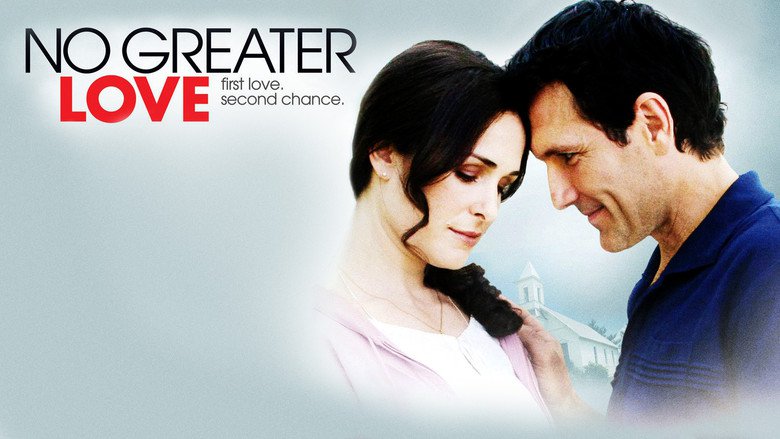
This Is Why We Can’t Have Nice Things/Christian Movie Reviews: No Greater Love (2009)

I absolutely adore the Christian film Grace Unplugged, so when I picked up the No Greater Love DVD, I was delighted to see the label, “From the makers of Grace Unplugged” on the cover.  “What could possibly go wrong?” I said to myself.

One viewing later….

12052569_1037212156312312_165950688372252734_o

This is my review of No Greater Love!

dLMN6TaQj5hpZ4pqOqlIdXRsJPU

No Greater Love tells the story of Jeff, a workaholic who is about to propose to his girlfriend Katie, but stops in his tracks when his long-lost ex-wife Heather comes back into the picture.
Now both the trailer and the back of the DVD push the idea that this movie is about Jeff forgiving Heather for abandoning him and their son, as well as Heather forgiving herself.  However…
Well, let’s just get to the Hits and Misses.

The Hits
The actual premise is pretty interesting, especially in our generation where many people have experienced having a parent walk out on the family.  Most movies either villify absent spouses or just have them mentioned in dialogue.  The script is very merciful with Heather.  She is easy to empathize with and she is trying to make amends for walking out ten years ago.  As long as a character who messes up tries to make things right with a sincere heart, I can root for that character.
Jeff and Heather have a belieavable chemistry.  I can buy them as having been a couple at one time.  They also have a good rapport with their son Ethan.
This movie allowed me to root for Heather.  If only I could root for this movie. Why can’t I stand behind this flick?  Well…

The Misses
(Commencing rant mode) The movie is advertised as a journey of two people forgiving each other, but that plot point is resolved in seconds.  In addition to that, this movie is a demonstration of the oversimplification of forgiveness.  In this film’s universe, forgiveness can be achieved by a simple talking-to with some Christian slogans slapped on.
It took Grace Unplugged just fifteen minutes to get to its main conflict.  Jeff and Heather don’t run into each other until the twenty-five minute mark.  After that, scenes are either too long or too short, making it impossible for them to develop properly.  Hey filmmakers, pacing matters.
You know it’s a bad sign when a Christian blogger is calling a Christian film “preachy.”  That said, this movie is so preachy that the faith dialogue becomes a chore to listen to.  I shouldn’t be rolling my eyes when the pastor character says “God is in control” for the hundredth time.  Yes, I do firmly believe that God is running the show and He will never leave us stranded, but the message becomes meaningless when it is shoehorned into conversations where it’s not needed.
However, I could forgive all of these shortcomings if the plot didn’t feel so agenda-driven.  No Greater Love is so hellbent on getting these two ex-spouses back together that it forgets the personal sacrifice and sanctification aspect of marriage. Heather changes her ways for the good of her family, but Jeff–oh, Jeff–is obliviously self-absorbed and the script never has him own up to his selfishness. As you can tell, I really didn’t like Jeff.  Many times throughout the film, he goes from “I want you back, Heather,” to “You go to church, Heather; I’m gonna watch the game” in a matter of minutes.  This is the most halfhearted character I have ever seen, and even his sincere moments feel shady.
I’m a single woman, but even I know that marriage is about two imperfect people rising above their flaws for a Christ-centered marriage.  It’s about sacrificing selfish habits to be the best versions of yourselves.  If one spouse isn’t willing to change their ways, then you’ve got yourself a one-sided relationship.  In fact, the movie actually gives Heather reasons NOT to go back to him.  Not once does Jeff say something to the effect of, “You know, maybe always answering my phone even when I’m having a meaningful conversation with the woman I’m trying to get back together with isn’t such a bright idea.”
Heather, honey, when the man you love answers a work call while you’re showing him that you kept your wedding ring around your neck, that should send up a red flag.
Finally, the movie’s “ending” makes it clear as day that the budget ran out and they just had to wrap things up abruptly.  The film doesn’t end, it just stops.
A European-style ambigious ending would have been a lot more satisfying.

In terms of production quality and premise, No Greater Love is miles better than Christian Mingle: The Movie.  However, if I was a marriage counselor and I had to choose between No Greater Love and Fireproof to give to my client(s), I’d hand them Fireproof in a heartbeat.

CGB Review of The Cobbler (2014)

I would love to step into the shoes of someone who didn’t have to watch this movie.

This is my review of The Cobbler!

untitled

The Cobbler tells the story of Max Simkin, a New York cobbler who can quite literally step into the lives of his customers by fixing their shoes with a magical stitching machine and then wearing the shoes.
Have you ever watched a movie that was meant to be a short film, but was then auctioned off to a drunk guy and given the budget for a feature film?  Yeah, that’s this movie.

The Cobbler suffers from the same problem as Fant4stic Four; it’s a story that is given to the wrong director teamed up with the wrong actor and is filmed in the wrong format.  Fant4stic Four shouldn’t have been dark and gritty, and The Cobbler should have been animated and NOT starring Adam Sandler.
Why do I say that The Cobbler should have been animated?  Well, for one, the musical score belongs in an animated flick.  In a live-action movie, the bouncy musical score is obnoxious.  It doesn’t make my ears bleed, but it sure as heck isn’t The Imitation Game soundtrack!  Also, the entire premise would have worked better if done by Pixar or Illumination (the folks behind the Despicable Me franchise).

I get the feeling that this movie is desperate to be “Amelie” without having a proper understanding of the “Amelie” story formula.  Granted, I didn’t like “Amelie,” but I have respect for that film.  Why?  Because it was self-aware.  You see, “Amelie” was structured as a modern-day fairy tale.  Early on, it established itself as a whacky, offbeat universe.  The music, costume and the color palate matched the vibe of the film.  Amelie Poulain had neurotic parents, an odd upbringing and was a little strange herself, so it was easier to go along with the whimsy of her saga.
Meanwhile, The Cobbler takes none of those necessary steps to classify itself as a modern-day fairy tale.  The film’s tone is very indecisive, as if the filmmakers couldn’t decide if The Cobbler should be a quirky comedy or a character study that features a magic stitching machine.

For an Adam Sandler movie, he has very little to do.  All he does is look sad, mention his absent father who walked out because–potatoes–and put on shoes.  That’s pretty much it for his performance.  As for the other actors, they don’t have much to work with.  Here’s an example: Method Man plays a gangster.  In his first scene with Sandler, he’s a chill guy.  However, in the second act, he does a 180 and become unrealistically nasty.  Gangster doesn’t equal automatic hothead.  There’s a way to write the gangster archetype correctly.  Just go watch Black Mass if you want proof of this.

I had this movie playing on Netflix while working on the study guide for my upcoming Sign Language quiz.  The Cobbler is so not engaging that I got more enjoyment out of writing, “17% of people in the United States classify as hard-of-hearing” and “90% of Deaf people are born to hearing parents.”
I envy anyone who never has to hear the uninspired dialogue of The Cobbler.

Saint Zita, pray for us.

CGB Review of Maze Runner: The Scorch Trials

This movie made me hate flashlights.  Why?  Because three times, the characters are in chase sequences that involve them running through dark rooms while swinging around their flashlights with reckless abandon.

This is my review of Maze Runner: The Scorch Trials!

scorchtrials-7

Maze Runner: The Scorch Trials is the sequel to last year’s The Maze Runner.  In this installment, Thomas and his friends, Newt, Minho, Teresa, Frypan, and Winston have survived living in a large maze while fending off, for lack of a better term, mechanicle beetles called Grievers.  Now they have escaped the maze and are staying in a facility run by Mr. Janson.  They are hiding from the organization WCKD (pronounced as “Wicked” like the Broadway play), but when Thomas and company discover that Janson and his cohorts have, well, wicked intentions in store, they flee the facility and travel across a scorched wasteland that was once the U.S of A.

The Hits
Everything good about the movie is in the first act.  The conflict is well-established and the chase sequence is action-packed and perfectly paced.  The facility develops its own character as a cold, unsettling sanctuary with hidden secrets abound.
Dylan O’Brien plays Thomas and makes the character a vast improvement from the first film, as well as the book.  He doesn’t have a complex arch, but he is curious, fast-thinking, and as someone who is prone to anxiety attacks, I can tell that Thomas may suffer from high anxiety.  O’Brien does what he can with the chracter he’s working with, and for the most part, he does a passable job.
I’ve always wanted to see characters actually walk into destroyed post-apolcalyptic skyscrapers and in this movie, they do!  There’s one pretty cool sequence in the second act where Thomas and Brenda (Rosa Salazar) have to outrun the infected CGI zombie people in a collapsed skyscraper.
Honestly, if this was a short film on YouTube, it would be amazing.  Just use the entire first act and then use the skyscraper fight as the climax, and you’ve got yourself a YouTube short film that gets a bajillion views.

The Misses
This movie gets really repetitive really fast.  In my intro, I mentioned how this movie made me hate flashlights.  There are far too many scenes of characters running in dark places while wildly swinging their flashlights.  A lot of scenes play out the exact same way: Thomas and the gang go to some rusty place, they turn the lights and CGI zombie brouhaha chase after them.  Rinse and repeat.  Even the Hunger Games have variety in their scene set-ups!
This movie has a major development problem, as in nothing gets a chance to develop.  The movie attempts character development with Thomas, but because the script is so hellbent on keeping the story as mysterious as possible, very little is revealed about him or the circumstances surrounding him and his friends.  The wasteland, aka the scorch, has no sense of place; it’s just a lot of sand and heat that never feels threatening.  Actually, now that I think about it, they don’t spend a whole lot of time outside in the scorch until the third act.  They just run across it from one broken-down building to the next.
I’m getting real sick and tired of the “good kids and shady adults” arch that contaminate these young adult movie adaptations, and this movie definitely falls into the trap.  I’m all for the “kid trusts adults, but then sees their imperfections” narrative, but when EVERY. SINGLE. ADULT character is a Bond-villain wannabe and there’s no strong adult mentor on the good side, it gets pretentious as all heck.
This movie was doing just fine when it was Thomas & company versus WCKD and even the resistance run by Jorge and Brenda was all right, but then comes this Right Arm group comes in and now you have WCKD, the Right Arm, the kids and all the while, I’m just so worn out from all the drama with underdeveloped characters who I really don’t care about that I’m just waiting for the credits to roll.

Overall, Maze Runner: The Scorch Trials slogs more than sprints.  The action will definitely keep your attention, but the forgettable characters makes rooting for anyone a challenge.

CGB Review of Guardians of the Galaxy (2014)

I know this seems like a random CGB post.  This movie isn’t in theaters anymore and I didn’t even announce that I’d be reviewing this movie on the CGB Facebook page.  However, there is an explanation as to why I’m reviewing this today.
On Friday, I wrote my first article for The Catholic Response.  It was an op-ed about Kim Davis, the Kentucky County Clerk who refused to issue marriage licenses to both homosexual and heterosexual couples.  When I posted the article on my personal FB page, it didn’t take long for a war to break out in the comments section between my conservative friends and my liberal friends.  Anywho, playing defense for two days wore me out, so I thought I’d do a more light-hearted post.

This is my review of Guardians of the Galaxy!

GotG1
Guardians of the Galaxy is the movie that had Marvel Studios bitting their nails. Based on an obscure series of comics, Guardians of the Galaxy tells the story of Peter Quill, aka Starlord, a fast-talking, brash space collector who ends up coming across three misfits; an alien named Gamora and two genetically engineered creatures, Rocket the racoon and his tree hybrid friend, Groot.  The four of them are taken into custody after a brief quarrel with one another and meet another outcast named Drax.  From there, this ragtag group must come together to save the world.

I’ve seen this movie four times and it wasn’t until my fourth viewing when I finally gave in to the film’s charms and embraced it as my favorite Marvel movie.  This is the ultimate popcorn flick!

The Hits
I have always had a soft spot for stories about a group of oddball people who have to set aside their differences and stick together.  The five leads are well-established and identifiable not just because of their unique designs, but also because of their personalities and backstories.  Peter/Starlord, Gamora, Drax, Rocket and Groot are all fleshed-out characters and never come across as cliched tropes.
I LOVE Rocket and Groot!  Rocket is hilarious with his sardonic humor and quips. Groot is just charming with his humility and classic line, “I am Groot.”  I appreciate how his one line never becomes annoying.  It’s made clear that he has a limited vocabulary through no fault of his own, so him saying “I am Groot” all the time is understandable.
Guardians of the Galaxy does what Fant4stic Four couldn’t achieve; it establishes Starlord, Gamora, Drax, Rocket and Groot as a family unit.  They bicker and argue without bailing on each other.  They disagree, but begrugingly come to necessary compromises.  There’s a dynamic within the group.  They have a rapport with one another.  What’s interesting is that the five characters start out using each other, but as a journey goes on, their selfish agendas are gradually replaced with sincere loyalty and a sense that sticking together is essential for their survival.  Actually, this movie depicts how everything falls apart when people come together for self-serving reasons, and that the greater good can be accomplished once those same people put aside personal gain.
C.S. Lewis once said, “How monotonously alike all the great tyrants and conquerors have been; how gloriously different are the saints.”  This movie is a great example of that.  The villains, Thanos, Ronan and Nebula have the same demeanor and are all self-centered.  Meanwhile, Starlord, Gamora, Drax, Rocket and Groot all have distinct personalities and different backstories, yet come together for the same cause.
Yes, I love the Guardians of the Galaxy soundtrack.  I’ve listen to “Hooked on a Feeling,” “Cherry Bomb” and “Come and Get Your Love” about a dozen times. Making Peter Quill/Starlord a lover of 80’s rock music was a brilliant way to incorporate the songs into the film.

The Misses
Why did it take four viewings for me to like Guardians of the Galaxy?  Well, for one, you almost have to watch it a second time because the plot gets convoluted, especially with its space talk and technobabble.  I found myself caring more about the characters than the actual conflict.  Despite all the emphasis placed on the Inifinity Stone thingamajig, the object itself doesn’t have much presence.  I kept forgetting that the Infinity Stone was even a thing unless characters brought it up via expositional dialogue.
Am I the only one getting sick of weak villains?  I understand that no one is born evil, but come on, screenwriters, step up your game when it comes to writing villains!  Mind you, the MCU (Marvel Cinematic Universe) is handled by the same people who gave us the entertaining, yet intimidating Loki (Thor’s brother).  Loki is the best comedic villain that I’ve seen in a while, so I know that Marvel Studios is capable of bringing great villains to the big screen.  As for Guardians, Ronan the Accuser is the reason why I didn’t care for the story’s conflict.  The script tries to make him a narrow-minded traditionalist, but that arch goes nowhere.  His rivalry with Thanos is partially realized.  Two villains who don’t like each other is an interesting concept, but the movie doesn’t execute it very well. Ronan himself is just not very interesting.  His design is passable and the actor portraying him is fine, but the character never frightened me.  How am I supposed to be concerned about the safety of the protagonist(s) if the villain isn’t an intimidating threat?
Finally, there is one thing I should mention.  The movie opens with a hospital scene in which young Peter Quill says good-bye to his dying mother.  This scene might be uncomfortable for those who have lost a family member (specifically a mother or grandmother) recently.  The scene is only a few minutes long, but I thought I’d give you all a heads-up.

Honestly, I love this movie because of the five titular Guardians.  Their evolution from selfish outcasts to a family unit that would go through Hell and back for each other is executed wonderfully.  Other than the heartwrenching opening scene, the majority of the movie is an exciting action comedy with heart and humor.

Saint Ignatius of Loyala, pray for us.